Planning
What it costs to start a forex brokerage
Every article on this subject leads with a number, and those numbers mean little, because costs vary enormously by jurisdiction and choice. This page shows where the money goes, which costs are one off and which recur, what the software costs, and a worked example built only from published figures.
Five ways software is pricedFrom this guide
- Flat monthly feeOne fee a month for the platform and CRM$1,250 or $2,500 a month, CRM included
- Setup fee plus monthly feeA one-off fee, sometimes five figures, then a monthly feeNo setup fee
- Revenue or profit shareA percentage of your spread, volume or profitNo revenue share
- Separate CRM licenceA second product and contract beside the platformCRM included on every plan
- Volume feesA charge per million traded on top of the monthly feeNo volume fees
Figures and rows from this guide's own sources. Sample market data, sample clients and sample brands. "Your Brand" stands for your own name and logo.
Why there is no single cost figure
The cost of launching depends on the jurisdiction you license in, whether you intend to hold client money, which payment providers accept you, how many staff you hire and what your capital requirement is. Those choices move the total by an order of magnitude.
Treat any single headline figure as marketing. Instead, build a plan from the categories below, get quotes for each one, and note which ones tend to be underestimated. Where a figure is published by the regulator or the vendor itself, this page gives it with the source.
Read moreShow less: Why there is no single cost figure
On your platform
What every plan runs on
One deployment on your brand, domain and database: the terminal your clients trade on, and the CRM your team runs.
Deposits
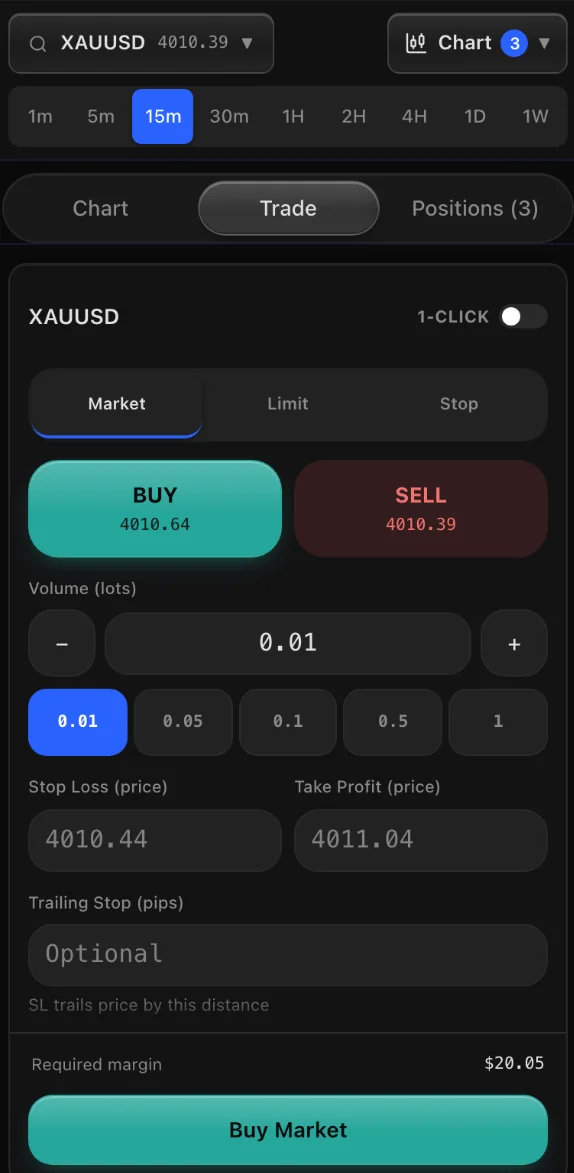
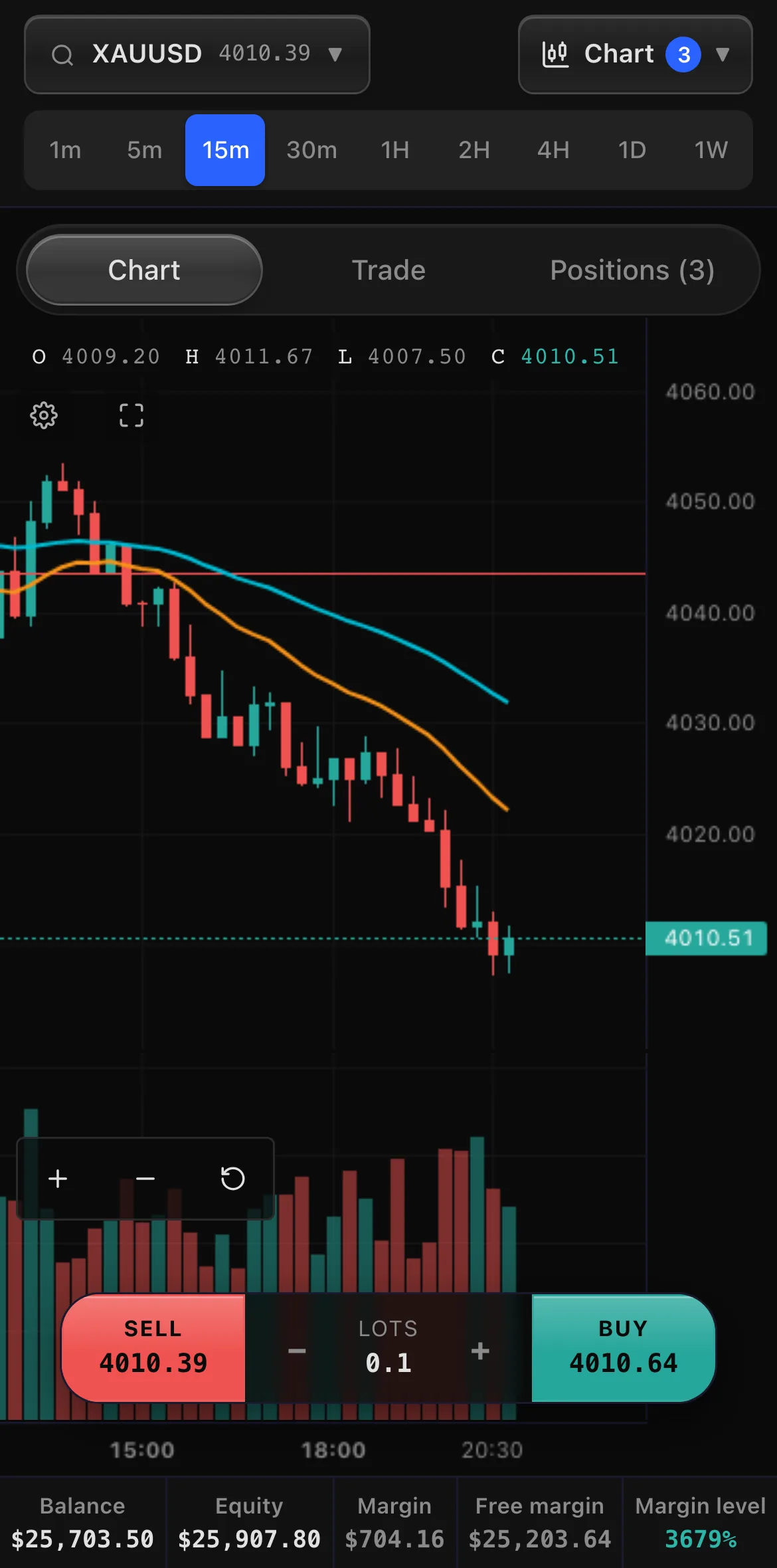
Sample market data and sample clients. "Your Brand" stands for your own name and logo.
Where the money goes
Six categories cover almost everything.
Read moreShow less: Where the money goes
Founders tend to focus on the first three. The last three are the ones that surprise them.
- Licensing and formation
Application fees, legal and corporate services, and in many regimes a local office and local directors. These costs recur.
- Regulatory capital
Money that must stay in the business and cannot be spent. It varies widely by regime and is the largest swing factor.
- Technology
The trading platform, the CRM and the mobile experience. Usually a monthly fee, sometimes with a setup fee or a revenue share.
- Market data
Licensed real time data is an ongoing cost, and first budgets often leave it out.
- Payments and banking
Provider fees, rolling reserves and the cost of the time it takes to get approved at all, which is often months.
- People
Compliance, operations, retention and support. In most regimes some of these roles are required.
Licence capital and regulator fees
Capital is usually the biggest number, and it is money you keep rather than spend.
Who holds whatIllustration
- Licence
- Client relationship
- Client money
- Trading accounts
Illustration and sample market data.
Read moreShow less: Licence capital and regulator fees
Published minimums range from MUR 1,000,000 for a Mauritius investment dealer and USD 100,000 for a Seychelles securities dealer to EUR 750,000 for a Cyprus investment firm that deals on its own account and AED 30 million for a UAE mainland trading broker. Regulator fees are small by comparison: in Seychelles, USD 3,000 to apply and USD 6,000 a year.
Our comparison of licence jurisdictions gives capital, application and annual fees for ten jurisdictions, each taken from the regulator's own documents, and the step by step guide explains how the application itself works.
What trading platform and CRM software costs
Vendors that publish prices for a trading platform with the CRM included charge from $1,500 to $6,000 a month, and some add a five figure setup fee or take a share of your revenue on top.
One monthly priceFirst month free on any plan
- Starter$1,250a monthNew brokers launching their first branded desk
- Growth$2,500a monthScaling desks that want automation and a native app
- EnterpriseCustomMulti-brand groups and regulated operators
Prices as on the pricing page, and sample inputs.
Read moreShow less: What trading platform and CRM software costs
Standalone forex CRMs on published price lists cost $500 to $20,000 a month, before the trading platform they need beside them.
Our price sits below that range with everything in it: $1,250 a month on Starter and $2,500 on Growth for a white label CFD and forex platform, with the terminal, the mobile app, the CRM and the back office included, no setup fee and no revenue share. Whichever vendors you compare, the price model matters as much as the headline, so check each one against the table.
| Price model | How it is charged | What to check | On our platform |
|---|---|---|---|
| Flat monthly fee | One fee a month for the platform and CRM | What is included, and the client limit | $1,250 or $2,500 a month, CRM included |
| Setup fee plus monthly fee | A one-off fee, sometimes five figures, then a monthly fee | Whether any of the setup fee is refundable | No setup fee |
| Revenue or profit share | A percentage of your spread, volume or profit | How it grows as your book grows | No revenue share |
| Separate CRM licence | A second product and contract beside the platform | Who keeps the two in step | CRM included on every plan |
| Volume fees | A charge per million traded on top of the monthly fee | The cost at the volume you plan for | No volume fees |
A worked example: a Seychelles start, from published figures
To make the numbers concrete, here is what the published figures alone add up to for a Seychelles securities dealer running on our Starter plan for its first year.
Read moreShow less: A worked example: a Seychelles start, from published figures
Every other line depends on your choices and needs a quote.
| Cost line | Amount | Kept or spent |
|---|---|---|
| Paid-up capital, held in a bank account | USD 100,000 | Kept in the company |
| Regulator application fee | USD 3,000 | Spent |
| Regulator annual fee | USD 6,000 a year | Spent |
| Trading platform and CRM, twelve months | USD 15,000 | Spent |
| Company formation, registered agent, legal and compliance work, office, staff, market data, payment providers and marketing | Get quotes: together these are usually the largest share | Spent |
What the example tells you
The published lines come to roughly USD 124,000 before company formation, a single salary, a legal bill, an office lease, a data licence or a marketing campaign, and USD 100,000 of that is capital you keep rather than spend.
Read moreShow less: What the example tells you
The technology is about an eighth of it. The lines that need quotes are where budgets go wrong, which is why they are worth more of your planning time than the software is.
Add several months of running costs held in cash on top. Payment providers hold back reserves, the first quarter rarely covers its costs, and the regulatory capital cannot be used to pay bills.
The costs founders underestimate
Payment processing is the most common.
Read moreShow less: The costs founders underestimate
Getting approved by providers takes months, providers often hold a rolling reserve against your balance, and a new brokerage in a lightly regulated jurisdiction is not an easy account to open. Start those conversations far earlier than feels necessary.
Market data is the second. Real time licensed data for the instruments you want to offer is an ongoing subscription, and the price scales with coverage and with whether you are redistributing it to clients. A budget that treats data as free is wrong by a meaningful monthly amount.
The third is time. Every month between spending money and taking your first client is a month of burn. This is the strongest argument for running licensing and technology in parallel: the technology takes one week, licensing takes months, and doing them one after the other adds cost for no benefit.
Liquidity and bridge costs
If you plan to pass client trades on to a liquidity provider, two more lines appear.
Read moreShow less: Liquidity and bridge costs
The provider sets its own margin deposit, minimum volume and fees privately with each broker, and the bridge, the software that links a trading platform to providers, is a monthly cost of its own. What a liquidity provider costs, line by line, is in our guide to choosing one.
On our platform you choose per client: keep trades in-house and launch without a liquidity contract, or cover them with your own liquidity provider, and switch whenever you like. We also introduce providers; the agreement is between you and the provider.
Building versus buying the technology
Building your own platform is almost never the right call for a first brokerage.
Read moreShow less: Building versus buying the technology
A trading terminal, a CRM, a payments layer, a margin engine and a mobile app add up to a multi year engineering programme, and the cost does not end at launch: it needs maintaining, securing and extending forever, by a team you must hire and keep.
Buying turns an unpredictable capital project into a predictable operating cost, with a launch date you can plan around. Our own pricing is published on the pricing page.
Common questions
Anything else? Our team answers 24/7.
How much does it cost to start a forex brokerage?
The published lines alone for a Seychelles start come to roughly USD 124,000 in the first year, of which USD 100,000 is regulatory capital kept in the company. Staff, legal work, an office, market data, payment providers and marketing come on top and depend on your plans. Capital in other jurisdictions ranges from MUR 1,000,000 in Mauritius to EUR 750,000 in Cyprus for dealing on own account.
What is the single biggest cost?
Usually regulatory capital, and it varies more than anything else on the list. Where that requirement is high it dominates the budget; where it is low, licensing and people tend to lead.
How much does a white label trading platform cost?
Plans that include the CRM are published at $1,500 to $6,000 a month, and some vendors add a five figure setup fee or a revenue share. Ours is $1,250 a month on Starter and $2,500 on Growth, with the CRM included, no setup fee and no revenue share.
Is market data included?
Institutional data is included from day one. Licensed production real time data is a managed add on billed separately, which keeps feed contracts off your plate.
How long before we can take a first client?
The technology is live in one week. Licensing and payment provider onboarding usually set the date and run for months, which is why they should start first and run alongside everything else.
Can we start small and grow?
Yes. Instruments, leverage, account types and staff roles are configuration, so you can open with a narrow product set and widen it as your licence, liquidity and team allow.
See what the technology line costs
Book a demo and see what the published price buys, running on your own brand.