Sri Lanka
Starting a brokerage from Sri Lanka
Anyone asking whether forex trading is legal in Sri Lanka ends up at the Central Bank of Sri Lanka's notice to the public of 21 October 2019. This page reads that notice, and the rules built around it since, from the side of a founder in Colombo: what the Foreign Exchange Act allows, how the card route was closed, what changed in 2026, and how people who still want to build a brokerage structure it.
Exchange control in Sri LankaFrom this guide's sources
- CBSLWho may deallicensed commercial banks acting as authorised dealers
- CBSLCards issued to residentsnot used for dealings in foreign exchange
- CBSLOverseas investment, from 20 June 2026only in overseas employee share ownership plans
Figures and rows from this guide's own sources. Sample market data, sample clients and sample brands. "Your Brand" stands for your own name and logo.
Exchange control comes first
Sri Lanka is not a place where you can assume the rules and correct course later. The Central Bank of Sri Lanka's notice to the public of 21 October 2019 says that engaging in forex trading by a person in, or resident in, Sri Lanka is a violation of the Foreign Exchange Act, No. 12 of 2017. The notice explains that under the Act, licensed commercial banks acting as authorised dealers are permitted to deal in foreign exchange. Those facts decide whether a plan is viable, and weighing them is a job for a lawyer.
The 2019 notice goes further than its headline. It says CBSL has not granted any permission for authorised dealers to facilitate forex trading, and that a person in or resident in Sri Lanka, other than an authorised dealer, may not undertake forex trading, remit funds abroad for it, or receive income or profit earned from it. It also says CBSL may take action against those who encourage the public to trade as well as against those who trade.
That final point reaches introducing brokers, affiliates and anyone else marketing to residents, so a founder's promotion plan deserves the same legal review as the business plan. This page is not legal advice.
Read moreShow less: Exchange control comes first
Who holds whatIllustration
- Licence
- Client relationship
- Client money
- Trading accounts
Illustration.
On your platform
How the platform fits this route
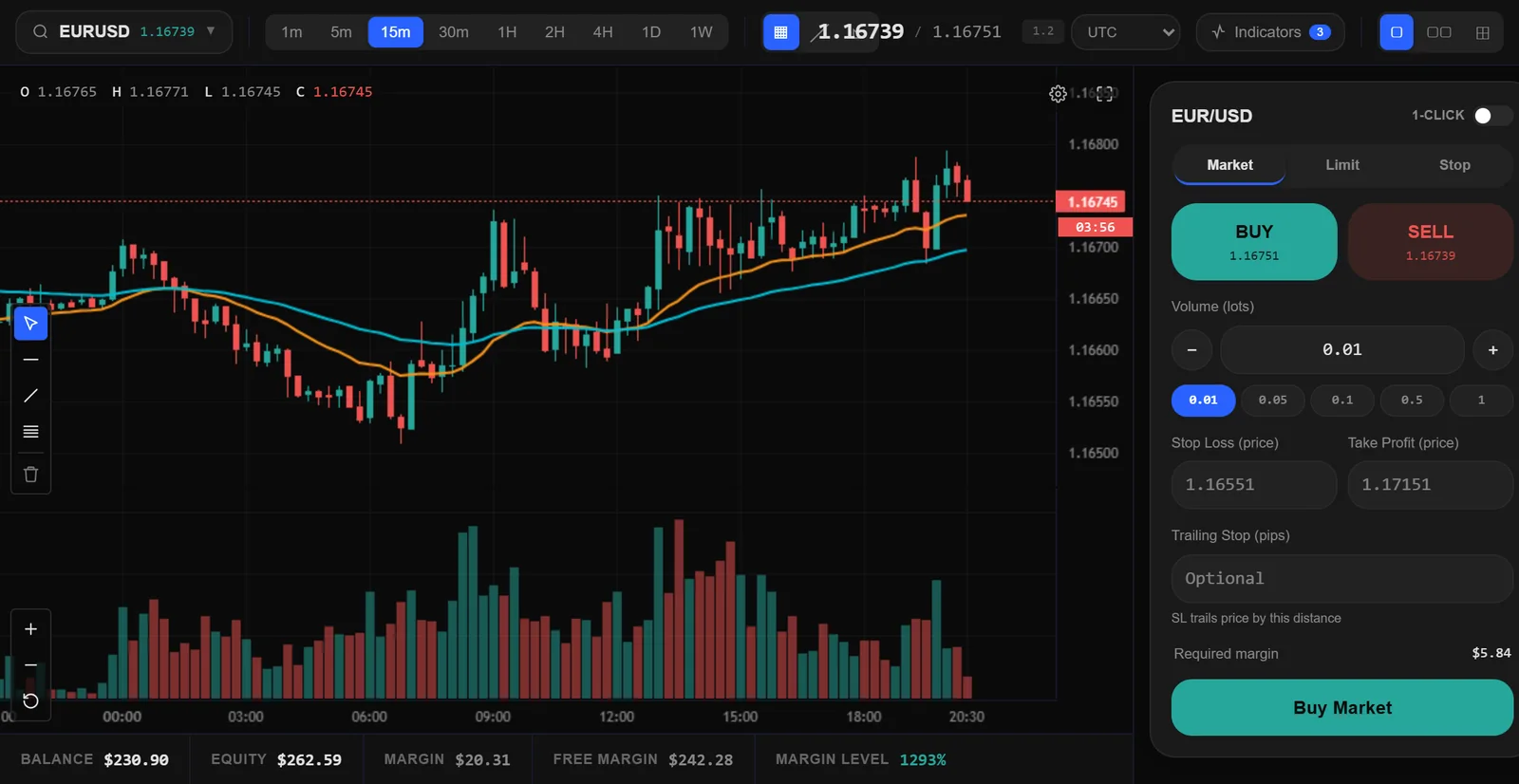
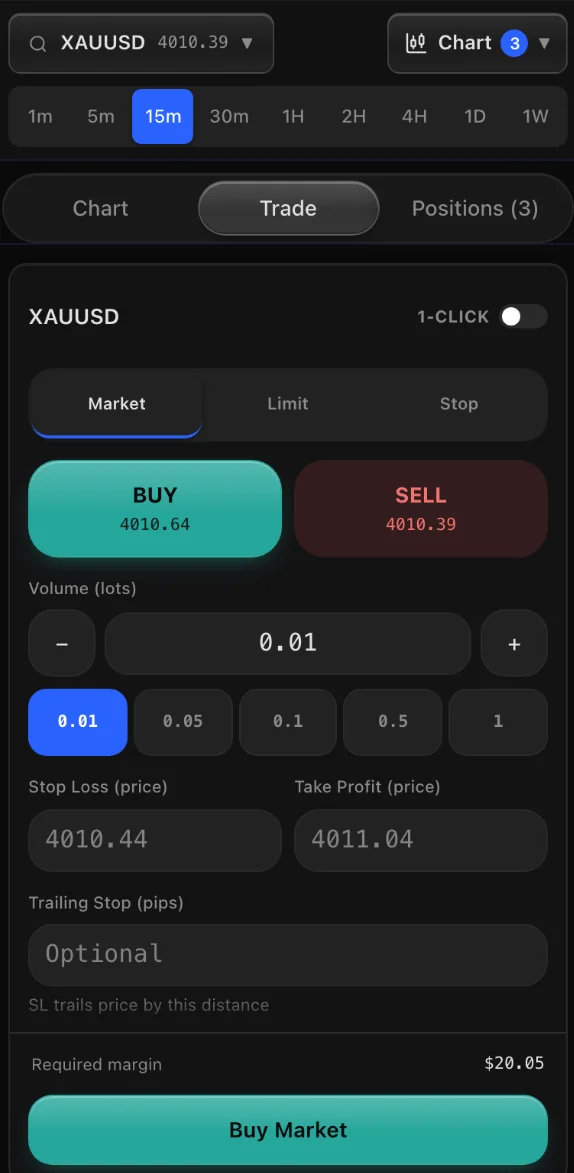
One deployment on your brand, domain and database: the terminal your clients trade on, and the CRM your team runs.
Sample market data and sample clients. "Your Brand" stands for your own name and logo.
Cards, overseas investment and the 2026 changes
Card payments are shut as well.
Read moreShow less: Cards, overseas investment and the 2026 changes
CBSL's Directions No. 03 of 2021 under the Foreign Exchange Act require banks to ensure that credit, debit and stored value cards issued to residents are not used for dealings in foreign exchange, which the Direction calls forex trading.
Overseas investment has narrowed since. From 20 June 2026, resident individuals other than emigrants and non-nationals who convert rupees may invest abroad only in overseas employee share ownership plans or share option schemes, under the Foreign Exchange (Overseas Investments Made by Persons Resident in Sri Lanka) Regulations No. 1 of 2026.
On 17 August 2026 the Cabinet approved, in principle, amending the Foreign Exchange Act so that unauthorised transfers of funds out of Sri Lanka become a criminal offence. No Bill had been published when we reviewed this page, so watch for it.
Sources (3)
- Central Bank of Sri Lanka, Directions No. 03 of 2021 under the Foreign Exchange Act (18 March 2021)
- Department of Foreign Exchange, Overseas Investments Regulations No. 1 of 2026, Gazette Extraordinary No. 2493/36 (18 June 2026)
- Cabinet Office of Sri Lanka, Cabinet decisions of 17 August 2026: Amending the Foreign Exchange Act, No. 12 of 2017
How founders in Colombo structure it
People who still go ahead generally form a company licensed in another jurisdiction and serve only the clients that licence allows, leaving the Sri Lankan residents the 2019 notice covers out of the client terms entirely.
Read moreShow less: How founders in Colombo structure it
Funding that company from Sri Lanka is an exchange control question in its own right, given the 2026 limits on overseas investment described above. Where the Colombo team's role ends, how it is paid and how the company is funded are for a Sri Lankan lawyer to define before the first client is onboarded. Our overview of the jurisdictions founders usually shortlist can start that conversation. It does not recommend any of them.
Running the legal work alongside a product evaluation saves weeks. Our plans are priced monthly in US dollars with no setup fee, and a broker who signs off the demo normally has a branded platform within a week; the most recent launch took six days.
The platform side
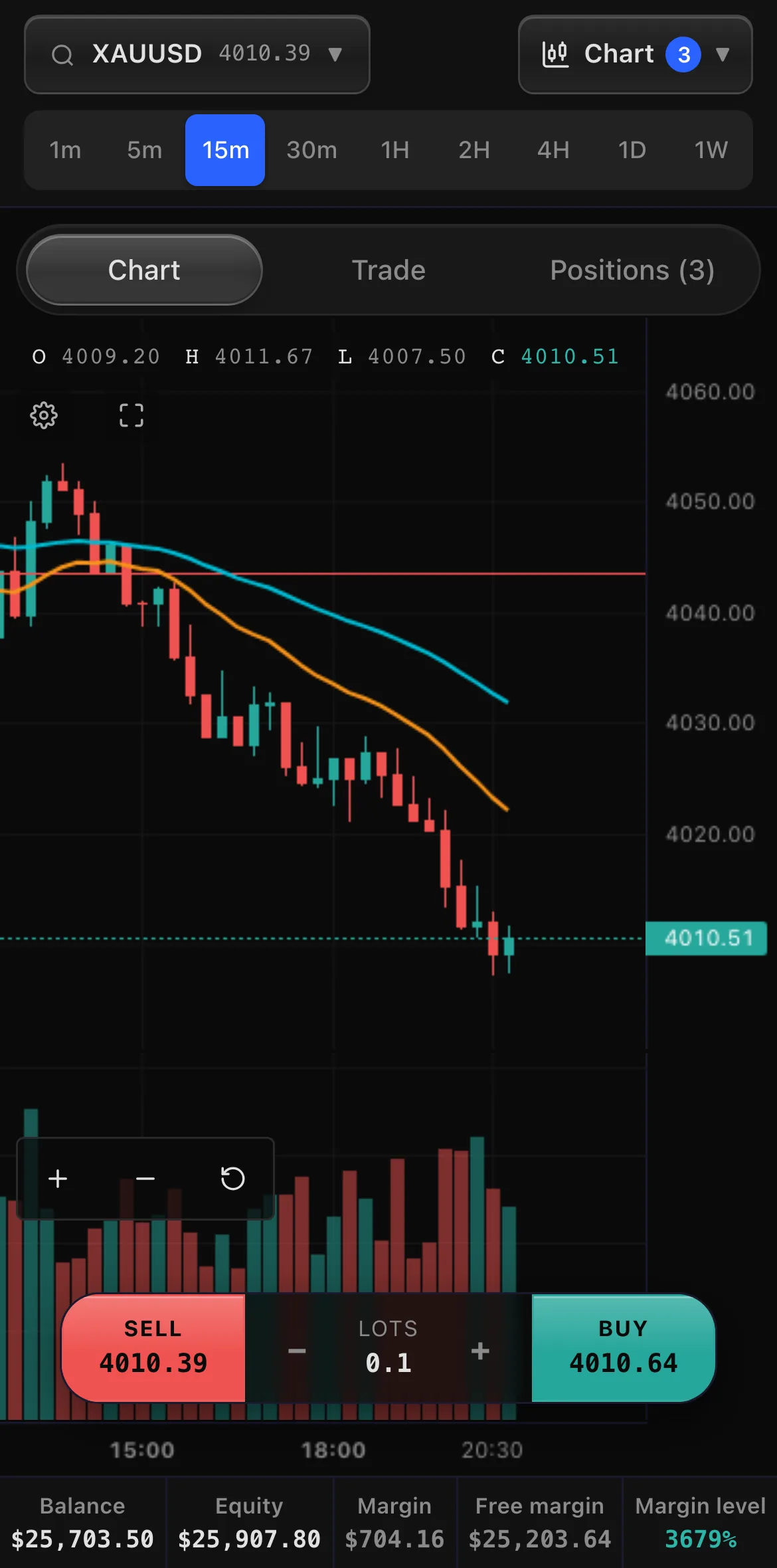
Clients trade on a branded web terminal that installs to the home screen on iOS and Android, with orders filled in-house and your brokerage as the counterparty.
Sample market data and sample clients.
Read moreShow less: The platform side
Partners earn per lot commissions across up to five levels, and KYC review in the CRM holds each withdrawal until the documents are approved.
Common questions
Anything else? Our team answers 24/7.
Is retail forex trading permitted for residents in Sri Lanka?
No, on the Central Bank of Sri Lanka's published position. Its notice of 21 October 2019 says forex trading by a person in, or resident in, Sri Lanka is a violation of the Foreign Exchange Act, No. 12 of 2017, and that it has not permitted any bank acting as an authorised dealer to facilitate it. What that means for a specific business plan is a question for a Sri Lankan lawyer.
Can a Sri Lankan bank card be used to fund a forex account?
CBSL's Directions No. 03 of 2021 require banks to ensure that cards issued to residents are not used for forex trading.
Can introducing brokers in Sri Lanka promote offshore forex?
CBSL's 2019 notice says it may act against traders and against those who encourage the public to engage in forex trading. Anyone marketing to residents should take that to a Sri Lankan lawyer before starting.
Where do Sri Lankan founders usually register?
Outside Sri Lanka, in a jurisdiction whose licence fits the markets they intend to serve. That is a legal and banking decision for advisers, and the platform works the same wherever the entity sits.
Get the technology question settled early
Book a demo and see the whole stack running under your name before you spend anything.