White label
A white label CFD and forex trading platform under your own brand
A white label trading platform, also called a private label forex platform, lets a licensed broker offer forex and CFD trading under its own name without building the software. Every broker here runs on a separate deployment with a separate database, a separate domain and a full brand kit, so your clients and your staff never see a vendor name anywhere in the product.
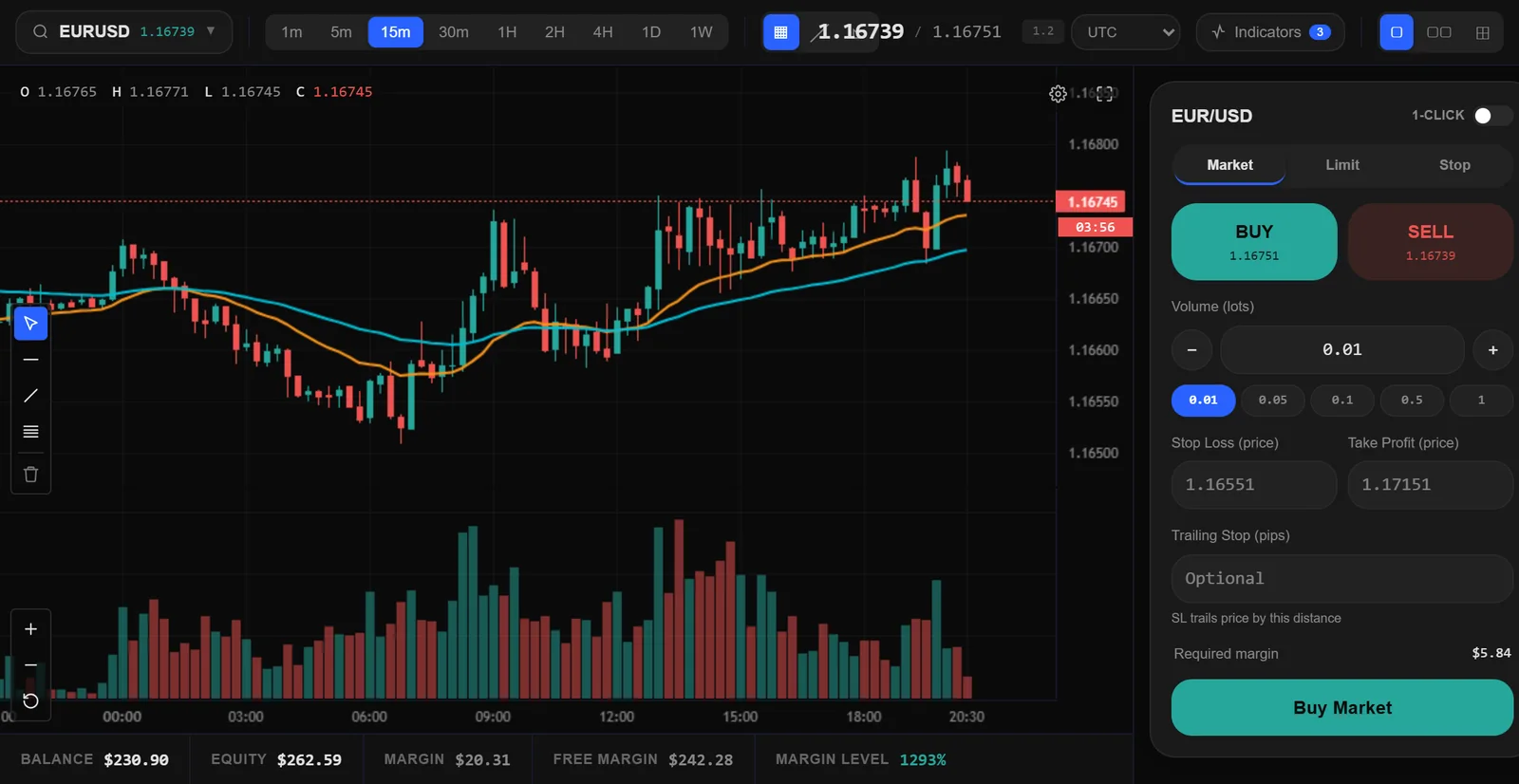
One sample platform switching between made-up brands: the name, logo, colour, typeface and web address change on the terminal and the phone sign-in.
Sample brands, made up for this page.
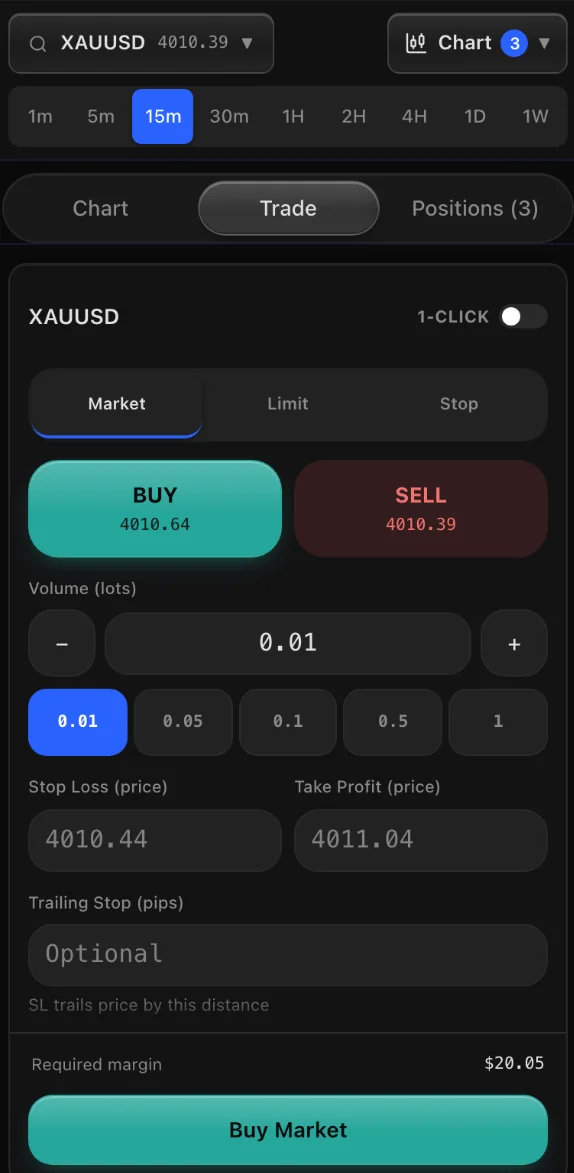
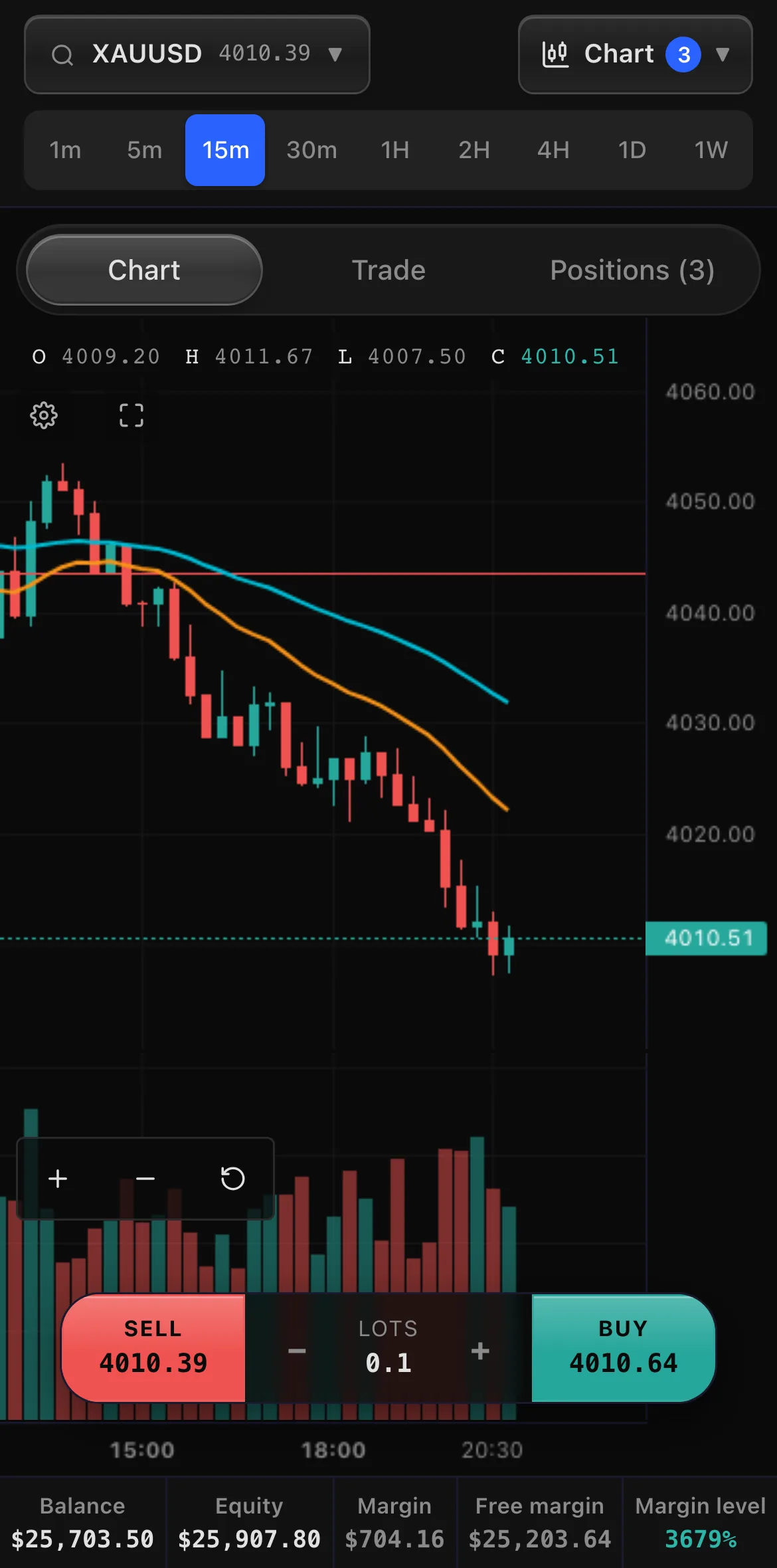
Sample market data, sample clients and sample brands. "Your Brand" stands for your own name and logo.
What white label means here
White label is an overloaded phrase in this industry. It can mean anything from a reskinned login page to a full platform licence. What you get decides whether your brokerage looks like a business or a reseller.
On this platform, the brand is applied at the level of the build. Your logo, your accent colour, your typography, your favicon and your app icons are configuration, and they flow through the client trading terminal, the staff CRM and every transactional email your clients receive. There is no vendor watermark, powered by footer or shared support domain.
Read moreShow less: What white label means here
- Your domain
The terminal and the CRM both run on your URL, so clients bookmark your brand.
- Your database
A dedicated Postgres instance per broker, with no shared tenant table, so one broker's book cannot be read from another.
- Your deployment
Separate infrastructure per brokerage, so load, incidents and data all stay inside your own boundary.
- One codebase
Every broker runs the same well tested code, so every fix and every new feature reaches you automatically.
Try it on your brand
Your name and colour, on the terminal
Pick a colour and type a name: the terminal takes your brand in place. Every figure is sample data.
The terminal your clients get, in your colours and name, with its dark and light themes. BUY stays green and SELL stays red on every brand, and a light accent turns its own text dark, as it does in the live product.
What a white label CFD platform has to get right
A white label CFD platform lets a licensed broker offer contracts for difference on currencies, metals, energy, stock indices, shares and crypto under its own brand.
Read moreShow less: What a white label CFD platform has to get right
A CFD book is harder to run than spot forex alone, because every instrument behaves differently. Gold, oil, an index, a share and a crypto pair each have their own contract size, precision, spread, leverage limit and overnight financing, and the platform has to apply all of them correctly to every open position, every second.
Here each instrument carries its own contract size, pip size, digits, spread and maximum leverage, and the margin on a position is worked out at the lower of the account's leverage and the instrument's limit. Positions held past the daily rollover are charged or credited an overnight swap set per instrument and per side, long or short.
Pricing is yours to shape. Spreads are set per account type and can be overridden for a single client or a single account, and leverage can be set per account type and for a single account. A cent account for small first deposits and a pro account with tighter spreads sit side by side.
Risk is watched live. Equity, used margin and free margin move with every price, a margin call warning fires as the margin level falls, and an automatic stop out closes the largest losing position first. You set your own margin call and stop out levels in the CRM: they start at 100% and 50%, and the stop out can sit anywhere from 10% to 100%. If a fast market leaves an account below zero, an admin writes the negative balance back to zero in one step, and the adjustment stays in the client's history.
| Asset class | Instruments by default | Examples | Default maximum leverage |
|---|---|---|---|
| Forex | 218 currency pairs: majors, minors and crosses | EURUSD, GBPJPY | 1:200 to 1:1000, by pair |
| Metals | 18 spot metals against several currencies | XAUUSD, XAGUSD | 1:200 |
| Stock indices | 12 cash index CFDs | US30, NAS100, SPX500, GER40, UK100 | 1:200 |
| Energy and industrial commodities | 4 commodity CFDs | USOIL, UKOIL, NATGAS, COPPER | 1:200 |
| Crypto | 39 cryptocurrencies against the dollar | BTCUSD, ETHUSD | 1:100 |
| Shares | 20 US-listed share CFDs | AAPL, TSLA | 1:20 |
White label, grey label and the other models compared
Five different arrangements get called white label in this market, and providers do not always say which one they are selling.
Read moreShow less: White label, grey label and the other models compared
The difference that matters is whose licence the business runs under and who owns the platform and the client data.
| Arrangement | What it is | Whose licence | Whose platform and data |
|---|---|---|---|
| Introducing broker | You refer clients to a licensed broker and earn a share of the revenue they generate | The broker's | The broker's |
| Grey label, or white label broker | Your brand on another firm's licence and platform, with limited control over pricing and instruments | The partner firm's | The partner firm's |
| MetaTrader 5 white label | A sub-licence to run MetaTrader under your brand on a provider's server | Yours, for your brokerage | The provider's server, with the CRM bought separately |
| White label trading platform, as we run it | Your brokerage on a vendor's terminal, CRM and back office, under your brand | Yours | Yours: your own domain and your own database |
| Main label | Your own licence for the platform software itself, on servers you operate | Yours | Yours, and you run the infrastructure |
Starting a white label forex brokerage
A white label forex broker can mean two different businesses, and it is worth knowing which one you are building before you talk to anyone.
Read moreShow less: Starting a white label forex brokerage
In the first, your brand sits on another firm's licence and platform, and that firm keeps the client contract, the pricing and the data. In the second, your company holds the licence, or works with a licensed partner it chooses, and runs its own brokerage on white label software, so the clients, the pricing and the data are yours.
This page is about the second. A white label brokerage on this platform gets its own branded terminal and mobile app, its own staff CRM and back office, its own domain and its own database, for one flat monthly fee. You set the instruments, spreads, leverage and account types, and you choose for each client whether trades are kept in-house or covered with your liquidity provider. Once you are happy with the demo, the branded platform is set up within a week.
Brokerage technology as one broker platform
Brokerage technology is often bought in pieces: a trading platform from one vendor, a CRM from another, a bridge, a client portal, a payments layer and a system for introducing brokers, each with its own contract and its own copy of your clients.
Read moreShow less: Brokerage technology as one broker platform
Much of the work of running the brokerage then goes into keeping those copies in step. Building, assembling and white label are weighed side by side on our options page.
Pelris is one broker platform instead. The client trading terminal, the staff CRM and back office, deposits and withdrawals, identity checks and the introducing broker system share one database on your own deployment, so a deposit, a trade and a document are the same record for your client and for your team. It comes at one flat monthly price, with no setup fee and no share of your revenue.
What your clients get
The client side is a professional trading terminal.
Sample market data and sample clients.
Read moreShow less: What your clients get
It prices forex majors and crosses, gold and silver, oil, stock indices, crypto and US stocks, each with its own spread, contract size, pip size and digit precision.
That breadth makes it a white label CFD platform. Metals, oil, indices, crypto and stocks trade as contracts for difference alongside spot forex, on the same margin engine and under your spreads, so you can offer a full CFD book under your own brand from the first day.
Charting covers candle, line and area across nine timeframes with more than thirty indicators, drawing tools, multi chart layouts and a fullscreen mode. Order handling covers market, limit and stop, with take profit, stop loss, trailing stops and linked one cancels the other pairs. Behind it sits a margin engine with live equity, free margin, margin call warnings and an automatic stop out.
The same terminal installs to the home screen on iOS and Android in one tap, opens full screen like a native app and updates itself, so you get mobile coverage without shipping and maintaining a separate app.
AI is built into the terminal on every plan. A short market note sits beside the chart, an Ask box answers questions about the instrument, the news and the client's own account in their own language, and each client who trades gets an evening and a weekly review of what they did. The order ticket flags patterns such as re-entering straight after a loss, and a bot can be drafted from a sentence. Questions are capped per trader per day and spend is capped per month, so the cost stays flat as your book grows.
What your team gets
A trading platform on its own does not run a brokerage.
Read moreShow less: What your team gets
The staff side is a full CRM: a leads pipeline with sources, campaigns, assignment and a conversion funnel, client profiles that pull accounts, money, trades, documents, calls and notes into one screen, a call log per agent, a document review flow that gates withdrawals until identity is verified, and role based access for admin, manager, sales manager, retention and sales.
Money moves the way your desk wants it to. Deposits through the online checkout credit as soon as they are paid, deposits by bank wire and other methods wait for your team's approval, and withdrawals go through instantly or pass an approval queue, as you choose. Every sensitive staff action is written to an audit log with actor, target and timestamp.
Do you need a licence to run a white label platform?
Yes, if you are running a brokerage on it.
Who holds whatIllustration
- Licence
- Client relationship
- Client money
- Trading accounts
Illustration and sample market data.
Read moreShow less: Do you need a licence to run a white label platform?
A white label trading platform is software. It gives a licensed firm its terminal, CRM and back office, and it does not carry a licence of its own: we are a software company, not a broker. Your company needs the licence or registration that fits what it does and where its clients live, and the platform is configured to match.
If you are not licensed yet, start with the licensing step in our brokerage guide and the comparison of licence jurisdictions. The platform takes about a week, so it can be ready and branded while the application is still with the regulator, which also makes payment provider conversations easier: you can show them the product.
Retail CFD rules in the EU and the UK
Contracts for difference are among the most tightly regulated products a broker sells.
Read moreShow less: Retail CFD rules in the EU and the UK
If your brokerage takes retail clients in the European Union or the United Kingdom, these rules apply on top of your licence. They come from ESMA's product intervention decision of 22 May 2018, which applied across the EU from 1 August 2018 and has since been carried into each member state's own rules, and from the FCA, which made the same kind of limits permanent in the UK from 1 August 2019. Professional clients and other countries are treated differently, so have your compliance adviser confirm what applies in each market you serve.
Four duties come with the leverage limits: close out a client's positions when their funds fall to half of the margin their open positions need, make sure no client can lose more than the money in their account, offer no bonuses or other incentives to trade, and show a standard risk warning with the percentage of your own retail accounts that lose money. On this platform the stop out level is yours to set in the CRM, and its default of 50% is that close out line.
| Underlying | Initial margin | Maximum leverage |
|---|---|---|
| Major currency pairs: any two of USD, EUR, JPY, GBP, CAD and CHF | 3.33% | 30:1 |
| Other currency pairs, gold and major stock indices | 5% | 20:1 |
| Other commodities and other stock indices | 10% | 10:1 |
| Individual shares and other underlyings | 20% | 5:1 |
| Cryptocurrencies | 50% | 2:1 |
Execution and liquidity
You choose how each client's orders are handled, client by client in the CRM, and you can switch whenever you like.
Read moreShow less: Execution and liquidity
Keep a client's trades in-house, against your own book at the prices and spreads you set, and you keep the spread and the result of each trade. Or cover them with your liquidity provider, and the exposure is offset with the provider instead. Choosing client by client is the hybrid model most brokerages run, and how brokers weigh keeping trades against covering them is set out in our founder's guide.
Bring your own liquidity provider, or we introduce you to one; the agreement is between you and the provider. Market data is part of the platform: institutional data is integrated out of the box, and licensed production real time data is a managed add on billed separately.
What a white label trading platform costs
Most providers quote a setup fee plus a monthly fee, some also take a share of revenue, and the CRM is often a separate product with its own contract.
Read moreShow less: What a white label trading platform costs
The useful comparison is the total at your size over a year, not the headline. Published prices across the market are collected on our cost page, and the table shows what each line costs here.
| Cost line | On our platform | What to ask any provider |
|---|---|---|
| Monthly platform fee | $1,250 a month on Starter, $2,500 on Growth, published | Is the price published, and what is it at your client count? |
| Setup fee | None | Is there a setup or integration fee, and is any of it refundable? |
| Revenue share | None | Is any share of spread, volume or profit taken? |
| CRM and back office | Included on every plan | Is the CRM a separate product with a separate contract? |
| Mobile app | Installable app on every plan; a native iOS and Android app on your brand from Growth | Is the app branded, and who publishes it to the stores? |
| Market data | Institutional data included; licensed production real time data billed separately | Who licenses the data, and does the licence cover showing it to your clients? |
| Liquidity and payment providers | Contracted by you directly; we can introduce liquidity providers | Are you tied to the provider's own liquidity or payment partners? |
How to choose a white label provider
Six checks separate a platform you can build a business on from one you will outgrow.
Read moreShow less: How to choose a white label provider
They come from the Six-Question Broker Software Test, which we publish so you can run it on every vendor on your shortlist, including us. Our guide to the best white label trading platform takes them to ten.
- A database of your own
Ask whether client records sit in a database dedicated to you or in a shared one separated by a column.
- Your brand everywhere
Terminal, CRM, emails and app on your domain, with no vendor name left anywhere a client can see.
- The CRM in the same product
If the CRM is separate, ask who keeps the two in step and who you call when they disagree.
- A full, published price
Setup, monthly fee, revenue share, data and app costs, at your client count, in writing.
- A real launch date
Ask for the steps and who does each one. Ours is about a week once you are happy with the demo.
- An exit you can read
Ask what you get back if you leave: clients, accounts, balances and trade history, and in what form.
How a launch runs
The first step is configuration.
Read moreShow less: How a launch runs
We stand up your isolated deployment with your domain, brand kit and database, then configure instruments, leverage, spreads and account types to match how you intend to trade.
The second step is your team. Leads are imported, roles are set up, your deposit details are configured and client document review is switched on. Your desk can be working inside the CRM within days.
The third step is your clients. The branded terminal opens on web and mobile, accounts are funded, and promotions and bonuses run from the CRM. The whole sequence usually takes one week, and the pacing is normally set by onboarding with your payment providers and bank.
Already running a brokerage on another platform? Switching to this one carries your leads, clients, balances and trade history across, so clients sign in to the new terminal with their accounts intact.
Common questions
Anything else? Our team answers 24/7.
What is a white label CFD platform?
A trading platform a licensed broker runs under its own brand to offer contracts for difference on currencies, metals, energy, indices, shares and crypto. Ours includes the client terminal, the mobile app and the staff CRM, on the broker's own domain and database.
What is the difference between a forex white label and a CFD white label?
A forex white label covers currency pairs. A CFD white label adds contracts for difference on metals, energy, stock indices, shares and crypto, each with its own contract size, leverage limit and overnight swap. Ours covers both in one terminal, on one margin engine and one client account.
Which CFDs can my clients trade?
311 instruments by default: 218 forex pairs, 18 metals, 12 stock indices, 4 energy and industrial commodities, 39 cryptocurrencies and 20 US shares, each with its own spread, contract size and maximum leverage.
How much does a white label trading platform cost?
Ours is $1,250 a month flat on Starter and $2,500 on Growth, with no setup fee and no revenue share, and the CRM, the mobile app and institutional market data are included. Liquidity and payment providers are contracted by you directly.
Do I need a licence to use a white label trading platform?
To run a brokerage on it, yes. The platform is software and carries no licence of its own. Your company needs the licence or registration that fits its business and its clients' countries, which a specialist adviser should confirm.
How long does a white label launch take?
Once you are happy with the demo, your branded platform is set up within a week. Licensing and payment provider onboarding usually take longer and set the date you take your first real client.
Will my clients ever see the platform vendor's name?
No. The brand is applied through the terminal, the CRM and the transactional emails, on your own domain. There is no vendor badge in the product and no shared support address.
Can I run more than one brand?
Yes. Multi brand groups are handled on the Enterprise plan, where each brand gets its own deployment, domain and database under a single contract.
Do I need a development team to run this?
No. Branding, instruments, spreads, leverage and account types are configured without code. The platform is operated and maintained for you.
What happens to my data if I leave?
Your database is yours and is dedicated to your brokerage, so a full export of your clients, accounts and trade history is straightforward to produce.
See it running on your brand
Book a demo and we will walk your team through the client terminal and the staff CRM configured with your name, colours and instruments.