Back office
A multi-level IB module and the back office behind a brokerage
Founders compare trading platforms for weeks, but the staff side decides whether a brokerage runs smoothly or leaks money and clients: who follows up a lead, who approved a withdrawal, who can see what, and how partners get paid. This page covers that layer in detail.
Partner commissionsSample data
- Sample Client D1.00 lot, Level 3+$0.50
- Sample Client C2.00 lots, Level 2+$2.00
- Sample Client B1.00 lot, Level 1+$2.00
Sample market data, sample clients and sample brands. "Your Brand" stands for your own name and logo.
What a forex back office covers
A forex back office is the operations layer of a brokerage: the software your finance, compliance and support staff use to approve money, check identities, pay partners and answer for every decision later. It sits between the trading platform, where clients trade, and the CRM, where sales and retention work. Here all of it runs on one database with the terminal, so a figure is never copied from one system into another.
| Part | What it does | Who uses it |
|---|---|---|
| Client portal | Wallet, deposits, withdrawals, trading accounts, document upload and statements, inside the terminal | Clients |
| Money movement | Instant or approved deposits and withdrawals, as you choose, with every approver recorded | Finance and back office staff |
| Identity review | Documents reviewed in the client record; withdrawals blocked until a client is verified | Compliance |
| Bonuses and promotions | Deposit bonus credit tracked apart from real money, and revocable | Retention and management |
| Partner commissions | Per lot commissions across up to five introducing broker levels, with a partner portal | Partners and finance |
| Reports | Deposits, withdrawals, net deposits, commission and swap revenue, active clients and agent performance | Owners, managers and agents for their own book |
| Audit trail | Every sensitive staff action with actor, target and time | Owners, compliance and auditors |
Lead tracking and follow-up
A brokerage loses more money to leads nobody followed up than most founders expect. The pipeline tracks source and campaign, so you can see which marketing brought in funded clients. It assigns leads to agents and shows each lead's place in the conversion funnel.
Without that attribution you optimise spend on registration counts, and registrations are the easiest number to inflate and the least tied to revenue.
On your platform
How it fits the rest of the platform
One deployment on your brand, domain and database: the terminal your clients trade on, and the CRM your team runs.
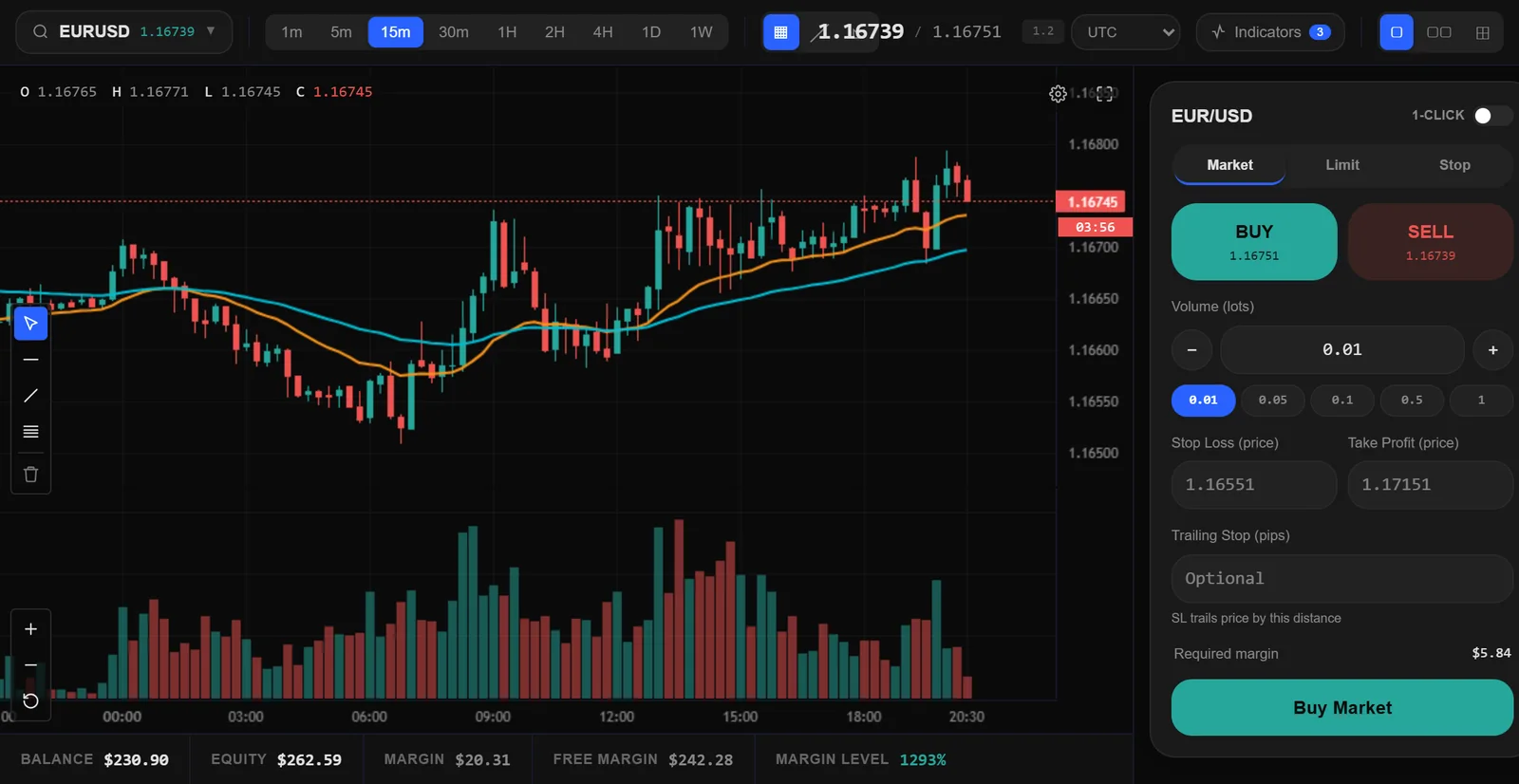
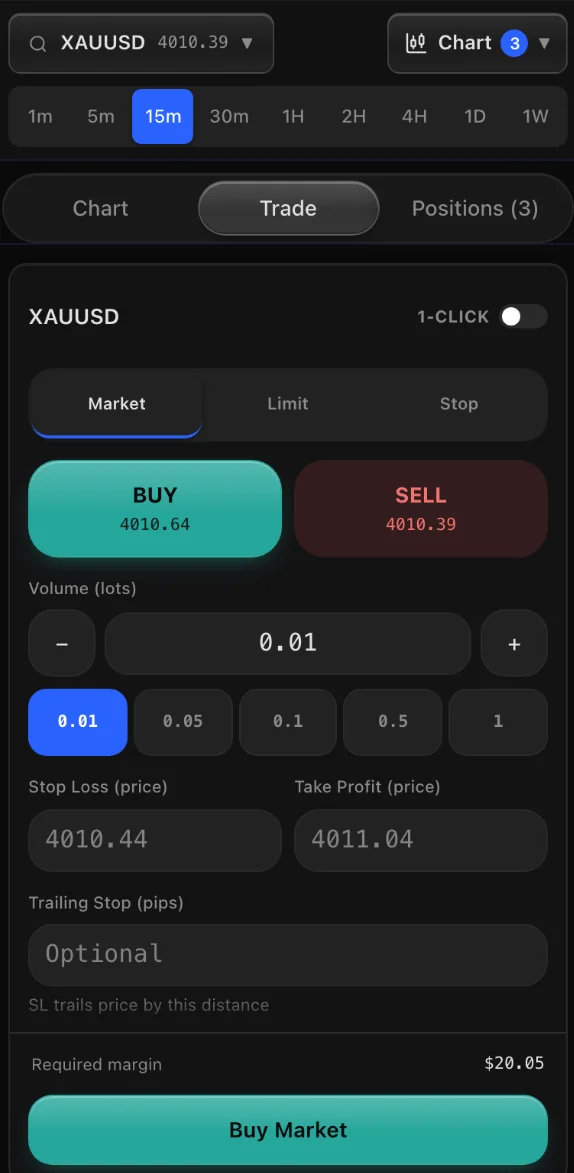
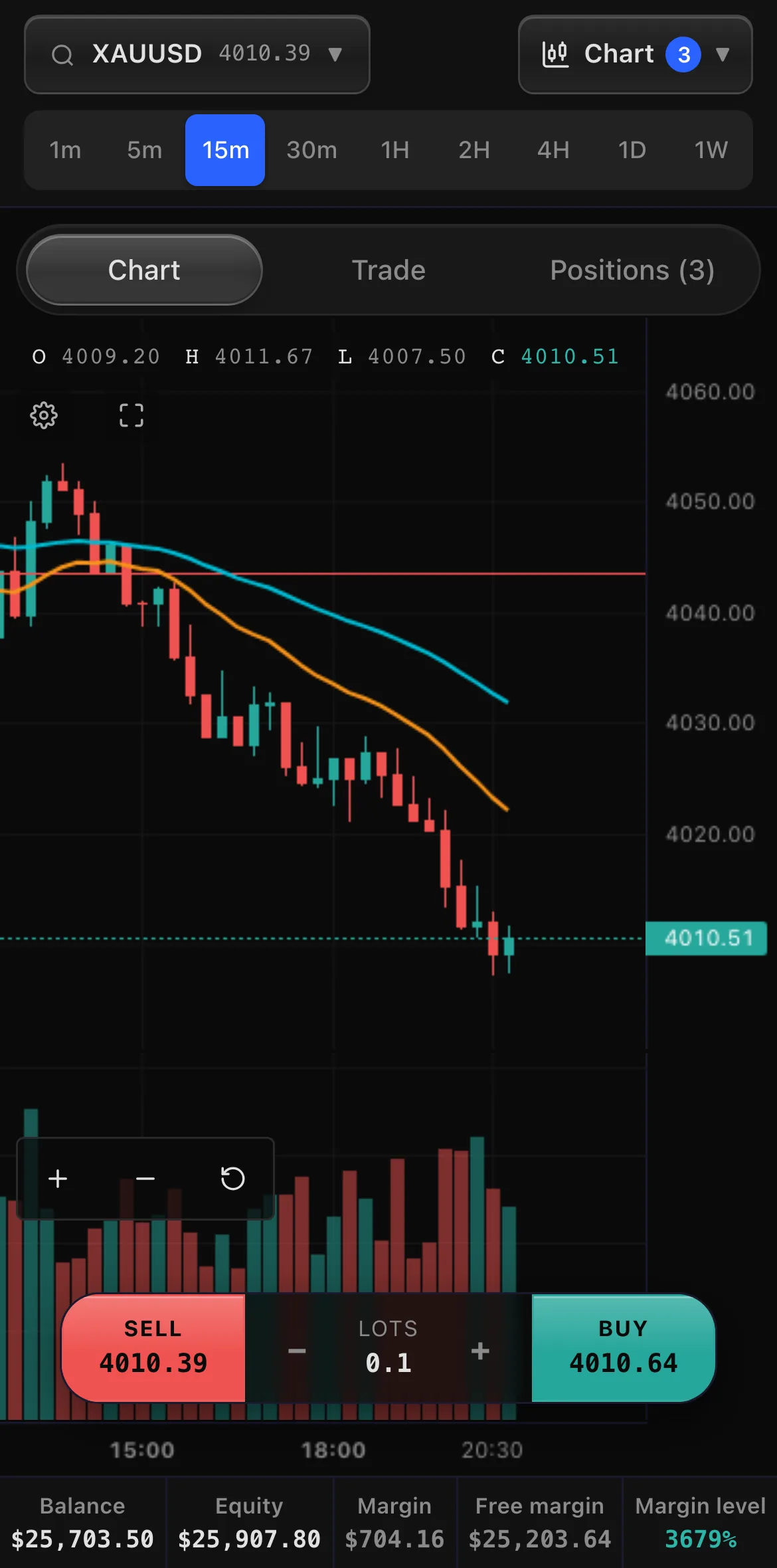
Sample market data and sample clients. "Your Brand" stands for your own name and logo.
One screen per client
An agent about to call a client should not need four tabs to understand them.
KYC review
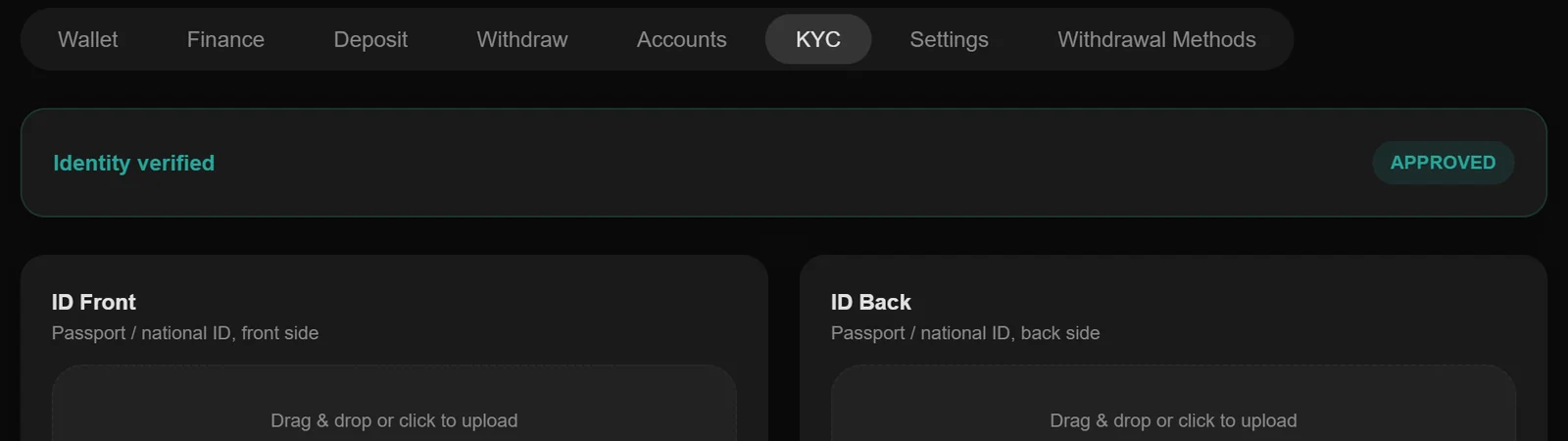
Sample data and sample clients.
Read moreShow less: One screen per client
The client profile pulls trading accounts, balances, deposits and withdrawals, open and closed positions, uploaded documents, call history and every note any colleague has left into a single view.
Calls are logged against the client, so the next agent picks up where the last one left off. Documents are reviewed in place, and the review status gates withdrawals.
- Accounts and money
Every trading account, balance, deposit and withdrawal for that client, without leaving the page.
- Documents
Identity documents reviewed in place, with the outcome gating what the client is allowed to do next.
- Calls and notes
A shared history so the client is not asked the same questions by three different people.
- Trading activity
Open and closed positions in context, so every conversation about the account is informed.
Deposit and withdrawal approvals
Deposits and withdrawals are where an operational mistake becomes a financial one, so you decide which money moves instantly and which waits for a person.
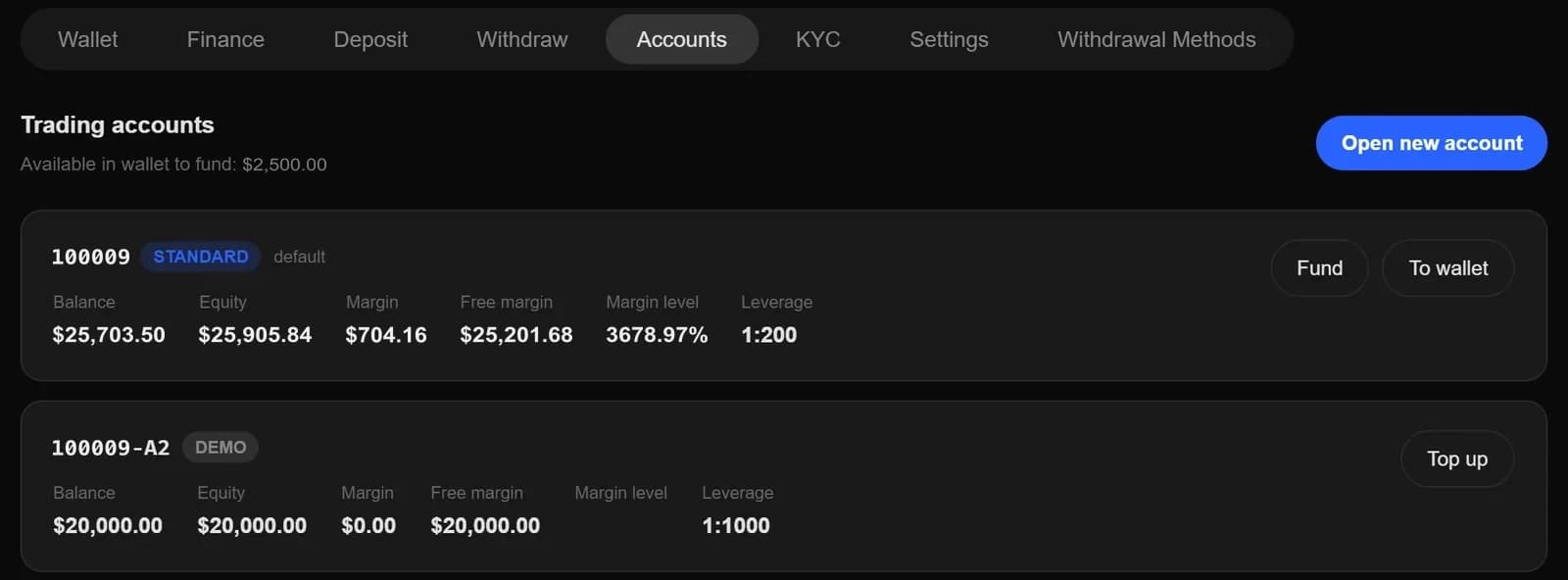
Sample data and sample clients.
Read moreShow less: Deposit and withdrawal approvals
Deposits through the online checkout credit as soon as they are paid, and bank wires and other methods wait for your team's approval, because crediting an unconfirmed transfer can lose you money.
Withdrawals go through instantly or pass an approval queue, as you choose, and identity verification gates them. Checking identity at withdrawal keeps sign-up quick, and no money can leave to an unverified account.
Roles and the audit trail
There are five staff roles: admin, manager, sales manager, retention and sales.
Read moreShow less: Roles and the audit trail
Each sees and can do only what the job requires, so a sales agent cannot reach a withdrawal queue and a retention agent cannot alter commission structures. Most disputes that end up needing investigation start with someone having access they never needed.
Every sensitive action is written to an audit trail with the actor, the target and the timestamp. That covers approvals, account changes, document decisions and anything else that touches a client record. Most often you need it to explain an ordinary action nobody can reconstruct six weeks later.
Multi-level IB: commissions across up to five levels
Each partner is paid a fixed amount per lot on the closed trades of the clients they referred.
Read moreShow less: Multi-level IB: commissions across up to five levels
You set a base rate and, where you want them, separate rates per instrument category, so metals or indices can pay differently from forex. A partner can sit under another partner, and a trade then pays up to five levels: the direct partner at their own rate and each partner above them at that partner's own override rate. Override rates start at zero, so nothing is paid upstream until you set it, and the rate used is recorded with every payment, so changing a rate never rewrites last month's figures.
In most of the world outside Europe and North America, introducing brokers bring in a large share of clients, and paying them correctly takes a lot of work. Multi tier structures, per partner commission rules and the reporting needed to settle them are part of the CRM, so nobody keeps a spreadsheet by hand.
A spreadsheet has to get this sum right every month. Take one illustrative partner: an IB whose directly referred clients traded 120 lots in a month at a commission of $7 per lot, and who also introduced a sub partner whose own clients traded 200 lots, on which the senior partner earns a $2 per lot override. That month settles as 120 times $7 plus 200 times $2, which is $840 plus $400, so $1,240, while the sub partner separately earns their own rate on their own 200 lots. Now multiply by thirty partners, three tiers and clients who switch partners mid month, and hand reconciliation stops being realistic. The CRM computes this ledger per partner per period and settles it to the partner wallet with the trail attached.
Partners can see their own performance without seeing anything else, which removes the monthly cycle of partners emailing to ask how much they are owed and someone in operations reconciling it manually.
Common questions
Anything else? Our team answers 24/7.
Is the CRM separate from the trading platform?
They are two interfaces over the same system. The client trades in the terminal and your staff work in the CRM, and neither needs an integration or a nightly sync to see the same data.
Can we control what each role sees?
Yes. Admin, manager, sales manager, retention and sales each have scoped access, so staff reach only what their job requires.
How are introducing broker commissions handled?
Per lot, with a base rate and optional rates per instrument category, across up to five partner levels. The ledger settles each partner's earnings with the trail attached, and partners see their own referrals and earnings and nothing else.
Are bank wires credited automatically?
No. Bank wires wait for your team's approval. Deposits through the online checkout credit as soon as they are paid.
Can we export our data?
Yes. Each broker has its own database, so exporting yours is straightforward.
See the back office that runs a brokerage
Book a demo and we will walk through the CRM with real data.