Guide
How to start a forex brokerage, step by step
To start a forex brokerage you need five things working together: a company with the right licence, banks and payment providers that will accept you, a way to price and fill client orders, a trading platform with a CRM behind it, and a team that can bring clients in and keep them. Licensing and payments usually take months and set the launch date. The technology can be ready in about a week. This guide takes you through the ten steps in the order that saves the most time and money, with the figures we could check against primary sources.
The launch orderFrom this guide
- 1Choose your route
- 2Define the offer
- 3Get the licence
- 4Open banking and payments
- 5Decide how orders are filled
- 6Choose the platform and CRM
- 7Set up compliance
- 8Hire the first team
- 9Plan marketing and partners
- 10Test, launch and measure
Steps 3, 4 and 6 take the longest, so start them together.
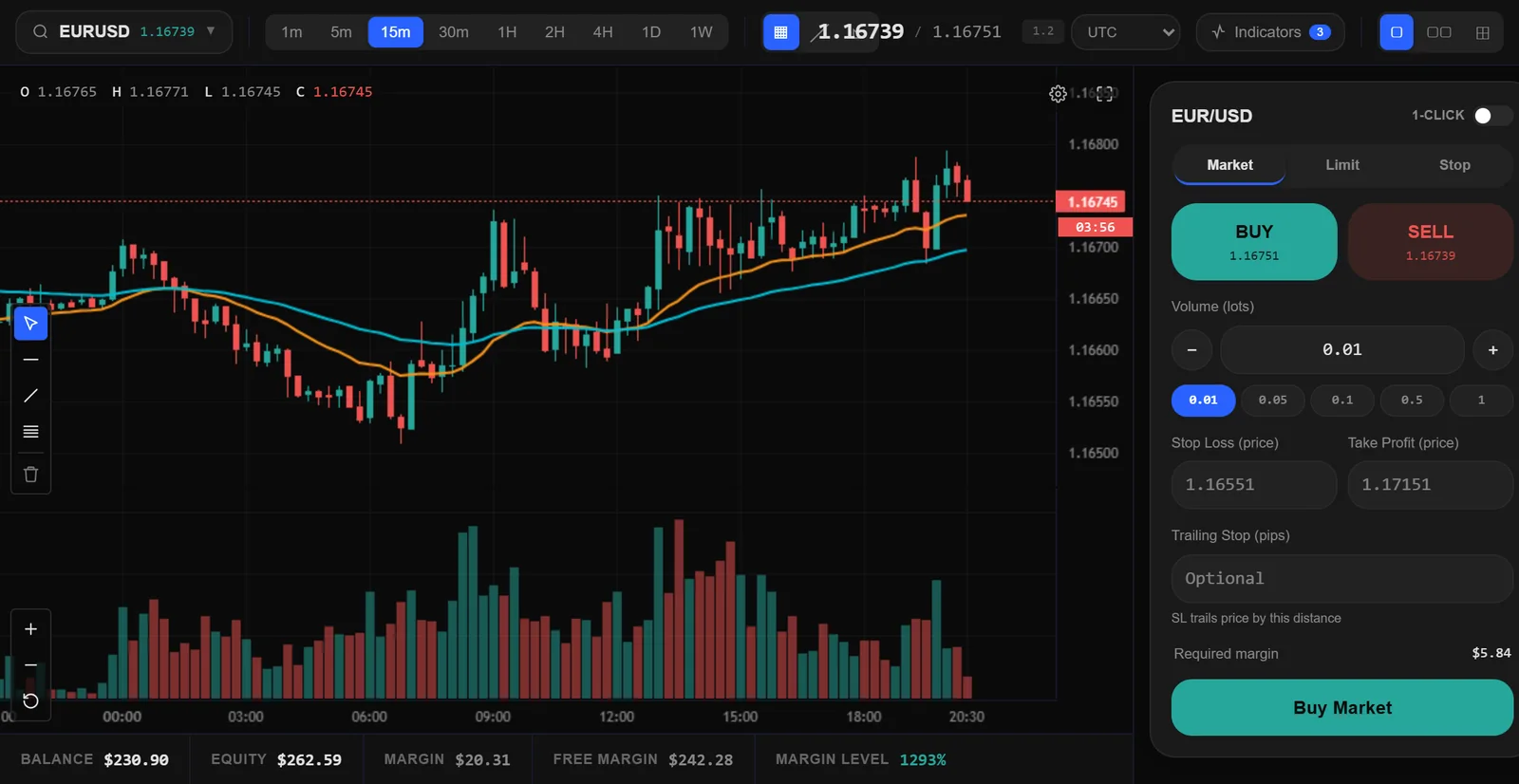
Figures and rows from this guide's own sources. Sample market data, sample clients and sample brands. "Your Brand" stands for your own name and logo.
The ten steps at a glance
Each step is explained further down the page. Steps three, four and six take the longest, so start them together rather than one after another. Whether you call it opening a forex broker company, becoming a forex broker or setting up a brokerage firm, the work is the same.
Jump to a step10
- 1. Choose your routeIntroducing broker, a partnership under another firm's licence, or your own licensed brokerage.
- 2. Define the offerMarkets, account types, leverage and the countries you will serve.
- 3. Get the licencePick a jurisdiction, form the company, put the capital in place and apply.
- 4. Open banking and paymentsA corporate bank account, a client money account and providers for cards, e-wallets and crypto.
- 5. Decide how orders are filledCarry client trades on your own book, pass them to a liquidity provider, or mix the two.
- 6. Choose the platform and CRMA client terminal, a mobile app, a staff CRM and a back office that share one set of data.
- 7. Set up complianceKYC and AML procedures, client agreements, risk disclosures and record keeping.
- 8. Hire the first teamCompliance, dealing, finance, sales, retention, support and marketing.
- 9. Plan marketing and partnersLead sources, an introducing broker programme and tracking from the first click.
- 10. Test, launch and measureRun every money path end to end, open to a small group first, then scale what works.
How to become a forex broker: what you need
Becoming a forex broker here means owning the business that offers clients forex and CFD trading, not taking a sales job at one.
Read moreShow less: How to become a forex broker: what you need
Whichever route you take in step one, the same building blocks decide whether you can open, and the steps below put each one in place in the order that saves the most time.
- A company and a licence
Yours, or a licensed partner's, matched to the countries your clients live in.
- Capital
The regulator's minimum, which stays in the company, plus several months of running costs.
- Banks and payment providers
A corporate account, a client money account and providers that will take your clients' deposits.
- A way to fill orders
Your own book, a liquidity provider, or a mix chosen client by client.
- A platform and a CRM
A branded terminal for clients and a CRM and back office for your team.
- A compliance officer and a first team
KYC and AML procedures, plus the people who sell, support and watch risk.
Step 1: Choose your route into the business
There are three common ways in, and they differ in what you own, what you answer for and how much capital you need.
Read moreShow less: Step 1: Choose your route into the business
Many founders start with the first and move to the third once they have a client base.
An introducing broker brings clients to a licensed broker and is paid a share of the spread or commission those clients generate. The partner broker holds the licence, the client accounts and the client money, so the capital and compliance burden is small, and so is your control: the product, the pricing and the client contract all belong to the partner.
A partnership under another firm's licence, often called a white label broker or a grey label, puts your brand in front of clients while a licensed firm stays the regulated party. It is faster than a licence of your own, but you work within the partner's terms, and the arrangement itself can need the regulator's approval. Ask counsel what it requires in each country you plan to serve.
Your own licensed brokerage means you hold the licence, sign the client agreements, set the pricing and keep the full revenue of the book. It takes the most capital, time and responsibility, and it is the route the rest of this guide mostly covers. The technology for it no longer has to be built: a white label trading platform gives a licensed firm its own branded terminal and CRM.
| Route | Who holds the licence | Who holds client money | What you control | Capital needed | Time to start |
|---|---|---|---|---|---|
| Introducing broker | The partner broker | The partner broker | Marketing and the client relationship | Low | Weeks |
| Partnership under another firm's licence | The partner firm | Usually the partner firm | Brand and sales, within the partner's terms | Moderate | Weeks to a few months |
| Your own licensed brokerage | You | You, under your regulator's client money rules | Pricing, products, clients and data | Highest: regulatory capital plus running costs | Months, set by licensing and payments |
Step 2: Define what you will offer, and to whom
Be specific before you speak to a lawyer or a bank.
Read moreShow less: Step 2: Define what you will offer, and to whom
Which instruments will you quote: currency pairs only, or also gold, oil, stock indices, shares and crypto as contracts for difference? What leverage, which account types, which base currencies and, above all, which client countries? Those answers decide the licence you need, the payment providers that will accept you and the market data you must license. If you add CFDs, a white label CFD platform quotes them beside your currency pairs from the first day.
Client countries matter most. Many countries restrict who may offer leveraged products to their residents, and some cap the leverage a retail client can be given. In the United Kingdom, for example, a retail client must post at least 3.33% margin to open a position on a major currency pair, which caps leverage at 30 to 1. A product designed for one market can be unsellable in the next, so write the target list down and have counsel check it.
Then decide the account structure. Most brokerages run a standard account, a pro account with tighter pricing, a cent account for small first deposits and a demo account for the top of the funnel. On a platform where account types, spreads and leverage are settings, you can change these later without a rebuild, so treat this as a starting point rather than a commitment.
Write the revenue model down at the same time. A forex broker earns from the spread, from commission per lot on some account types, from overnight swap charges on positions held past the daily rollover and, if it carries trades on its own book, from the net result of those trades. Introducing broker payouts, payment fees and bonuses come out of that revenue, and the business plan your regulator asks for will want all of it.
Step 3: Choose a jurisdiction and apply for the licence
Licensing is the longest workstream and the one technology cannot shorten.
Read moreShow less: Step 3: Choose a jurisdiction and apply for the licence
The work looks similar almost everywhere: form a company, appoint directors and officers who pass the regulator's fit and proper test, write the business plan and the compliance manuals, put the regulatory capital in place, often open a local office, then apply and answer the regulator's questions. Approval takes from a few weeks to the better part of a year, depending on the jurisdiction.
Founders compare two numbers first: capital, which must stay in the company, and regulator fees, which are spent. The table gives both for six common choices, taken from each regulator's own documents. Our full comparison of licence jurisdictions covers ten, plus what Dominica does and does not license, with the fee changes and the warnings, and there are country guides for Dubai and the UAE and Labuan in Malaysia.
Check what a jurisdiction actually licenses before you pay anyone. Some names that appear in online lists are not forex licensing regimes at all, and a licence that banks and payment providers will not accept is worth little. Ask your intended payment providers which jurisdictions they accept before you register anywhere, using the Banking Acceptance Test.
| Jurisdiction | Licence | Minimum capital | Application fee | Annual fee |
|---|---|---|---|---|
| Seychelles | Financial Services Authority, Securities Dealer licence | USD 100,000 paid-up capital, kept in a bank account at all times | USD 3,000 | USD 6,000 |
| Mauritius | Financial Services Commission, Investment Dealer (Full Service Dealer excluding Underwriting) | MUR 1,000,000 stated unimpaired capital | USD 1,000, plus USD 600 for the Global Business Licence | USD 3,400, plus USD 2,600 for the Global Business Licence |
| Labuan (Malaysia) | Labuan Financial Services Authority, money broking licence (intermediary only, no dealing as principal) | RM1,000,000 paid-up capital | USD 500 processing fee | USD 5,000 |
| Cyprus (EU) | Cyprus Securities and Exchange Commission, investment firm authorised to deal on own account | EUR 750,000 initial capital | EUR 7,000, plus EUR 500 per ancillary service | EUR 10,000 fixed, plus a turnover-based amount and EUR 3,000 for CFD services, up to EUR 150,000 |
| United Kingdom | Financial Conduct Authority, investment firm with permission to deal on own account | GBP 750,000 permanent minimum capital | Confirm with the regulator | Confirm with the regulator |
| UAE mainland | Capital Market Authority, First Category: trading broker of OTC derivatives and spot forex | AED 30 million paid-up capital | AED 5,000 | AED 300,000 |
Sources (8)
- Seychelles Official Gazette, S.I. 117 of 2024, Securities (Financial Statements) (Amendment) Regulations (31 December 2024)
- Seychelles Official Gazette, S.I. 120 of 2024, Securities (Forms and Fees) (Amendment of Second Schedule) Regulations (31 December 2024)
- FSC Mauritius, Securities (Licensing) Rules 2007, Rule 14 and Fourth Schedule (consolidated to 8 September 2020)
- FSC Mauritius, Financial Services (Consolidated Licensing and Fees) (Amendment) Rules 2026, GN No. 119 of 2026 (in operation 1 July 2026)
- Labuan FSA, Labuan Financial Services and Securities (Amendment) Regulations 2026, P.U.(A) 246/2026 (in operation 1 July 2026)
- CySEC, Prudential Supervision of Investment Firms Law 165(I)/2021, section 9 (5 November 2021, English translation)
- FCA Handbook, MIFIDPRU 4.4, Permanent minimum capital requirement (6 April 2026)
- UAE Capital Market Authority, Rulebook Section 2, Licensing of Financial Activities, Annex 1 licence categories (amended to June 2025)
Who holds whatIllustration
- Licence
- Client relationship
- Client money
- Trading accounts
Illustration and sample market data.
Step 4: Open banking and payment rails early
A brokerage needs a corporate bank account, usually a separate account for client money, and payment providers for the ways its clients actually pay: cards, e-wallets, local bank transfers and, more and more, crypto.
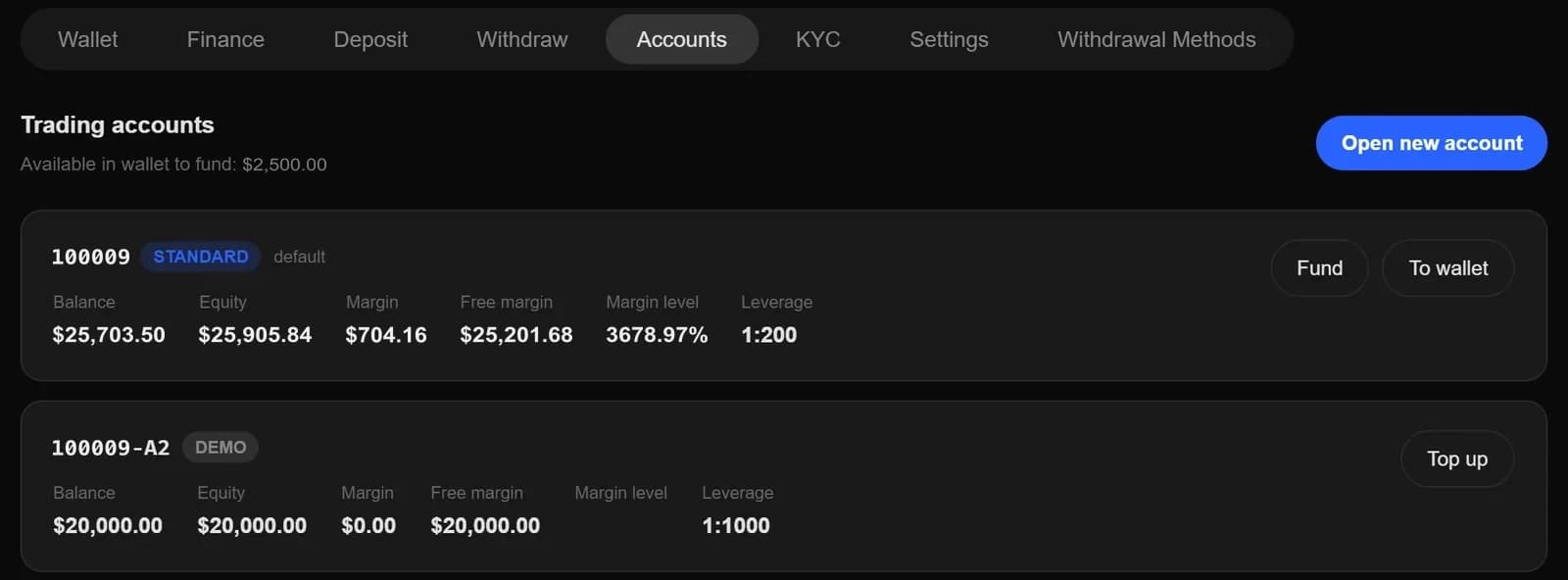
Sample data and sample clients.
Read moreShow less: Step 4: Open banking and payment rails early
Every provider underwrites you before it onboards you. It looks at your licence, your jurisdiction, your target countries and your owners, and many decline new brokerages outright.
That is why payments are usually the second longest workstream and should start at the same time as licensing. Expect providers to hold back a rolling reserve, a share of what you process kept for several months, and budget for it as money you cannot use. Crypto deposits widen your reach where card acceptance is hard, and they come with anti money laundering checks of their own.
On the platform side, you decide which money moves instantly and which waits for your team. Deposits through our online checkout credit as soon as they are paid, other methods wait for approval, withdrawals go through instantly or through an approval queue, and withdrawals stay blocked until a client has passed verification. That is how money moves in our CRM, and every approval is recorded for a regulator or a payment provider to see.
Step 5: Decide how client orders are filled
Every brokerage has to decide what happens to a client's trade once it is placed.
Read moreShow less: Step 5: Decide how client orders are filled
There are two basic answers. The firm can carry the trade on its own book as the counterparty, keeping the spread and the result of each trade and carrying the market risk. Or it can pass the trade on to a liquidity provider, earning a markup or a commission while the provider takes the market risk. Most mature brokerages mix the two by rules. Our guide to the two execution models explains how each one earns, what it costs and what it demands of you.
Your licence often decides the question for you. Dealing as principal usually needs a higher licence category and more capital than acting as an agent, which is why the EU and UK figures in the table above are the ones for dealing on own account. Some licences, the Labuan money broking licence among them, do not allow it at all.
If you pass trades on, you need an account with a liquidity provider: a bank or, far more often for a new firm, a prime of prime provider that packages bank and non-bank liquidity for smaller clients. Expect due diligence on your company and your licence, a margin deposit held with the provider and minimum volumes or fees. The software link between a trading platform and a provider is usually called a bridge. Choosing a forex liquidity provider has the questions to ask and the costs.
You also need prices. Real time market data has to be licensed for redistribution to your clients, and it is an ongoing cost that first budgets often leave out. On our platform, institutional market data is integrated out of the box, and licensed production real time data is a managed add on billed separately.
On the Pelris platform you choose, client by client, whether to keep trades in-house with your brokerage as the counterparty or cover them with your liquidity provider, and you can switch whenever you like. Bring your own provider, or we introduce you to one; the agreement is between you and the provider.
Step 6: Choose the trading platform and CRM
The technology is four products that have to work as one: a client terminal on web and mobile, a staff CRM, a back office for money and verification, and a partner system for introducing brokers.
Sample market data and sample clients.
Read moreShow less: Step 6: Choose the trading platform and CRM
Many founders assume they need MetaTrader 4 or MetaTrader 5 because their traders know it. That is one option among four, and it comes without a CRM.
| Option | What you get | What to watch | Typical time |
|---|---|---|---|
| MetaTrader 5 white label | The platform many traders already know, under a sub-licence from a provider that holds the server licence | No CRM or back office included, so you buy and integrate one; availability and terms depend on the provider | Weeks, once a provider accepts you |
| Independent platform plus a separate CRM | A terminal from one vendor and a CRM from another | Two contracts, two support desks and an integration someone has to maintain | Weeks to months |
| Turnkey broker software | Terminal, mobile app, CRM, back office and introducing broker system in one product on your brand | Who owns the data, what happens if you leave, and what is a setting rather than custom work | About a week |
| Build your own | Exactly what you specify | A multi year engineering programme and a team to keep it running for good | Years |
How to judge a platform before you sign
Put every vendor on your shortlist through the Six-Question Broker Software Test, including us.
Read moreShow less: How to judge a platform before you sign
The questions a sales deck does not answer are the useful ones: whether the database is yours alone, what is not included, what the full monthly cost is at your size, and what happens to your data when you leave. MetaTrader white labels and turnkey software are compared in detail on a page of their own.
Pelris is turnkey broker software in that sense. The branded terminal, mobile app and staff CRM run on your own domain and your own database, and the price is published at $1,250 a month flat, with no setup fee and no revenue share. Once you are happy with the demo, your branded platform is set up within a week, and one of our most recent launches went from signed terms to a branded platform ready to hand over in six days.
Step 7: Put compliance in place before the first client
Regulators license the controls as much as the company.
KYC review
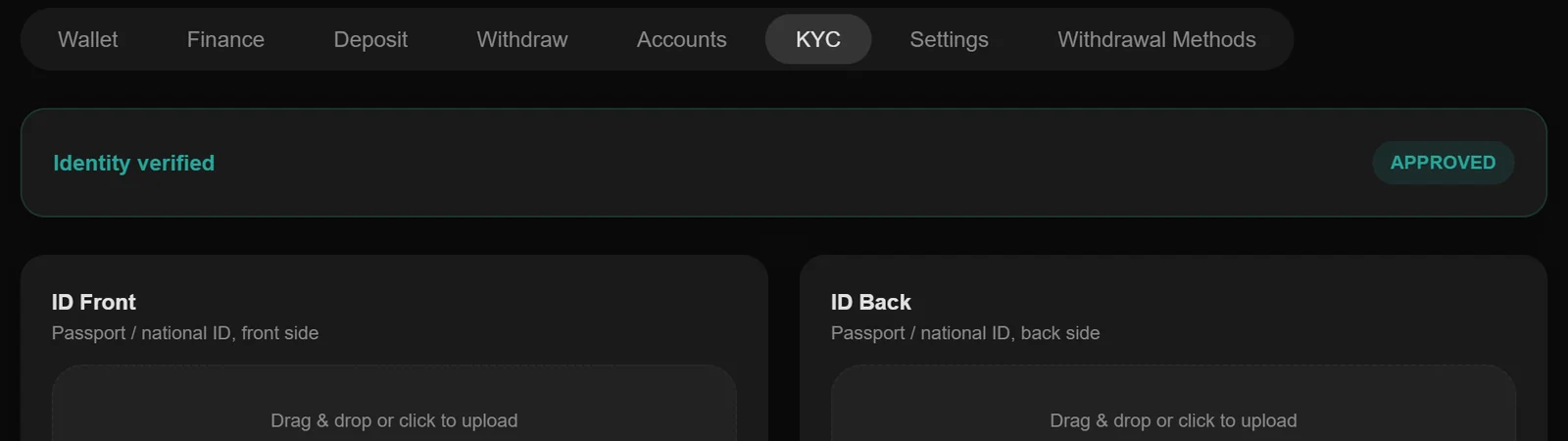
Sample data and sample clients.
Read moreShow less: Step 7: Put compliance in place before the first client
Before launch you need know your customer (KYC) and anti money laundering (AML) procedures, a named compliance officer and money laundering reporting officer, client agreements, a risk disclosure, a privacy policy, a complaints procedure, and records kept for as long as your regulator requires.
Most of that is written work with your lawyer and compliance adviser. The platform's part is to enforce it: clients upload identity documents, your team reviews them, withdrawals stay blocked until a client is verified, and every sensitive staff action is written to an audit log with who did it and when. If a regulator or a bank asks how a decision was made, the record should answer without relying on anyone's memory.
Decide early whether your team will review every document by hand or also use an identity verification service, which adds a cost per check to the budget. Either way, the decision and the reviewer belong in the client record.
Step 8: Hire the first team
A new brokerage does not need a large staff, but it needs every function covered from the first day, and regulators require some roles in most regimes.
Read moreShow less: Step 8: Hire the first team
Many small brokerages launch with fewer than ten people, sharing or outsourcing the rest.
Configure roles before the first lead arrives. On our platform admin, manager, sales manager, retention and sales roles each see only what their role allows, agents see only their own book, and a converted client moves from sales to retention automatically once verification is approved and the first deposit lands. Every call is logged against the client, so a manager can see what each agent did today without asking.
| Role | What they do | Often outsourced? |
|---|---|---|
| Compliance officer and MLRO | Own KYC and AML policy, regulator contact and suspicious activity reports | Sometimes, where the regulator allows it |
| Dealing and risk | Set spreads and leverage, watch exposure, manage the liquidity relationship | Rarely |
| Finance and payments | Approve deposits and withdrawals, reconcile provider statements, manage client money | Bookkeeping often is |
| Sales agents | Call and convert new leads, help clients open and fund accounts | Sometimes, to a call centre |
| Retention managers | Look after funded clients, encourage further deposits, reduce churn | Rarely |
| Client support | Answer account, platform and payment questions in the clients' languages | Often |
| Marketing | Run search, social, partner and event channels and track cost per funded client | Often, to an agency |
| Technology | Run the platform and its integrations | Usually, when the platform is bought rather than built |
Step 9: Plan marketing and partner channels
A brokerage is a sales business, and the cost of winning a funded client decides whether it survives.
Read moreShow less: Step 9: Plan marketing and partner channels
Plan the channels before launch: search and content, paid search and social, introducing brokers and affiliates, webinars and events, and referrals from your own clients.
Paid advertising for financial services needs approval on the major ad platforms in many countries, and that check can take weeks or be refused. Do not build a launch plan that depends on ads running on the first day.
Introducing brokers are the channel new firms most often underestimate. A local partner with a following can bring funded clients faster than any campaign, paid per lot or by a share of revenue. A multi-level IB module records who referred whom and what each partner has earned, so commissions are calculated rather than argued about.
Track every lead's source and campaign from the first click. Within a quarter you will know which channels produce funded clients rather than sign-ups, and you can move budget to them. Once clients are trading, copy trading and PAMM accounts give them reasons to stay.
Step 10: Test, launch and measure the first 90 days
Before the first real client, run every money path end to end with test accounts: a deposit by each method, a transfer into a trading account, a trade that hits its stop loss, a margin call and a stop out, and a withdrawal back out.
Read moreShow less: Step 10: Test, launch and measure the first 90 days
Check every email a client receives, every instrument's contract size and trading hours, and what each staff role can see.
Then open to a small group, often existing contacts and introducing broker partners, before switching on paid channels. A problem found with twenty clients is cheap to fix; the same problem with two thousand is not.
From the first week, watch a short list of numbers: leads by source, the share of leads that make a first deposit, the cost of each funded client, the average deposit, withdrawals against deposits, and how many clients are still trading after 30 and 90 days.
How long it takes to start a forex brokerage
The workstreams run at different speeds, so the order you start them in matters more than how hard you push any one of them.
Read moreShow less: How long it takes to start a forex brokerage
Licensing and payments set the launch date. The technology should be ready and waiting for them, not the other way round.
| Workstream | Typical duration | When to start |
|---|---|---|
| Company formation | Days to a few weeks | First |
| Licence application and approval | A few weeks to the better part of a year, by jurisdiction | First |
| Bank account and payment providers | Weeks to several months | With the licence application |
| Liquidity provider onboarding, if you pass trades on | Weeks, after the provider's due diligence | Once the licence is in sight |
| Trading platform and CRM | About a week once you are happy with the demo | Any time; it is not on the critical path |
| Hiring and training | Weeks | Alongside payments |
| Testing and a soft launch | A few weeks | Once payments work end to end |
How much it costs to start a forex brokerage
There is no honest single figure, because the jurisdiction, the route and the team move the total by an order of magnitude.
Read moreShow less: How much it costs to start a forex brokerage
What can be stated precisely is what the main lines are, and what the published figures for some of them are. Our cost breakdown goes line by line, with published software prices for comparison.
Plan to fund more than the licence asks for. Regulatory capital is a floor, payment providers hold reserves back, and most new brokerages take several months to cover their running costs, so budget those months in cash before you launch.
- Regulatory capital
From MUR 1,000,000 in Mauritius and USD 100,000 in Seychelles to EUR 750,000 in Cyprus for dealing on own account. It stays in the company and cannot be spent.
- Licence and company fees
Regulator fees offshore run to a few thousand US dollars a year. Legal work, a registered agent, local directors and an office usually cost more.
- Technology
Platform, mobile app and CRM. Ours is $1,250 a month flat with no setup fee and no revenue share.
- Market data
Licensed real time data for your clients is a monthly cost that grows with the instruments you quote.
- Payments
Processing fees, rolling reserves held back by providers, and the months it takes to be approved.
- People and marketing
Usually the largest running costs after launch, and the ones that decide how fast you grow.
Mistakes that sink new brokerages
Most failed launches do not fail on the licence.
Read moreShow less: Mistakes that sink new brokerages
They fail on one of the six mistakes below, and every one of them is avoidable with the order of work this guide sets out.
- Choosing the jurisdiction before the payment providers
A licence that no provider will process for is a licence you cannot trade under.
- Capitalising to the minimum
A losing month, a rolling reserve and a slow first quarter all need money on top of the regulatory floor.
- Building the technology
It turns a one week task into a multi year one and puts engineering on the critical path.
- Carrying risk with nobody watching it
If you fill orders on your own book, watching that book has to be somebody's job.
- Buying leads without tracking them
Without source tracking you cannot tell the channel that brings funded clients from the one that brings sign-ups.
- Promising what the platform cannot do
Check every feature you plan to advertise against what your software does today, and get it in writing from the vendor.
On your platform
How the platform fits this route
One deployment on your brand, domain and database: the terminal your clients trade on, and the CRM your team runs.
Deposits
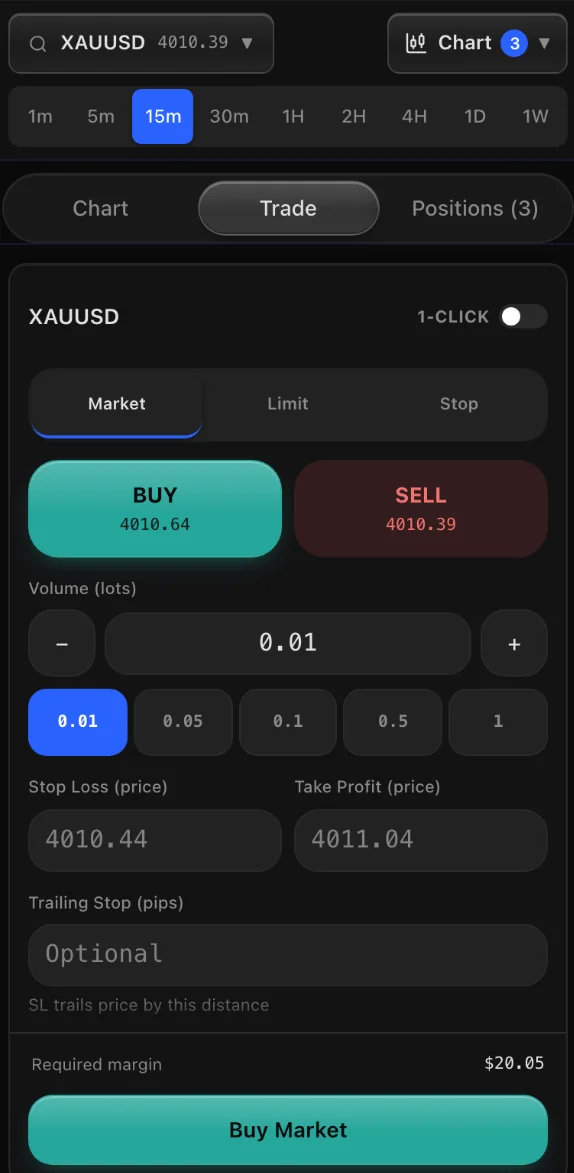
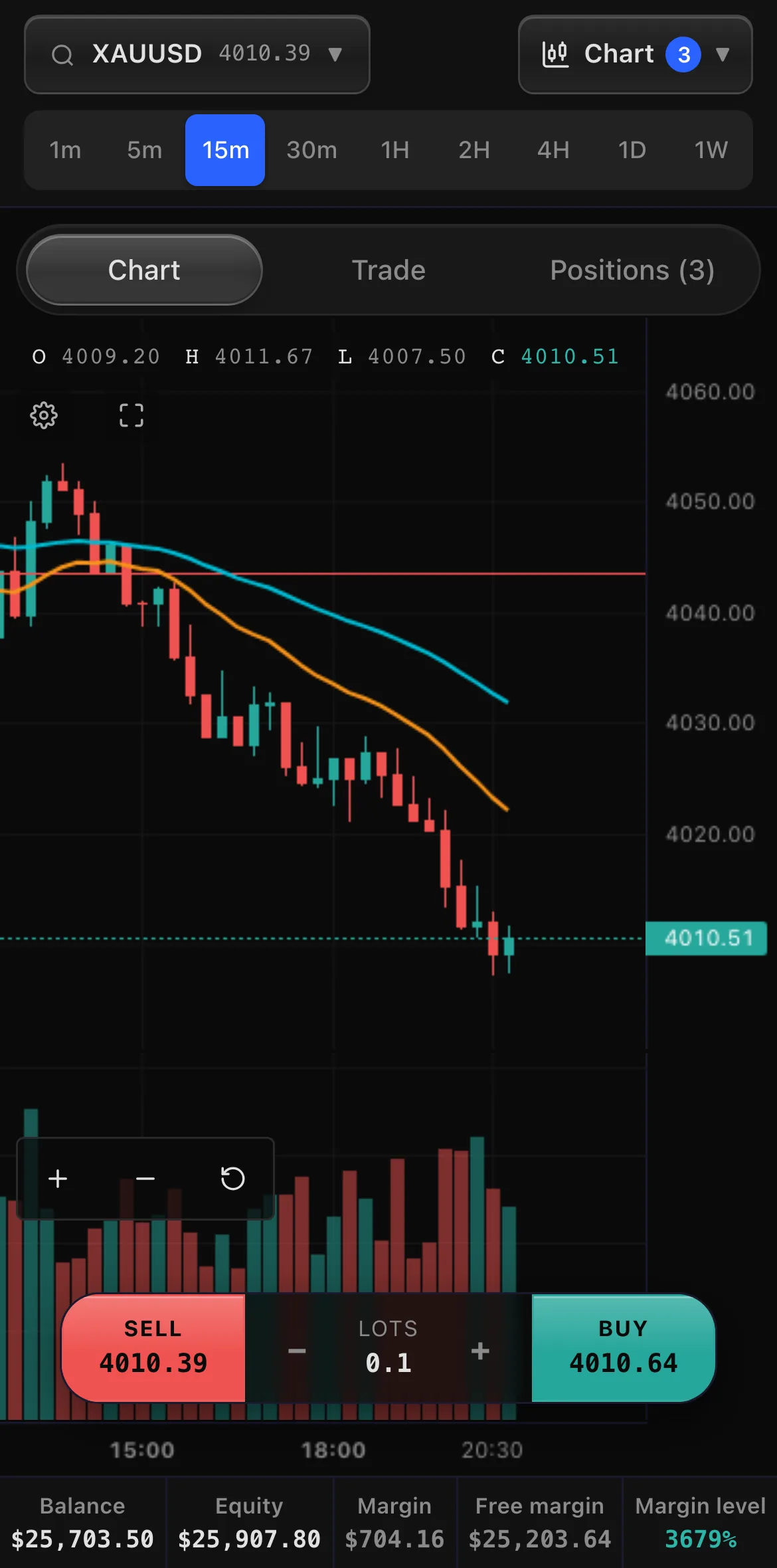
Sample market data and sample clients. "Your Brand" stands for your own name and logo.
Common questions
Anything else? Our team answers 24/7.
How much does it cost to start a forex brokerage?
It depends mostly on the jurisdiction and on whether you deal with clients as principal. Regulatory capital alone ranges from MUR 1,000,000 in Mauritius and USD 100,000 in Seychelles to EUR 750,000 in Cyprus for a firm dealing on its own account. On top come regulator and legal fees, payments, market data, staff and marketing, plus several months of running costs. The software is one of the smaller lines: ours is $1,250 a month flat.
How long does it take to start a forex brokerage?
Licensing and payment provider onboarding usually take several months and set the launch date. Once you are happy with the demo, your branded platform is set up within a week, so the technology should never be what you are waiting for.
How do I become a forex broker?
Choose your route first: an introducing broker who refers clients to a licensed firm, a partnership under another firm's licence, or your own licensed brokerage. Your own brokerage needs a company with the right licence, regulatory capital, a bank and payment providers, a way to fill orders, a trading platform with a CRM, and a compliance officer and first team. Licensing and payments take months; the platform can be ready in about a week.
Can I start a forex brokerage without a licence?
You can start as an introducing broker, referring clients to a licensed broker for a share of the revenue, or work under a partner firm's licence. Even those routes can need a registration, depending on where you operate and where your clients live. Running your own brokerage, holding client money and dealing with clients, needs a licence. Take legal advice for each country you plan to serve.
How do forex brokers make money?
From the spread between the buy and sell price, commission per lot on some account types, overnight swap charges on positions held past the daily rollover and, for a broker that carries trades on its own book, the net result of those trades. Introducing broker payouts, payment fees and bonuses are paid out of that revenue.
Do I need a liquidity provider to start a forex brokerage?
Only if you want to pass client trades on rather than carry them yourself. A firm that fills orders in-house is the counterparty and does not need a provider for execution, but it carries the market risk and usually needs a licence that permits dealing as principal. Many brokerages add a liquidity provider as they grow.
Which country is best for a forex broker licence?
There is no single best one. The right choice balances capital, time, running cost and how banks and payment providers in your target markets view the jurisdiction. Ask your intended payment providers which jurisdictions they accept before you choose, then take specialist legal advice.
Do I need MetaTrader to start a forex brokerage?
No. MetaTrader is one option, usually taken as a white label from a provider, and it comes without a CRM or back office. Turnkey broker software gives you the terminal, mobile app and CRM as one product on your own brand.
Do you provide regulatory or legal advice?
No. We build brokerage software. Licensing and compliance should be handled with specialist advisers in your chosen jurisdiction.
Get the technology out of the critical path
Book a demo and we will show you what your brokerage would look like on day one, on your own brand.