Jurisdictions
Offshore forex broker license jurisdictions, compared
Most new brokerages do not start under a tier one regulator. The cost and capital requirements of the European regimes put them out of reach for a first venture, so founders look at offshore jurisdictions instead. This page sets out how those options are usually compared and what the choice does and does not change about the business you are building.
Minimum capital, jurisdiction by jurisdictionFrom this guide
- SeychellesUSD 100,000 paid-up capital
- MauritiusMUR 1,000,000 stated unimpaired capital
- Labuan (Malaysia)RM1,000,000 paid-up capital
- Cyprus (EU)EUR 750,000 initial capital
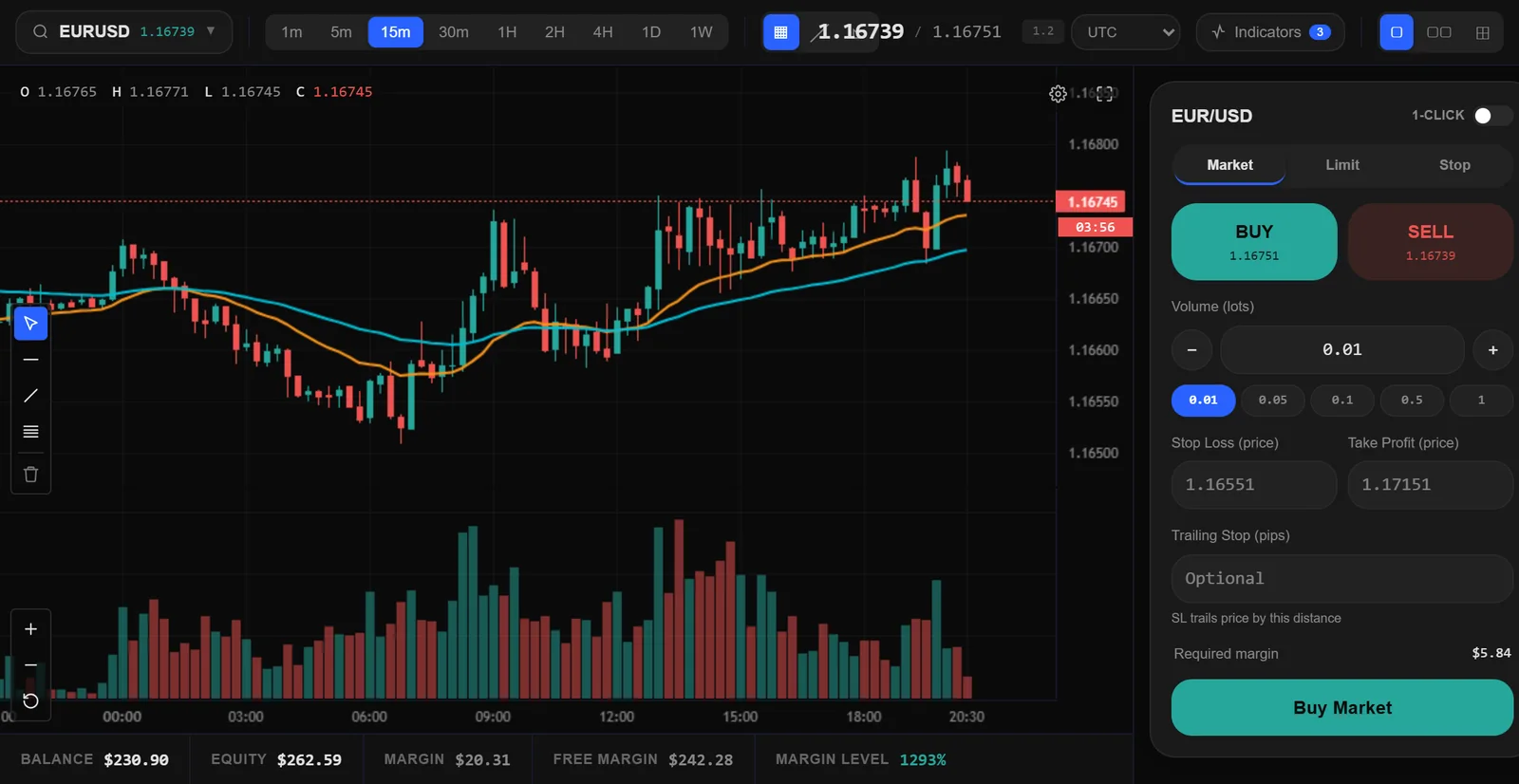
Figures and rows from this guide's own sources. Sample market data, sample clients and sample brands. "Your Brand" stands for your own name and logo.
What founders are trading off
Every one of these decisions comes down to the same three variables in different proportions: how much it costs to obtain and maintain, how long it takes, and how much credibility it carries with the banks, payment providers and liquidity partners you will need afterwards.
First time founders tend to underweight the third. A licence is also a signal: payment providers and liquidity desks make their own judgements about jurisdictions, and the cheapest option can quietly cost you more in refused banking relationships than it saved in fees.
Requirements and fees in every jurisdiction below change, sometimes substantially and at short notice. Treat what you read anywhere online, including here, as a starting point to check with a specialist adviser.
Read moreShow less: What founders are trading off
- Cost to obtain and maintain
The application fee is rarely the main cost. Capital requirements, local directors, audits and annual renewals are the ongoing cost.
- Time to approval
Ranges from weeks to the better part of a year. This usually sets your launch date.
- How it is perceived
Banking and payment partners treat jurisdictions very differently. Ask your intended providers what they accept before you register anywhere.
- Substance requirements
Some regimes expect a local office, local directors and ongoing reporting. Budget for operating there as well as registering.
On your platform
What every plan runs on
One deployment on your brand, domain and database: the terminal your clients trade on, and the CRM your team runs.
Deposits
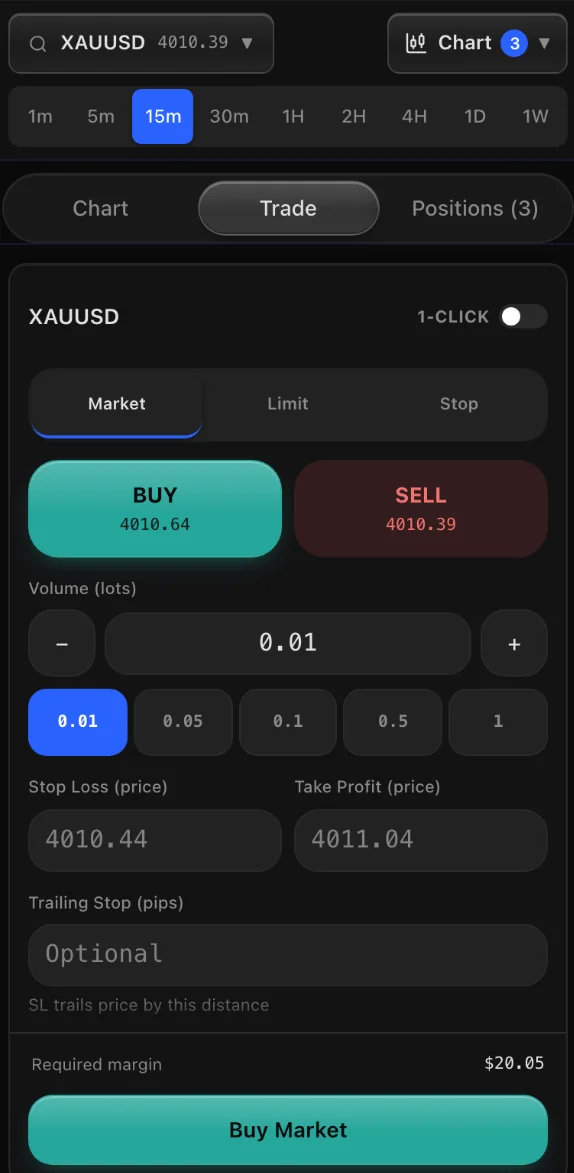
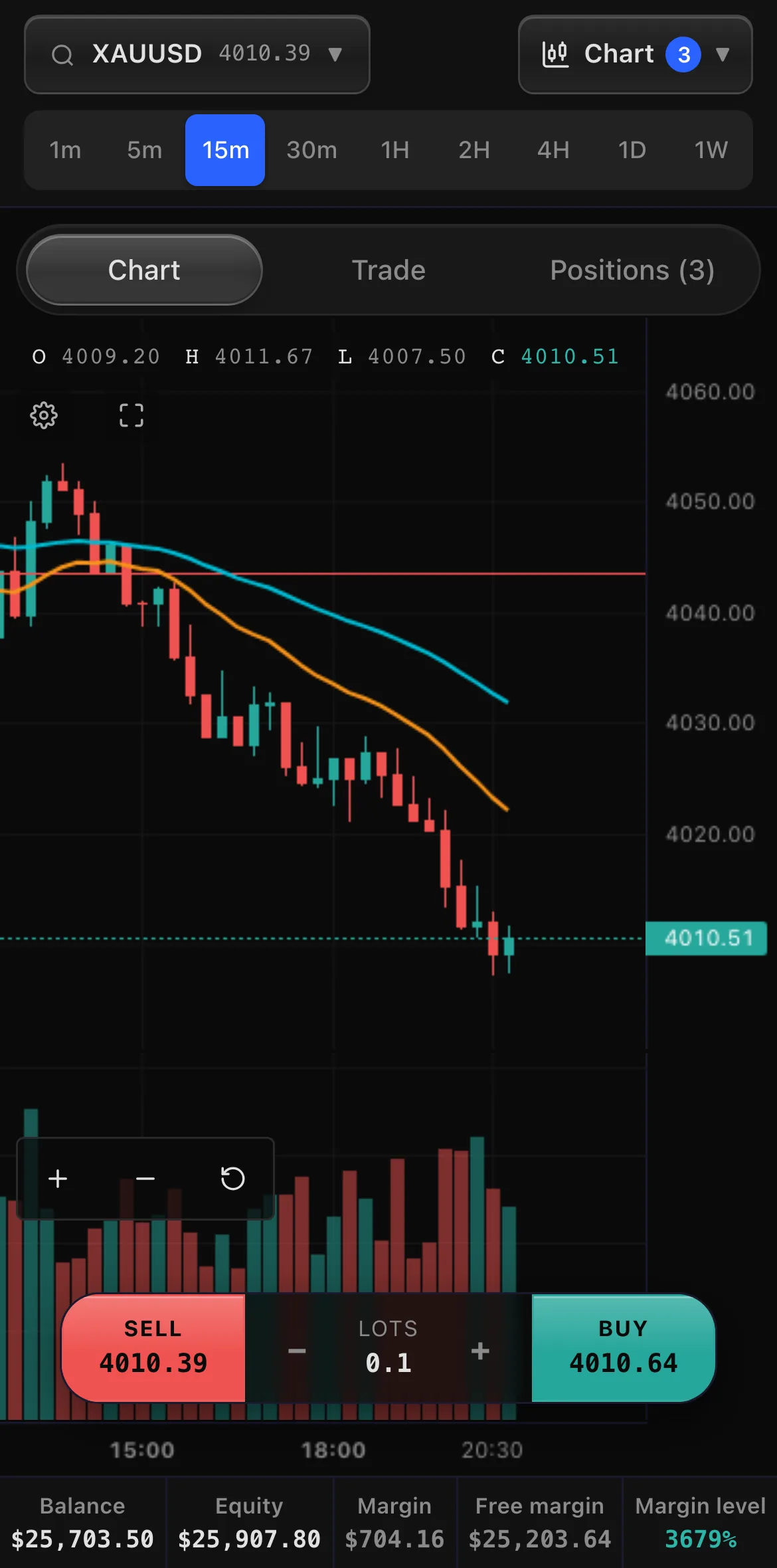
Sample market data and sample clients. "Your Brand" stands for your own name and logo.
Licence capital and regulator fees, jurisdiction by jurisdiction
The table covers the two numbers founders ask about first: the capital a licensed firm must hold, and what the regulator charges to apply and to renew.
Read moreShow less: Licence capital and regulator fees, jurisdiction by jurisdiction
Fees are spent. Capital stays in the company, and in several of these jurisdictions it must sit in a bank account, or with the regulator, for as long as the licence is held. Neither is the whole budget: formation, a registered agent, an office, resident directors, staff, audit and legal fees come on top, as our breakdown of where the money goes shows. The page covering the three UAE regulators adds their agent and matched principal categories.
Older articles often quote EUR 125,000 or EUR 730,000 for a European licence. Neither figure appears in the current capital rules for investment firms. In the EU, Article 9 of the Investment Firms Directive sets initial capital at EUR 75,000, EUR 150,000 or EUR 750,000 depending on what the firm is authorised to do, and Cyprus applies the same three levels. The UK's MIFIDPRU rules use the same amounts in pounds. The lowest level is only for a firm that does not hold client money. The 750,000 level applies to a firm authorised to deal on its own account, which MiFID II defines as trading against its own capital. It is only a floor: own funds must be at least the highest of that floor, a fixed overheads requirement of a quarter of the previous year's fixed overheads and, where it applies, a K-factor requirement. Which permission your business needs is a question for your adviser.
| Jurisdiction | Regulator and licence | Minimum capital | Application fee | Annual fee |
|---|---|---|---|---|
| Mauritius | Financial Services Commission, Investment Dealer (Full Service Dealer excluding Underwriting) | MUR 1,000,000 stated unimpaired capital | USD 1,000 for a global business company, plus USD 600 for its Global Business Licence (from 1 July 2026; was USD 750 and USD 500) | USD 3,400, plus USD 2,600 for the Global Business Licence (from 1 July 2026; was USD 2,500 and USD 1,950) |
| Seychelles | Financial Services Authority, Securities Dealer licence | USD 100,000 paid-up capital, kept in a bank account at all times (raised from USD 50,000 on 1 January 2025) | USD 3,000 | USD 6,000 |
| Vanuatu | Vanuatu Financial Services Commission, Principal's Licence: Class A for forex, Class C for derivatives, which is issued only to holders of Classes A and B | No capital figure in the Act; a VT 5,000,000 deposit must stay with the Commissioner | VT 50,000 per class applied for, plus VT 100,000 per class on grant | VT 500,000 on renewal (since 4 December 2024); confirm with the regulator whether it applies per class |
| Belize | Financial Services Commission, licence for trading in commodity-based and other financial instruments. CFDs count as securities and need registration under the Securities Industry Act instead, and leveraged forex that is settled in cash may too, so confirm with the regulator which one your business needs | USD 500,000 paid-up capital for this licence, normally deposited at a bank before it is issued. Confirm the Securities Industry Act figure with the regulator | USD 1,000, non-refundable | USD 25,000 |
| Dominica | No forex or CFD dealing licence found. The Financial Services Unit does not supervise securities business, and the Eastern Caribbean Securities Regulatory Commission licenses broker-dealers in securities, a term its Act defines without forex or CFDs | No forex figure published. An Eastern Caribbean broker-dealer needs EC$1,000,000 paid-up capital | Broker-dealer: EC$1,000, non-refundable | Broker-dealer: EC$3,000 licence fee, then EC$2,000 each year to renew on 1 April |
| Labuan (Malaysia) | Labuan Financial Services Authority, money broking licence (intermediary only, no dealing as principal) | RM1,000,000 paid-up capital, or RM1,500,000 with digital assets | USD 500 processing fee (from 1 July 2026) | USD 5,000, or USD 10,000 with digital assets (from 1 July 2026; was USD 1,500) |
| Cyprus (EU) | Cyprus Securities and Exchange Commission, investment firm authorised to deal on own account | EUR 750,000 initial capital | EUR 7,000, plus EUR 500 per ancillary service | EUR 10,000 fixed, plus a turnover-based amount and EUR 3,000 for CFD services, up to EUR 150,000 |
| United Kingdom | Financial Conduct Authority, investment firm with permission to deal on own account | GBP 750,000 permanent minimum capital | Confirm with the regulator | Confirm with the regulator |
| UAE mainland | Capital Market Authority, First Category: trading broker of OTC derivatives, OTC commodities contracts and spot forex | AED 30 million paid-up capital | AED 5,000 | AED 300,000 licence fee, then AED 300,000 each year to renew |
| Dubai (DIFC) | Dubai Financial Services Authority, Category 2: dealing in investments as principal | Base capital from USD 2 million, or USD 500,000 when dealing only as matched principal | Confirm with the regulator | Confirm with the regulator |
| Abu Dhabi (ADGM) | Financial Services Regulatory Authority, Category 2: dealing in investments as principal | Base capital from USD 2 million | Confirm with the regulator | Confirm with the regulator |
Sources (27)
- FSC Mauritius, Securities (Licensing) Rules 2007, Rule 14 and Fourth Schedule (consolidated to 8 September 2020)
- FSC Mauritius, Financial Services (Consolidated Licensing and Fees) (Amendment) Rules 2026, GN No. 119 of 2026 (in operation 1 July 2026)
- Seychelles Official Gazette, S.I. 117 of 2024, Securities (Financial Statements) (Amendment) Regulations (31 December 2024)
- Seychelles Official Gazette, S.I. 120 of 2024, Securities (Forms and Fees) (Amendment of Second Schedule) Regulations (31 December 2024)
- FSA Seychelles, Circular No. 1 of 2025 on the Securities (Amendment) Act 2024 (13 January 2025)
- VFSC, Financial Dealers Licensing Act [CAP 70], Consolidated Edition 2026 (16 April 2026)
- VFSC, Financial Dealers Licensing (Amendment) Act No. 5 of 2024 (in force 4 December 2024)
- VFSC, public notice on the Financial Dealers Licensing (Amendment) Act No. 5 of 2024 (24 January 2025)
- VFSC, Guidelines on Application for a financial dealer's licence (2021 edition)
- Belize FSC, S.I. No. 129 of 2023, Capital Requirement Regulations (18 November 2023)
- Belize FSC, S.I. No. 120 of 2023, Licensing Regulations (4 November 2023)
- Belize FSC, Securities Industry Act, Act No. 46 of 2021 (30 November 2021)
- Labuan FSA, Guidelines on the Establishment of Money Broking Business in Labuan IBFC (9 September 2024)
- Labuan FSA, Labuan Financial Services and Securities (Amendment) Regulations 2026, P.U.(A) 246/2026 (in operation 1 July 2026)
- Labuan FSA, Processing and Approval Fees (Labuan Financial Institutions) (Amendment) Order 2026, P.U.(A) 247/2026 (in operation 1 July 2026)
- EUR-Lex, Directive (EU) 2019/2034 on the prudential supervision of investment firms, Article 9 (27 November 2019)
- EUR-Lex, Regulation (EU) 2019/2033 on the prudential requirements of investment firms, Articles 11 to 14 (27 November 2019)
- EUR-Lex, Directive 2014/65/EU (MiFID II), Article 4(1)(6) and Annex I (15 May 2014)
- CySEC, Prudential Supervision of Investment Firms Law 165(I)/2021, section 9 (5 November 2021, English translation)
- CySEC, Directive DI87-03 on fees, consolidated to R.A.D. 298/2025 (17 October 2025, in Greek)
- FCA Handbook, MIFIDPRU 4.4, Permanent minimum capital requirement (6 April 2026)
- FCA Handbook, MIFIDPRU 4.3, Own funds requirements (1 December 2021)
- UAE Capital Market Authority, Rulebook Section 2, Licensing of Financial Activities, Annex 1 licence categories (amended to June 2025)
- UAE Capital Market Authority, Schedule of Technical Services Fees under Decision 32 of 2018 (amended 23 July 2026)
- DFSA Rulebook, PIB Rule 3.6.2, Base Capital Requirement (version in force from 1 July 2025)
- ADGM FSRA Rulebook, PRU Rule 3.3.2, Base Capital Requirement (version of 19 August 2025)
- ECSRC, Requirements for Broker Dealer Licence (checked 13 October 2026)
The jurisdictions that come up most
Founders in South Asia, Southeast Asia and the Gulf tend to compare the same shortlist.
Read moreShow less: The jurisdictions that come up most
Mauritius and Seychelles are the ones most often described as balancing cost against credibility, and both carry reporting obligations. Vanuatu and Belize appear regularly on the same shortlists.
Two names that still appear on many offshore lists need a warning. The Financial Services Authority of Saint Vincent and the Grenadines states that it does not issue licences for forex trading or brokerage, so registering a company there does not give it a forex licence. The Authority says such a company must be licensed in the countries where its clients are. In the Comoros, the central bank has named the Mwali International Services Authority and the Anjouan Offshore Finance Authority among fictitious structures that claim to grant licences they have no power to grant.
Labuan sits slightly apart. As a Malaysian federal territory with its own regime, it is often the first stop for founders in Southeast Asia. Its money broking licence is narrower than it sounds: the broker may only arrange trades as an intermediary, and the licence is aimed at institutional and wealthy clients, with retail clients expected to stay under half of the client base. There is a fuller explanation on our Labuan money broking page.
None of these is universally right. The correct answer depends on where your clients are, which payment providers you intend to use and how much you can afford to maintain year after year. An offshore licence covers only what its own regulator permits. It does not make it lawful to take on clients in a country whose rules restrict them. Seychelles, for example, requires a licensee to tell the regulator every country where it offers, or plans to offer, services, and to give assurance that those countries allow their residents to deal with it. This page is general information, not legal advice.
Sources (3)
- Financial Services Authority of Saint Vincent and the Grenadines, warning notice (February 2026)
- Banque Centrale des Comores, communique on illegal offshore banking activity (15 June 2022, in French)
- Labuan FSA, Guidelines on the Establishment of Money Broking Business in Labuan IBFC (9 September 2024)
Is there a Dominica forex license?
Dominica comes up often in searches for a quick forex license, so it is worth being plain about what its laws say.
Read moreShow less: Is there a Dominica forex license?
We could not find a licence for dealing in forex or CFDs with clients in any law, fee schedule or licence requirement that Dominica's regulators publish.
The Financial Services Unit Act 2008 makes it an offence to carry on a financial services business in Dominica without a licence, and its third schedule counts trading in foreign exchange and in derivatives, for the firm or for its customers, as a financial services business. A licence under that Act, though, is one granted under the laws listed in its first schedule: offshore banking, exempt insurance, international trusts, international business companies, credit unions, building societies and the development bank. None of them is a forex or CFD dealing licence, and the Unit's published fee schedule covers credit unions, insurance, money services, offshore banks and virtual asset businesses, with no forex dealer category.
The Unit says it supervises every financial institution in Dominica except commercial banks and securities business. Securities business there is licensed by the Eastern Caribbean Securities Regulatory Commission under the Securities Act 2001 that the Eastern Caribbean states share. Its broker-dealer licence needs EC$1,000,000 of paid-up capital and two staff licensed by the Commission, but the Act defines securities as shares, bonds, rights, options on securities, fund units and anything later prescribed, and does not mention forex or CFDs. Ask the Commission in writing before assuming that licence covers a forex brokerage.
The offers sold online as a Dominica forex license that we looked at were an international business company, or a sub-licence issued by a private company that calls itself a master licence holder. Registering a company is not a licence to deal with clients, and we found no master licence or sub-licence in the Financial Services Unit Act or its fee schedule. The Unit states that entities not listed on its website are not authorised to do business in Dominica, so look up any provider's name there before you pay. This is general information, not legal advice.
Sources (5)
- Commonwealth of Dominica, Financial Services Unit Act, Act No. 18 of 2008, section 11 and Schedules I and III
- Financial Services Unit of Dominica, home page: what the Unit supervises, and the notice on unlisted entities (checked 13 October 2026)
- Financial Services Unit of Dominica, FSU Fees (checked 13 October 2026)
- ECSRC, Requirements for Broker Dealer Licence (checked 13 October 2026)
- ECSRC, Securities Act 2001 (uniform Eastern Caribbean text), section 2, meaning of securities
What the choice does not change
The licence determines your obligations, your reporting, your capital and what you may permit clients to do.
Who holds whatIllustration
- Licence
- Client relationship
- Client money
- Trading accounts
Illustration and sample market data.
Read moreShow less: What the choice does not change
For most licences it does not change your technology. The exception is a licence that does not let you keep client trades on your own book, such as Labuan money broking or a matched principal permission in Dubai or Abu Dhabi: on our platform the brokerage is the counterparty to each client trade, even when it covers the trade with a liquidity provider, so it does not yet suit those licences.
The platform is the same wherever you are registered. Instruments, leverage limits, account types, document requirements and the wording clients see are settings, and the platform is built for a brokerage that fills client orders itself.
So run these tasks in parallel. Licensing runs for months and the technology for weeks. Waiting for the first before starting the second adds weeks to your launch for nothing.
What you have to build regardless
Whichever jurisdiction you land on, on the day the licence is granted you still need a trading terminal your clients will use, a CRM your staff can run, deposits and withdrawals that run instantly or through approval queues, identity verification, an introducing broker structure with commission reporting, and an audit trail over every sensitive action.
One sample platform switching between made-up brands: the name, logo, colour, typeface and web address change on the terminal and the phone sign-in.
Sample brands, made up for this page.
Sample data and sample clients.
Read moreShow less: What you have to build regardless
All of that runs on your own brand, your own domain and your own database, on a deployment separate from every other broker. Your clients and staff never see a vendor name, and no tenant table is shared.
Common questions
Anything else? Our team answers 24/7.
Which jurisdiction do you recommend?
We do not make that recommendation. We build brokerage software and are not licensing advisers, and the right answer depends on your clients, your capital and your payment providers. Speak to a specialist adviser, and be wary of any software vendor who answers this for you.
Do you help with the licence application?
No. Licensing and company formation should be handled by specialists in the jurisdiction you choose. We are happy to work alongside whoever you appoint.
What does a Mauritius forex license cost?
A Mauritius forex license is the Financial Services Commission's Investment Dealer licence (Full Service Dealer excluding Underwriting). It needs MUR 1,000,000 of stated unimpaired capital. From 1 July 2026 the application fee is USD 1,000 for a global business company plus USD 600 for its Global Business Licence, and the annual fees are USD 3,400 plus USD 2,600. Formation, a registered agent, audit and legal fees come on top.
Is a Labuan forex license a dealing licence?
No. The Labuan forex license on offer is the Labuan FSA's money broking licence, which only lets the holder arrange trades as an intermediary, mainly for institutional and high net worth clients. It needs RM1,000,000 of paid up capital, a USD 500 processing fee and a USD 5,000 annual fee from 1 July 2026. Our Malaysia page covers Labuan money broking in detail.
Can I get a forex license in Dominica?
We could not find one. Dominica's Financial Services Unit publishes no forex or CFD dealing licence, and the Eastern Caribbean Securities Regulatory Commission, which licenses securities business there, defines securities without forex or CFDs. An international business company or a private sub-licence is not a regulator's licence. Ask the regulators directly and take legal advice before paying for one.
Does the platform work differently under different regimes?
The software is the same. Instruments, leverage, account types and document requirements are configuration, so the platform is adjusted to the rules you operate under, with no rebuild. The one limit is a licence that only allows you to act as an intermediary, such as Labuan money broking: on our platform the brokerage is the counterparty to each client trade, even when it covers it with a liquidity provider.
Can we change jurisdiction later?
Firms do restructure, though it is disruptive and expensive. Your data and configuration move with you, because each broker has its own deployment and database.
How long does the technology take?
Once you are happy with the demo, your branded platform is set up within a week; the most recent launch took six days. Licensing and payment provider onboarding take far longer and set the launch date, which is why it pays to see the demo early.
Plan the platform alongside the licence
Book a demo and compare what your brokerage would look like from day one, whichever jurisdiction you land on.