The payment question comes up too late
A clean corporate structure and a polished platform still leave a brokerage dead in the water if no payment provider will process for a business of its shape, in its jurisdiction, for its target clients. Providers have risk appetites, and many decline a new brokerage in a sensitive category.
Founders tend to discover this after they have registered a company and signed for software, which is the most expensive possible order to learn it in. The fix is to flip the order. Before committing to a jurisdiction, ask the intended payment providers what they will and will not accept, and treat that answer as a constraint on everything upstream, including where to incorporate.
What a forex payment gateway does, and where it fits
A forex payment gateway is a payment provider that specialises in brokerages. It takes client deposits by card, e-wallet, local bank transfer or crypto, and many also pay withdrawals back out. Because it knows the business, it is usually more willing to onboard a new brokerage than a mainstream processor, but it still underwrites you, and its answer depends on your licence, your jurisdiction and the countries your clients live in.
Most brokerages end up with more than one: a card acquirer that accepts brokerages, a crypto gateway for regions where cards are hard, and local payment methods in their main markets. Ask each one how it confirms a payment and how fast, because that decides when a client sees the money. On Pelris, deposits through the online checkout credit the client's wallet as soon as they are paid, and other methods wait for your team's approval. Whichever gateways you shortlist, put every one through the test below before you register a company anywhere.
The Banking Acceptance Test
Here are the questions to ask. We publish this as the Banking Acceptance Test: put every question to every payment provider you intend to use, in writing, before you register anywhere, and treat any unanswered question as a no.
One. Will you onboard a brokerage registered in the jurisdiction I am considering, serving international retail clients? Two. Which client countries can you accept payments from, and which are excluded? Three. What is the settlement currency, the settlement schedule, and the rolling reserve percentage you will hold? Four. What are the transaction fees, the chargeback fees, and the chargeback ratio at which you terminate the account? Five. What documentation do you require from a newly licensed brokerage with no processing history? Six. Do you support payouts for client withdrawals, or collections only? Seven. If you offboard us, what happens to funds in settlement and in reserve, and on what timeline?
The answers, run past your lawyer, decide the jurisdiction question better than any incorporation brochure. If every serious provider says no to question one, the jurisdiction will not work, whatever its licensing pitch says.
Two things first-time founders underestimate
The technology is the fast part. A branded terminal, a CRM and an introducing broker system can be set up within a week. If a vendor is quoting many months to stand up software, it is worth asking why. The slow work is legal structuring and payment onboarding, and both begin before any software does.
And the regulatory homework is done country by country. The rules for retail forex differ sharply across neighbouring markets, and assuming they are the same is how founders end up building something they cannot run. A local lawyer comes before anything else.
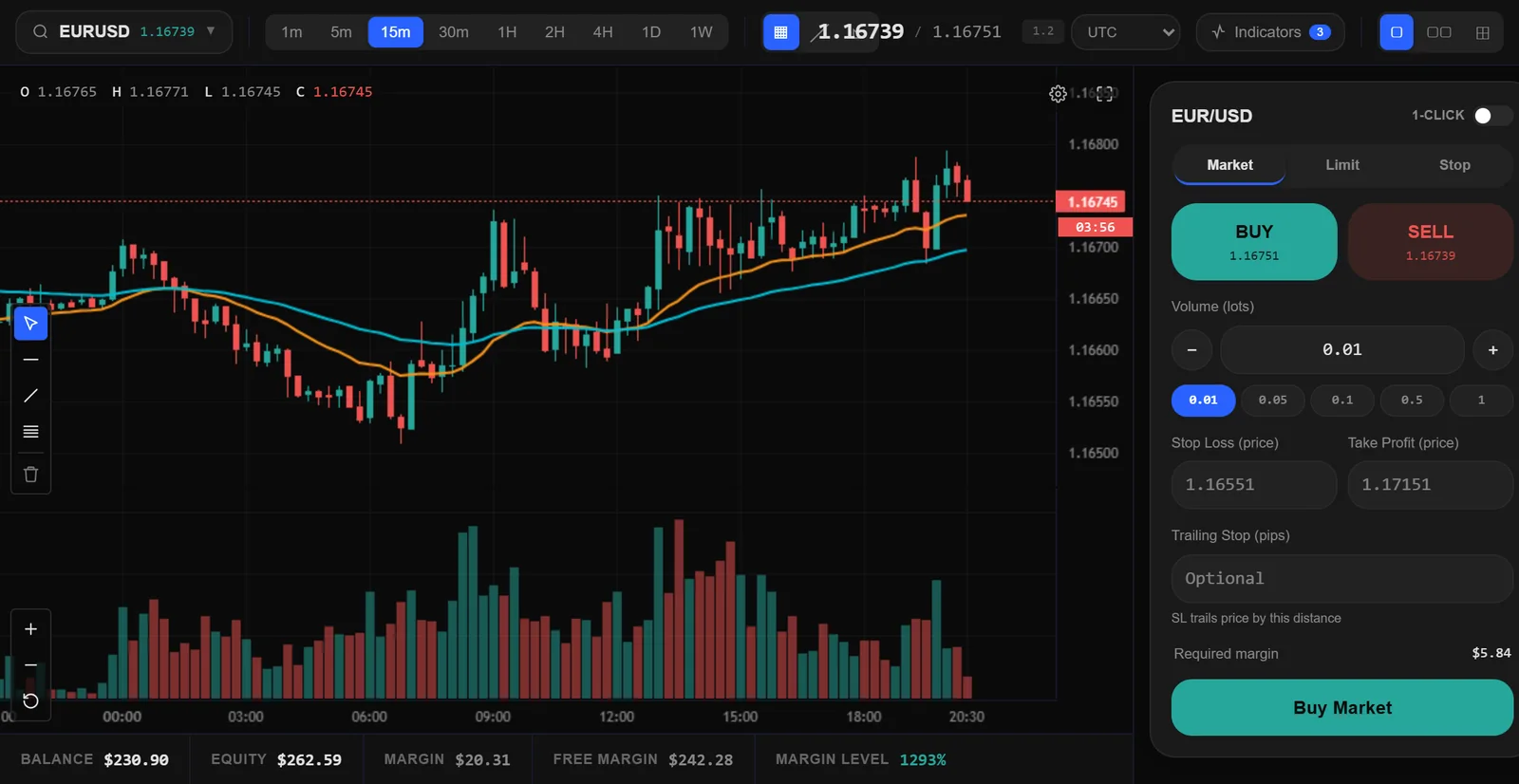
One sample platform switching between made-up brands: the name, logo, colour, typeface and web address change on the terminal and the phone sign-in.
Sample brands, made up for this page.
Sample data and sample clients.
The order to follow
Lawyer, then structure, then payments, then technology. The mistake is starting with the platform because it feels like progress. Build the legal and payments foundation first, and add the technology, the fast part, at the end.
None of this is advice for a specific situation. It describes a common pattern, so a founder can ask sharper questions of the advisers who sign off on the answers.
Who holds whatIllustration
- Licence
- Client relationship
- Client money
- Trading accounts
Illustration and sample market data.
Pelris builds brokerage software and is not a law firm or a broker. Nothing in this guide is legal, regulatory, financial or investment advice. Confirm your own position with a lawyer who practises in your jurisdiction before acting.