Buyer's guide
How to choose the best white label trading platform
The best white label trading platform for a forex or CFD brokerage is the one that puts the client terminal, the mobile app and the staff CRM on your own brand, domain and database as one product, lets you decide how each client's orders are handled, publishes its price, and is ready in days rather than months. This guide turns that into ten checks you can run on any provider in a single demo. We built Pelris to pass every one of them, and we publish the checks so you can hold us to them.
The White Label ScorecardFrom this guide
- Your brand everywhere
- A database of your own
- CRM in the same product
- A full CFD range
- Your choice of execution
- Mobile from day one
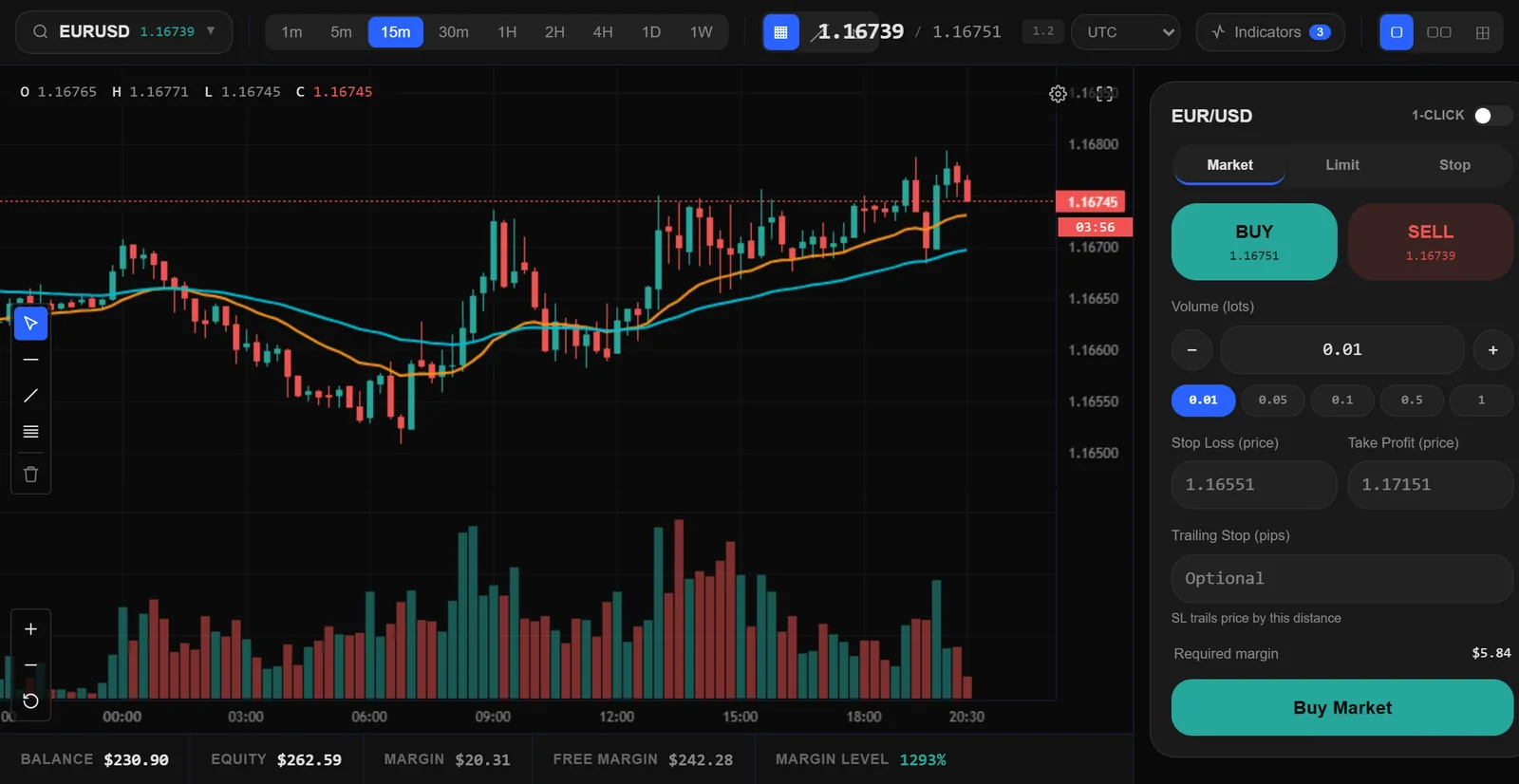
Figures and rows from this guide's own sources. Sample market data, sample clients and sample brands. "Your Brand" stands for your own name and logo.
What best means for a brokerage
Lists of the best white label platforms usually rank by size or by how long a vendor has been around. Neither tells you whether a platform will help your brokerage win and keep clients. What matters is whether your clients see your brand and nobody else's, whether your team can run the desk from one system, whether you control execution and money, and what the whole thing costs you each month.
A white label trading platform is software a licensed broker runs under its own name. What white label means in practice varies a lot between providers, so the checks below are written to cut through the labels and test what you actually get.
Read moreShow less: What best means for a brokerage
On your platform
What every plan runs on
One deployment on your brand, domain and database: the terminal your clients trade on, and the CRM your team runs.
Deposits
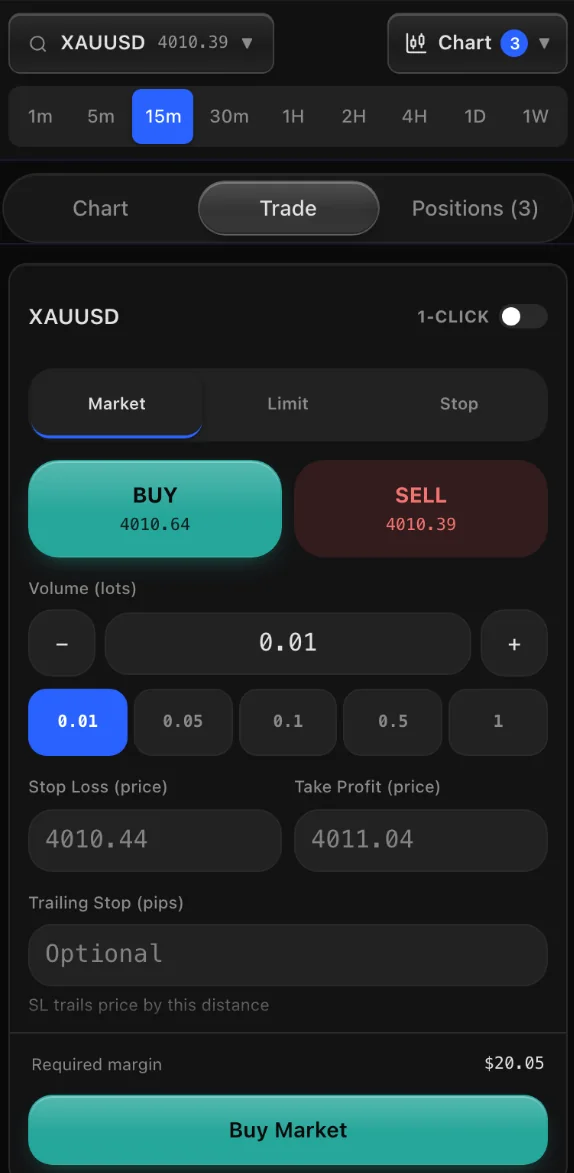
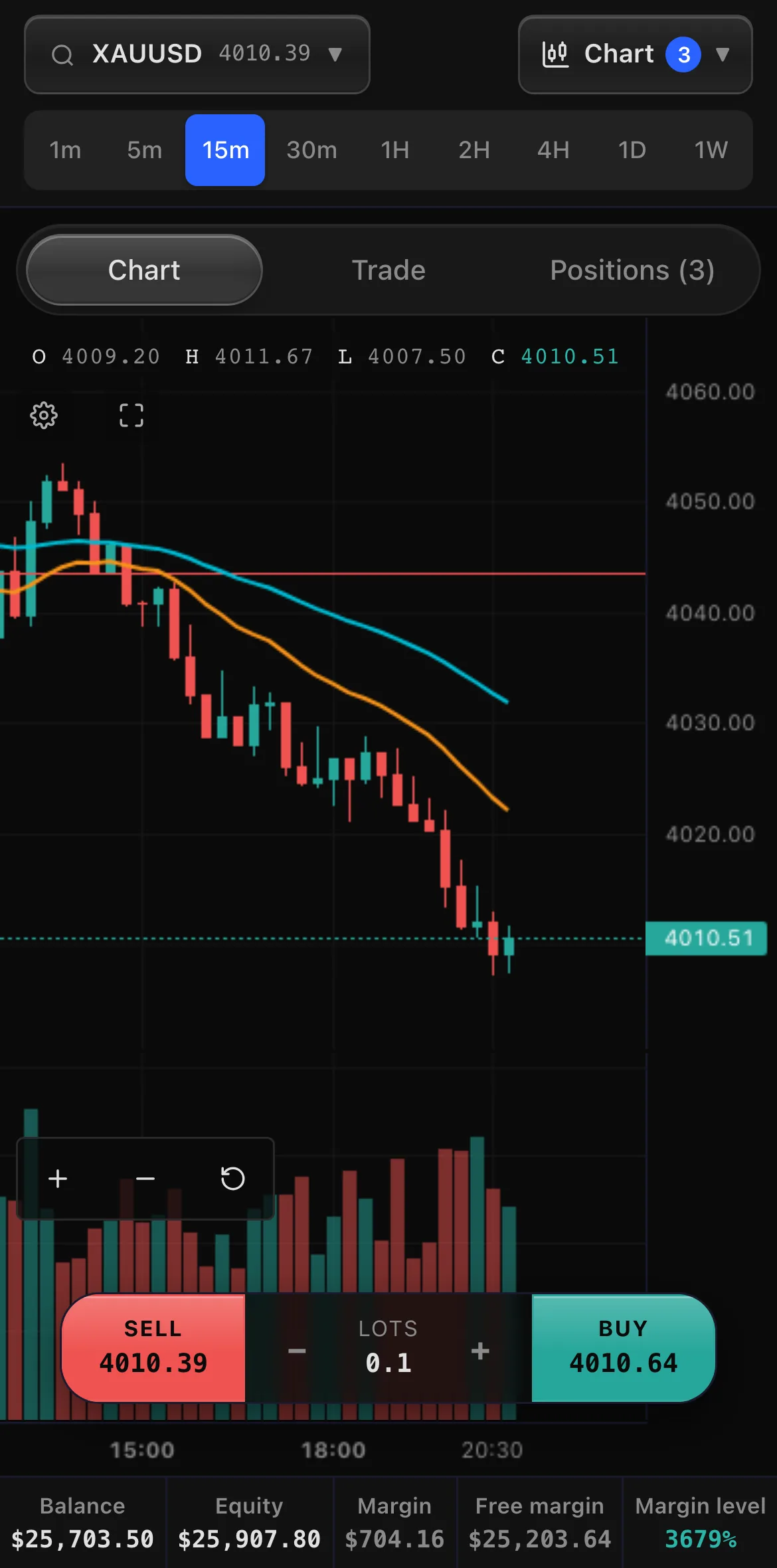
Sample market data and sample clients. "Your Brand" stands for your own name and logo.
The White Label Scorecard: ten checks for any provider
Score each provider on your shortlist against the ten checks.
Read moreShow less: The White Label Scorecard: ten checks for any provider
A platform that passes all ten gives you a brokerage you own and control. Each one you miss is a cost, a delay or a dependency you will carry for years.
| Check | Why it matters | How Pelris meets it |
|---|---|---|
| 1. Your brand everywhere | Clients trust the name they see on the terminal, the app and every email | Your logo, colours, fonts and domain across the terminal, the CRM and every client email, with no vendor name anywhere |
| 2. A database of your own | Your client book is your business, and it should never sit in a shared system | A dedicated database and deployment for every broker |
| 3. CRM in the same product | Two systems mean two contracts and a sync that is always a little behind | The staff CRM and back office come with the terminal on every plan |
| 4. A full CFD range | Clients expect more than currency pairs | Forex, metals, oil, stock indices, crypto and US stocks, each with its own contract size, spread, leverage limit and swaps |
| 5. Your choice of execution | Your model should be your decision, client by client | Keep each client's trades in-house or cover them with your liquidity provider, and switch whenever you like |
| 6. Mobile from day one | Most retail clients trade on a phone | An installable app on every plan, and a native iOS and Android app on your brand from Growth |
| 7. Money on your terms | Speed wins deposits; control prevents losses | Instant or approved deposits and withdrawals, as you choose, with withdrawals blocked until a client is verified |
| 8. Tools that keep clients trading | Retention is cheaper than acquisition | AI in the terminal on every plan, with copy trading, trading bots, PAMM and MAM accounts on higher plans |
| 9. Partners built in | Introducing brokers bring a large share of new clients | A multi-level IB module paying per lot across up to five levels, with a partner portal |
| 10. A published price and a fast start | You should know the cost before the first call and launch while your licence is still in progress | From $1,250 a month with no setup fee and no revenue share, set up within a week once you are happy with the demo |
The three kinds of platform you will be offered
Most offers fall into one of three shapes.
Read moreShow less: The three kinds of platform you will be offered
A MetaTrader 5 white label gives your clients a terminal many of them already know, under a sub-licence on a provider's server, and the CRM and back office are a separate purchase. An independent platform paired with a separate CRM gives you two modern products from two vendors, and the job of keeping them in step. Turnkey broker software gives you the terminal, the mobile app, the CRM, the back office and the partner system as one product.
For a new or growing brokerage, turnkey software usually scores highest on the checks above, because one vendor answers for the whole stack and one database holds the whole client record. MetaTrader white labels and turnkey software are compared in detail on a page of their own.
Questions to ask in every demo
A demo shows the best of a product.
Read moreShow less: Questions to ask in every demo
These questions show the rest. Ask each provider to answer on screen, not in a follow up email.
- Show me a client's whole record
Accounts, balances, deposits, trades, documents, calls and notes should sit on one screen, live.
- Change a spread for one client
Pricing per account type and per client should be a setting, not a support ticket.
- Switch a client to your liquidity provider
Execution should be your call, client by client, without a rebuild.
- Rebrand it in front of me
Logo, colours and domain should change the terminal, the CRM and the emails together.
- What is the full monthly price at my size?
Setup, platform, CRM, app, data and any revenue share, in writing.
- What do I take with me if I leave?
Clients, accounts, balances and trade history, in a form another system can read.
Red flags
Any one of these is worth a direct question before you sign.
Read moreShow less: Red flags
Several together usually mean the platform will cost more and do less than the sales deck suggests.
- No published price
A price you can only get on a call is usually a price that changes with your enthusiasm.
- A share of your revenue
A percentage of spread, volume or profit grows every time you succeed, for as long as you stay.
- A shared database
Your clients in a table next to other brokers' clients is a risk you cannot audit.
- The CRM sold separately
Two products means two bills and an integration that breaks at the worst moment.
- Launch measured in months
Branded software that is ready to configure should take days to stand up.
- The vendor's name on your client screens
A powered by footer or a shared support address tells your clients whose business it really is.
Where Pelris fits
Pelris is turnkey broker software for new and growing forex and CFD brokerages that want the whole platform on their own brand, at a published price, without an engineering team.
One sample platform switching between made-up brands: the name, logo, colour, typeface and web address change on the terminal and the phone sign-in.
Sample brands, made up for this page.
Sample data and sample clients.
Read moreShow less: Where Pelris fits
Every broker runs on its own deployment and database, with the branded terminal and staff CRM as one product, a CRM built for the desk and multi-level partner commissions.
You can check all ten points yourself before you commit. Start with the free 14-day demo of the full platform, and when you sign, your first month is free on any plan. Our prices are published, and what the rest of a brokerage costs is set out line by line.
Common questions
Anything else? Our team answers 24/7.
What is the best white label trading platform?
The one that passes the most of the ten checks in the White Label Scorecard: your brand everywhere, your own database, the CRM in the same product, a full CFD range, your choice of execution, mobile from day one, money on your terms, retention tools, partners built in, and a published price with a fast start. Pelris was built to pass all ten.
What is the best white label platform for a new forex broker?
Turnkey broker software usually suits a new brokerage best: the terminal, the mobile app and the CRM come as one product on your own brand, the price is published, and setup takes about a week, so the platform is ready while the licence and payment providers are still being arranged.
How much does a white label trading platform cost?
Plans that include the CRM are published at $1,500 to $6,000 a month, and some vendors add a five figure setup fee or a share of revenue. Pelris starts at $1,250 a month with the CRM included, no setup fee and no revenue share, and the first month is free.
Should I choose a MetaTrader white label or my own branded platform?
A MetaTrader white label gives clients a familiar terminal, but the CRM and back office are a separate purchase. A branded turnkey platform gives you the terminal, app and CRM as one product under your own name. For a brokerage that wants to own its brand and client data, the branded platform usually scores higher.
Can I try the platform before I sign?
Yes. A free 14-day demo gives you the full trading terminal and back office to test. When you sign, your first month is free on any plan.
Run the Scorecard on us
Book a demo and test all ten checks on the live platform, on your own brand.