For introducing brokers
Starting your own forex brokerage as an introducing broker
Many brokerages begin as introducing brokers. An IB paid rebates or a share of revenue by another broker already does the part most new firms struggle with, finding traders and keeping their trust, while the partner broker carries everything else: the licence, the client money, the orders, the payments and the compliance. This guide sets out what lands on your desk when you become the broker, what you can bring with you, the order to do it in and the costs our other guides publish.
What becomes yours as the brokerFrom this guide
- Licence and companyYour company holds a licence that lets it deal with clients
- Client agreement and accountsClients sign your agreement and open accounts on your platform
- Client moneyHeld by your brokerage under your regulator's client money rules
- Orders and market riskYour brokerage is the counterparty and keeps each trade in-house or covers it with its liquidity provider
- PaymentsYour own corporate account
- KYC and AMLYour procedures, your compliance officer and money laundering reporting officer, your records
- Support and retentionYour own team, from the first call to the last withdrawal
- How you are paidSpread, commission and swap and, on trades kept in-house, their result, with every running cost of the firm paid out of it
Figures and rows from this guide's own sources. Sample market data, sample clients and sample brands. "Your Brand" stands for your own name and logo.
What changes when the IB becomes the broker
As an introducing broker you own a relationship. The partner broker owns the rest: the licence, the client agreement, the trading accounts, the deposits, the order book and the duty to check who each client is. Becoming the broker moves every one of those onto your own company, and each brings its own cost, its own timeline and its own questions from a regulator.
In some countries even the introducing role is regulated, which shows where the line sits. In the United Kingdom, for example, the FCA Handbook limits an introducer appointed representative to effecting introductions to its firm and distributing non-real time financial promotions, and states that the role does not include dealing as agent or arranging deals. A brokerage of your own sits on the far side of that line: running it, holding client money and dealing with clients needs a licence, whatever your current partner or anyone selling a shortcut says. This is not legal advice.
Read moreShow less: What changes when the IB becomes the broker
| Area | As an introducing broker | As your own brokerage |
|---|---|---|
| Licence and company | The partner broker holds the licence, though your own IB work may need a registration where you operate | Your company holds a licence that lets it deal with clients, with regulatory capital kept in the company |
| Client agreement and accounts | Clients sign with the partner broker and their accounts sit there | Clients sign your agreement and open accounts on your platform |
| Client money | Deposited with the partner broker | Held by your brokerage under your regulator's client money rules |
| Orders and market risk | Filled and carried by the partner broker | Your brokerage is the counterparty and keeps each trade in-house or covers it with its liquidity provider |
| Payments | The partner broker's banks and payment providers | Your own corporate account, client money account and payment providers, each of which reviews your company first |
| KYC and AML | Run by the partner broker | Your procedures, your compliance officer and money laundering reporting officer, your records |
| Support and retention | Often left to the partner broker | Your own team, from the first call to the last withdrawal |
| How you are paid | Rebates per lot or a share of the revenue your clients generate | Spread, commission and swap and, on trades kept in-house, their result, with every running cost of the firm paid out of it |
On your platform
How it fits the rest of the platform
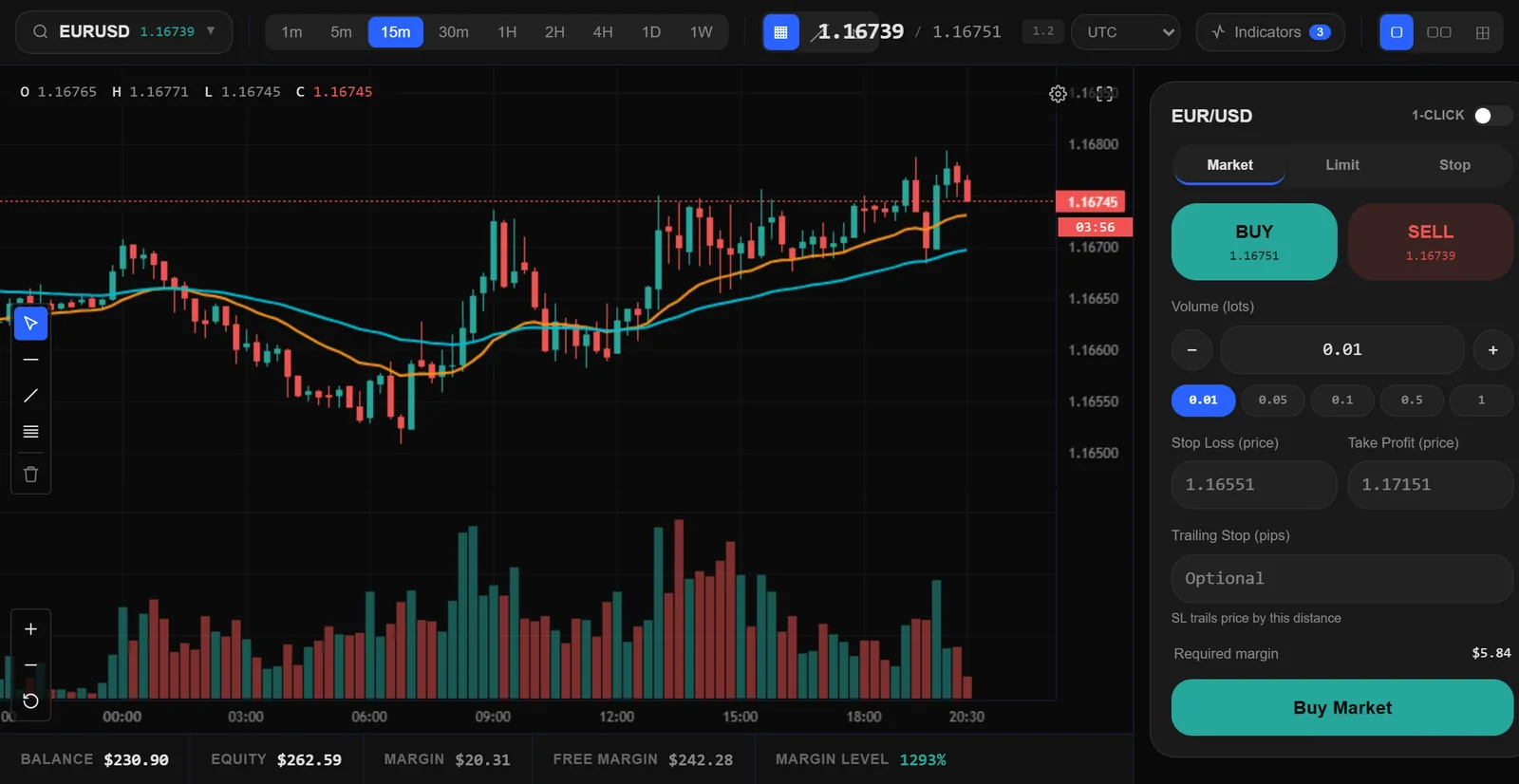
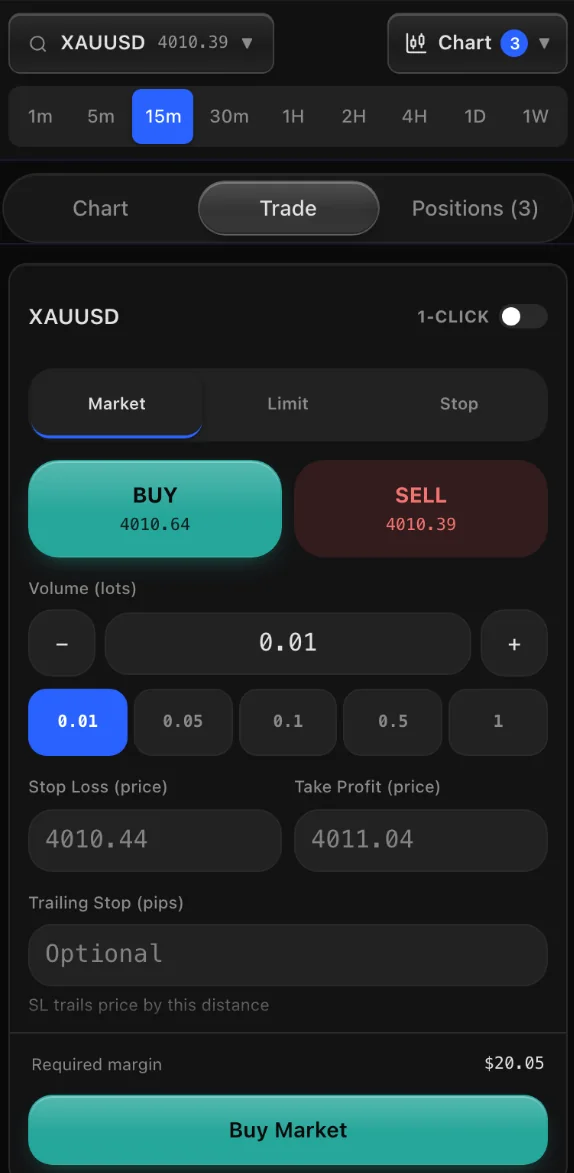
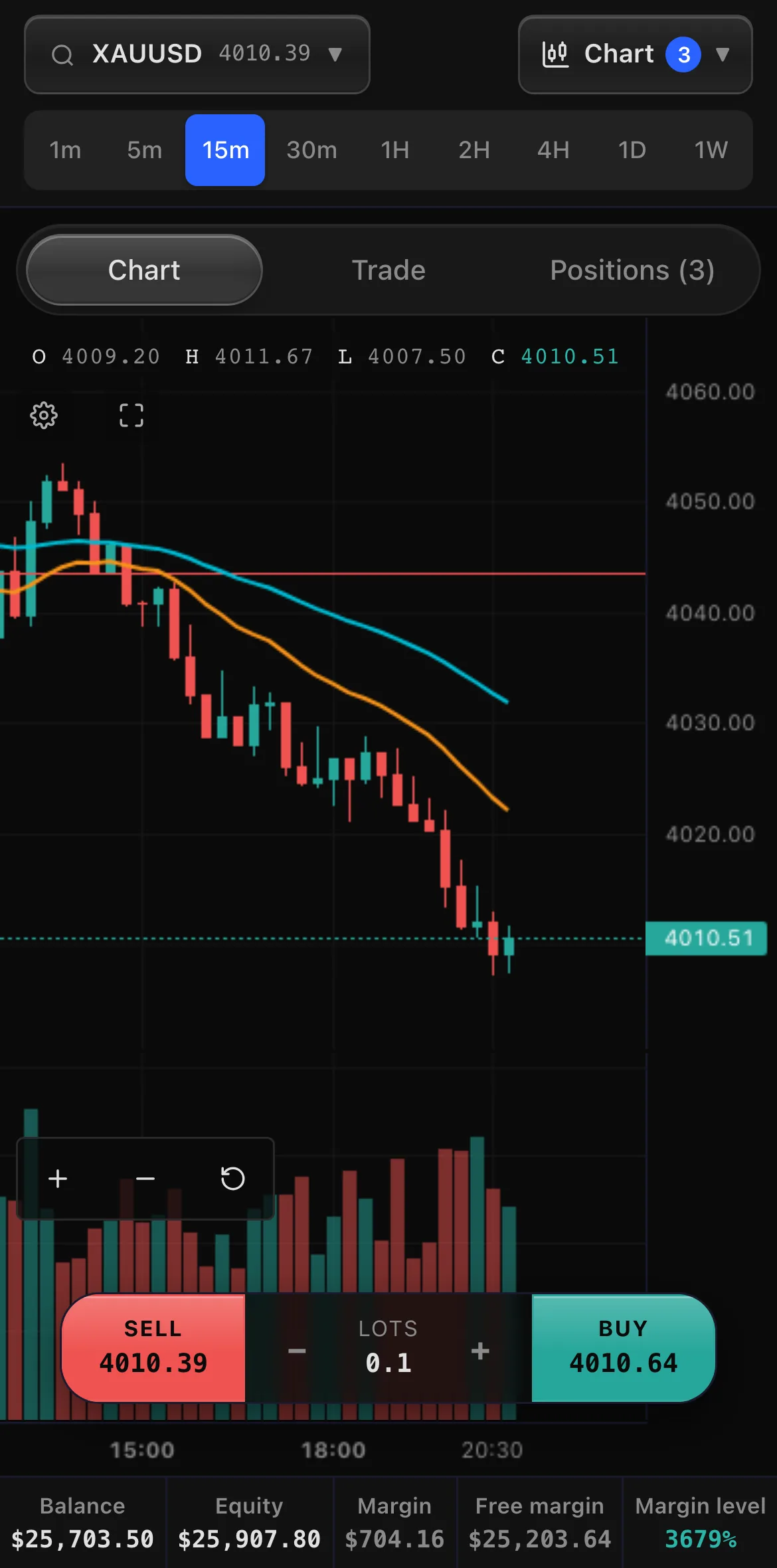
One deployment on your brand, domain and database: the terminal your clients trade on, and the CRM your team runs.
Sample market data and sample clients. "Your Brand" stands for your own name and logo.
What an IB already brings, and where it stops
Three things carry over, and they are the ones a new brokerage finds hardest to buy.
Read moreShow less: What an IB already brings, and where it stops
Clients who already trade and already trust you. A network of sub-IBs who bring clients of their own. And marketing that works: the channels, languages, content and local reputation that produce funded accounts rather than sign-ups.
Each has a limit worth knowing before you plan around it. Your clients' accounts, balances and trade history belong to the partner broker's records, so nothing is copied across: every client who follows you opens a new account with your brokerage, signs your agreement and passes your identity checks. Read your IB agreement with a lawyer before you tell anyone, because some contain terms on approaching clients or partners after you leave. And a client who relied on your partner's licence will ask about yours, so have the answer and the regulator's register entry ready from the first conversation.
Marketing changes in a quieter way. As an IB you promoted another firm's product; as the broker, every financial promotion, risk warning and advertising approval is yours to get right in each country you target, and the major ad platforms check financial advertisers before their ads run.
The licence and the company
Licensing is the longest piece of work and usually sets your launch date.
Who holds whatIllustration
- Licence
- Client relationship
- Client money
- Trading accounts
Illustration and sample market data.
Read moreShow less: The licence and the company
The steps are much alike in every jurisdiction: a company, directors the regulator accepts as fit and proper, a business plan, compliance manuals, regulatory capital paid in, then the application and the regulator's questions. Approval can take a few weeks or most of a year. Capital and fees, jurisdiction by jurisdiction gives the capital and regulator fees for each, from the regulators' own documents.
Match the licence to how your orders will be filled. On our platform the brokerage is the counterparty to every client trade, whether it keeps the trade in-house or covers it with its liquidity provider, so the licence has to allow dealing as principal. An intermediary licence such as Labuan money broking can look closer to the IB work you know, but it does not allow dealing as principal and so does not suit the platform.
Choose the jurisdiction together with your payment providers, not ahead of them, and ask which licences they accept before registering anywhere. Remember too that a licence reaches only as far as its own regulator's permission. Clients living in a country whose rules restrict them stay restricted, which matters to an IB whose clients may be spread across several countries.
Liquidity, execution and what clients trade on
Market risk was never yours as an IB: the partner broker filled every order and carried the result.
Sample market data and sample clients.
Read moreShow less: Liquidity, execution and what clients trade on
As the broker you decide, client by client. Keep a client's trades in-house and your brokerage carries the risk and keeps the spread and the outcome of each trade, or fill the client straight away and cover the trade with your liquidity provider. The setting lives on each client's page in the CRM, can be changed at any time and leaves open trades where they are. Execution and liquidity on the platform explains both.
We are not a liquidity provider and never hold client money. Keep a provider you already know, perhaps from your years as an IB, or we introduce you to a regulated one; either way the agreement is between your brokerage and the provider. Whichever way trades go, someone on your team has to watch the book from the first day.
Clients reach the terminal on your brand from a phone or a desktop. It sits on the home screen after one tap on Android or a short guided step on iOS, with no app store involved, and quotes forex, gold and silver, oil, stock indices, crypto and US stocks, every instrument carrying its own spread, contract size and digits. Leverage is yours to set per account type and per account. The margin engine follows each account's live equity and free margin, sends a warning at margin call and, at the stop out level you choose, closes positions on its own, biggest loser first, and an admin can write a negative balance back to zero in the CRM with the change on record.
Client money, payments, KYC and retention
Your partner broker's banks do not come with you.
Read moreShow less: Client money, payments, KYC and retention
A brokerage needs its own corporate account, usually a separate client money account, and payment providers for cards, e-wallets, local transfers and crypto, and each one looks closely at your company before it signs. Many hold back a rolling reserve, a share of what you process kept for months. Open these talks in the same week as the licence work, and put the payment questions first.
Compliance becomes yours too: KYC and AML procedures, a compliance officer and a money laundering reporting officer, client agreements, risk warnings and records kept as long as your regulator asks. In the CRM, deposits and withdrawals go through instantly or wait for approval, your choice, against the bank and payment details you set; a client's identity documents are reviewed before any withdrawal leaves; and sensitive staff actions are written to an audit trail.
Support and retention were mostly the partner broker's job, and now they decide whether clients stay. The CRM runs on your brand with a leads pipeline that records sources and assignment, one record per client holding accounts, money, trades, documents and calls, and five roles from admin to sales, so each agent sees only their own book. Pricing is a flat monthly fee, $1,250 on Starter or $2,500 on Growth, with no setup fee, no revenue share and the first month free.
Bringing your sub-IB network across
Sub-IBs carry over more cleanly than anything else, because they are relationships with you rather than accounts at your partner.
Read moreShow less: Bringing your sub-IB network across
In the multi-level IB module each partner gets an account and a referral link, clients who join through that link are attributed to them, and one partner can sit under another, so a network up to five levels deep can be rebuilt beneath your brokerage.
Commissions are a fixed amount per lot on the closed trades of each partner's clients. You set a base rate, and separate rates per instrument category where you want them, and every partner above the direct one earns their own override rate. Overrides start at zero, so nothing is paid upstream until you choose, and the rate used is stored with each payment, so a later change never alters past figures. Partners follow their own referrals and earnings in a portal inside the terminal and see nothing else.
Two limits, stated plainly. The module pays per lot, so a sub-IB on a share of revenue today moves to a per lot rate you agree together. And you are now the one paying these commissions out of your own revenue, so test each rate against your spreads and running costs before you offer it to anyone.
The order of steps, and what it costs
Start the slow work first and run it side by side.
Read moreShow less: The order of steps, and what it costs
Licensing and payments take months and set the date, while the platform is set up within a week once you are happy with the demo. The full step by step guide goes deeper on each stage.
| Cost line | Published figure | Kept or spent |
|---|---|---|
| Regulatory capital | From MUR 1,000,000 in Mauritius and USD 100,000 in Seychelles to EUR 750,000 in Cyprus for dealing on own account, and AED 30 million on the UAE mainland | Kept in the company |
| Regulator fees for a Seychelles securities dealer | USD 3,000 to apply and USD 6,000 a year | Spent |
| Published lines for a first year in Seychelles | Roughly USD 124,000, of which USD 100,000 is capital | USD 100,000 kept, the rest spent |
| Trading platform and CRM, IB module included | $1,250 a month on Starter or $2,500 on Growth, no setup fee, first month free | Spent |
| Legal work, formation, staff, office, market data, payments and marketing | Get quotes: together these are usually the largest share | Spent |
- 1. Read your IB agreement
With a lawyer: notice periods and any terms on clients and partners after you leave.
- 2. Define the offer
Instruments, account types, leverage and the countries your clients live in.
- 3. Pick the jurisdiction with your payment providers
Ask which licences they accept, then form the company and apply.
- 4. Open banking and payments
Corporate account, client money account and providers, started alongside the licence.
- 5. Decide how orders are filled
In-house, covered with a liquidity provider, or a mix chosen per client.
- 6. Build compliance and the team
KYC and AML procedures, the two officers, and support and retention staff.
- 7. Set up the platform and the partner structure
Your brand, account types, sub-IBs and their rates, tested end to end.
- 8. Open to your own clients first
Each opens a new account and passes your checks; widen the launch once every money path works.
Common questions
Anything else? Our team answers 24/7.
Can an introducing broker start a brokerage without a licence?
No. Running your own brokerage, holding client money and dealing with clients needs a licence, and in some countries even introducing clients needs a registration. Take legal advice for every country you plan to serve.
Can I move my clients from my partner broker?
Their accounts sit with the partner broker, so nothing is copied across. Clients who follow you open new accounts with your brokerage and pass your identity checks, and your IB agreement may have terms on this, so read it with a lawyer first.
Can my sub-IBs keep their structure?
Yes, up to five levels. Each partner gets a referral link and a portal, and you set per lot rates and override rates, which start at zero until you choose them.
Will a brokerage earn more than my IB rebates?
Nobody can promise that. A broker keeps the spread, commission, swap and, on trades kept in-house, their result, but it also pays for the licence, capital, payments, staff and partner commissions, and carries risks an IB never sees.
Which licence suits the platform?
One that allows dealing as principal, because on our platform your brokerage is the counterparty to every client trade, whether you keep it in-house or cover it with your liquidity provider. An intermediary licence such as Labuan money broking does not suit it.
How much does it cost to go from IB to broker?
Regulatory capital alone runs from MUR 1,000,000 in Mauritius and USD 100,000 in Seychelles to EUR 750,000 in Cyprus for dealing on own account. The platform with the CRM and IB module is $1,250 a month on Starter, and legal work, staff, payments and marketing need quotes.
Do you help with the licence application?
No. We build brokerage software. Licensing is for lawyers and advisers in the jurisdiction you choose, and we work alongside whoever you appoint.
See your brokerage before you leave your partner
Book a demo and see the terminal, the CRM and your sub-IB structure on your own brand while the licence work runs.