North Africa
Starting a brokerage from Egypt
A founder in Cairo or Alexandria looking at a forex brokerage meets two regulators with separate jobs. The Financial Regulatory Authority licenses non-bank financial business and has stated that forex trading instruments are not legal inside Egypt. The Central Bank of Egypt decides who may deal in foreign currency at all. This page reads both from their own documents, then looks at the exchange route and at how founders who license the company abroad set things up.
What Egyptian law says about forexFrom this guide's sources
- FRAUnlicensed regulated activityup to five years in prison
- CBEDealing in foreign currency outside banksthree to ten years in prison
- CBECrypto platform without a licenceEGP 1 million to EGP 10 million
- FRAFutures brokerage capitalEGP 50 million
Figures and rows from this guide's own sources. Sample market data, sample clients and sample brands. "Your Brand" stands for your own name and logo.
What the Capital Market Law licenses
Egypt's non-bank financial markets sit with the Financial Regulatory Authority, and its main statute for investment business is the Capital Market Law, Law No. 95 of 1992, which the FRA publishes as an updated Arabic copy. Article 27 lists the activities of companies working in securities: promoting and underwriting offerings, taking part in founding companies, venture capital, clearing and settlement, managing portfolios and investment funds, securities brokerage, dealing in bonds, securitisation, financial advice on securities, market making and administration services for funds. Retail forex and CFD dealing is not on the list.
Under article 28 none of those activities may start before the FRA grants a licence and enters the company in its register, and the FRA's chairman must stop any activity under the law that is carried on without one, which can include closing the premises by administrative order. Article 63 punishes anyone who carries on a regulated activity without a licence with up to five years in prison and a fine of at least EGP 50,000 or the gain made, whichever is larger, up to EGP 20 million or twice the gain, or with either penalty alone.
Read moreShow less: What the Capital Market Law licenses
| Law or notice | Regulator | What it says |
|---|---|---|
| Capital Market Law No. 95 of 1992, articles 27, 28 and 63 | FRA | Listed activities need an FRA licence; working without one carries up to five years in prison |
| FRA public warning of 31 December 2022 | FRA | Forex trading instruments are not legal inside Egypt, and their promoters face legal liability |
| Law No. 194 of 2020, articles 212 and 233 | Central Bank of Egypt | Foreign currency is dealt only through banks and licensed entities; dealing outside them carries three to ten years in prison |
| Law No. 194 of 2020, articles 206 and 225 | Central Bank of Egypt | Crypto trading platforms need a licence from the Central Bank's board; fines run from EGP 1 million to EGP 10 million |
| FRA Board Resolution No. 7 of 2026 | FRA | A futures brokerage on an exchange needs issued and paid-in capital of at least EGP 50 million |
Who holds whatIllustration
- Licence
- Client relationship
- Client money
- Trading accounts
Illustration.
On your platform
How the platform fits this route
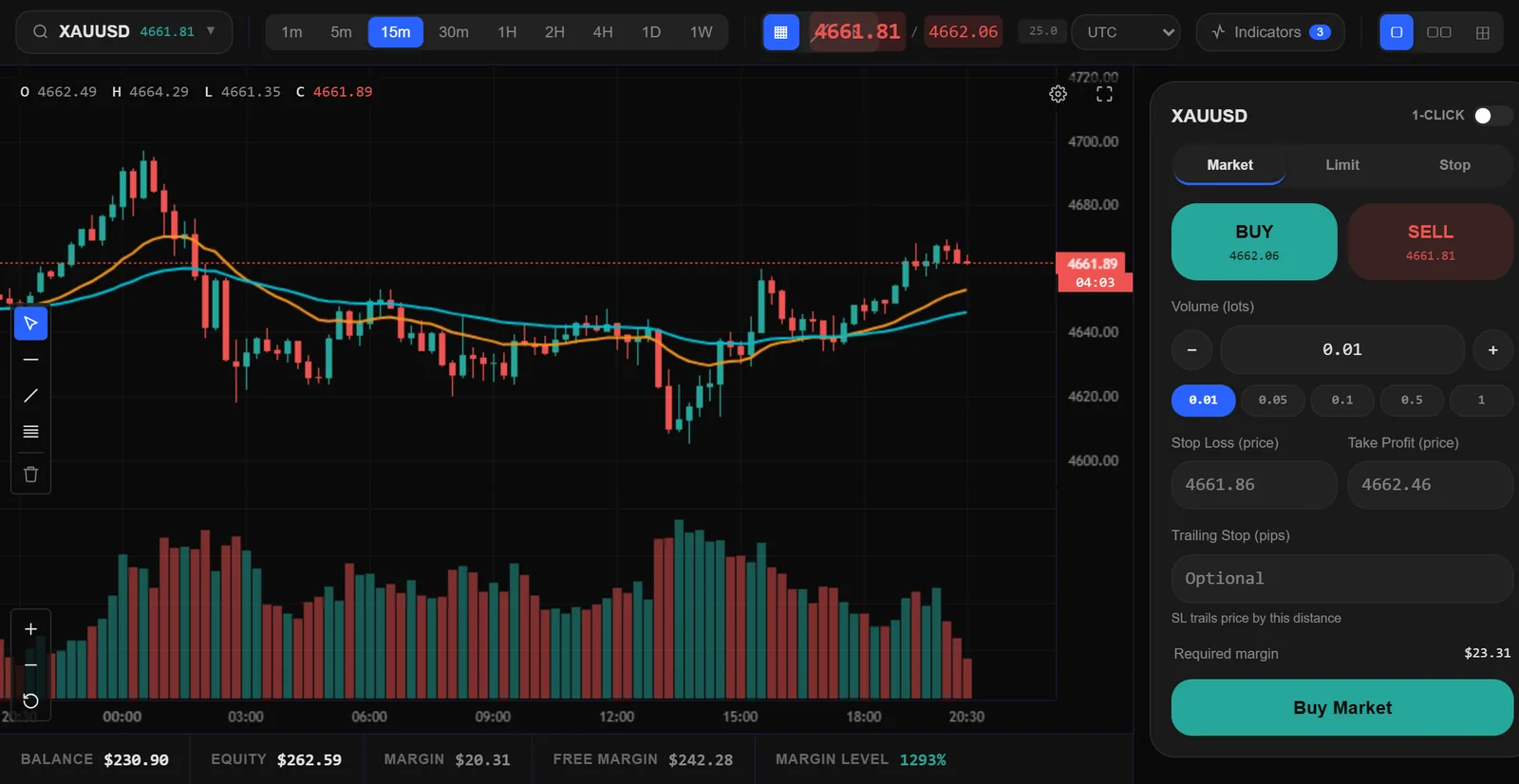
One deployment on your brand, domain and database: the terminal your clients trade on, and the CRM your team runs.
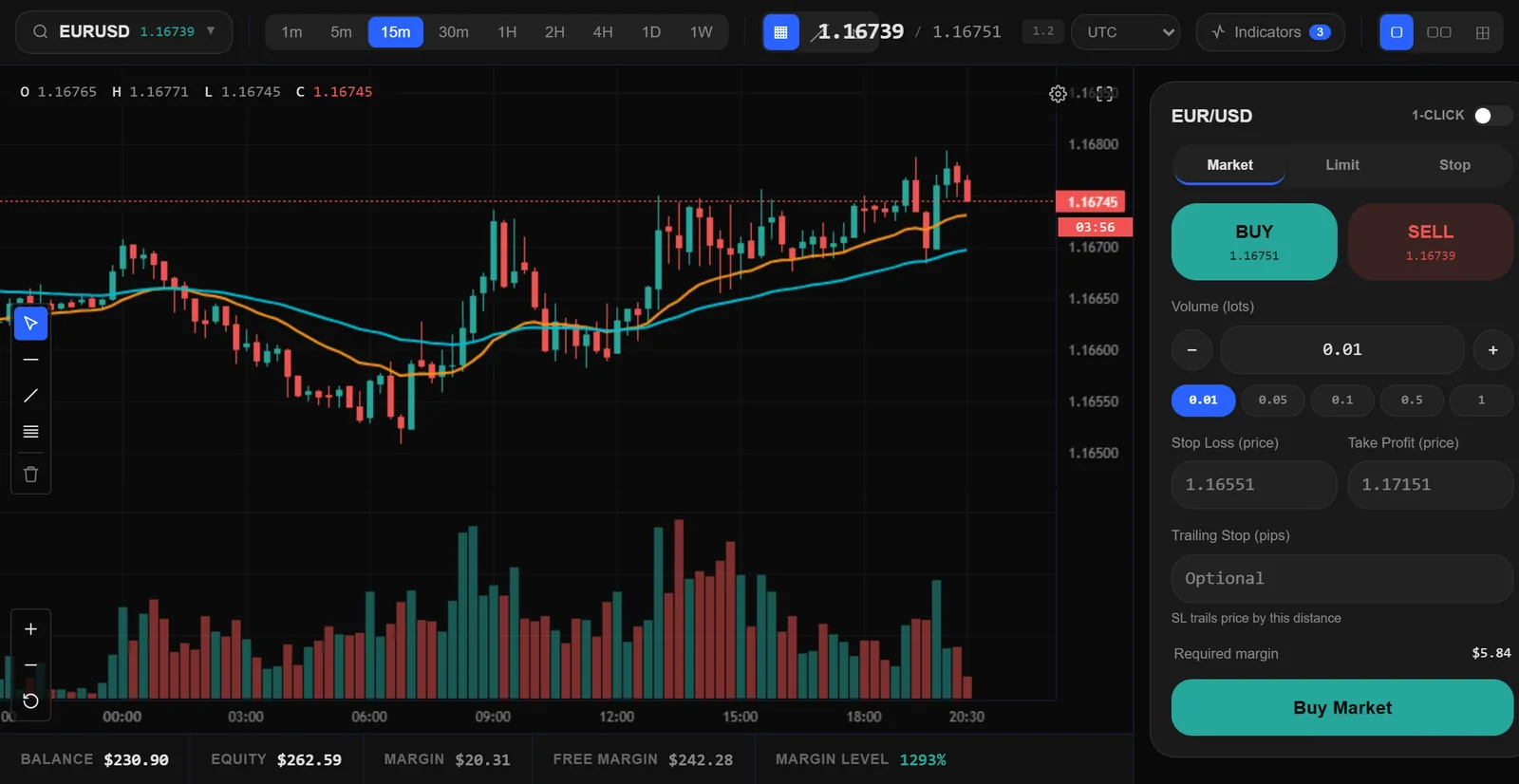
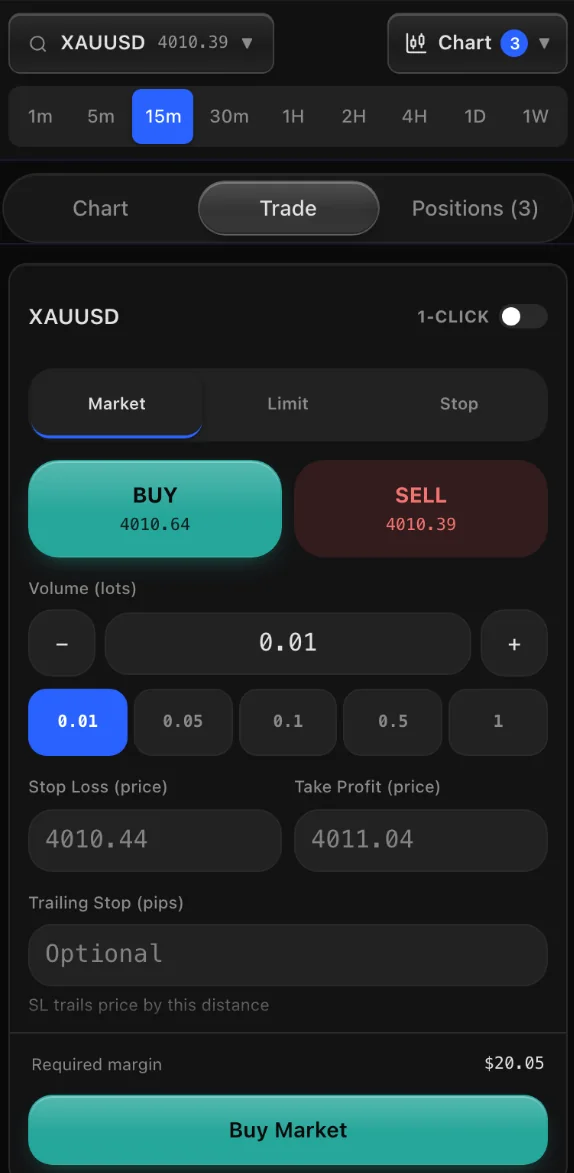
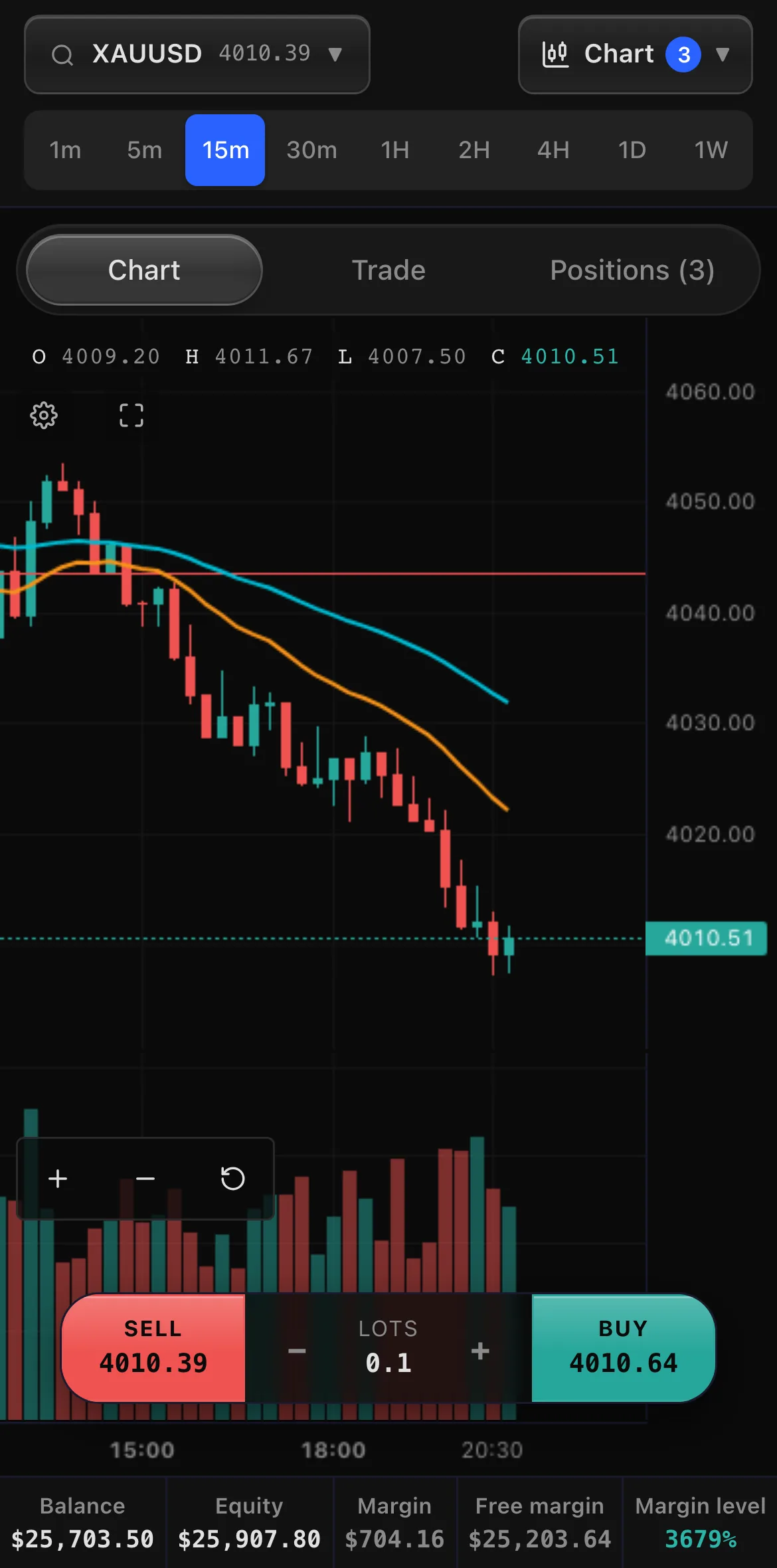
Sample market data and sample clients. "Your Brand" stands for your own name and logo.
The Central Bank's rules on foreign currency
Money is governed by a second statute.
Read moreShow less: The Central Bank's rules on foreign currency
The Central Bank and Banking Sector Law, Law No. 194 of 2020, published in the Official Gazette on 15 September 2020, gives a whole part to dealing in foreign currency. Article 212 lets any person keep the foreign currency they own and carry out any foreign currency operation, transfers into and out of Egypt included, but only through banks or entities licensed under the law, and it says dealings inside Egypt are in Egyptian pounds unless an international agreement, another law or a decision of the Central Bank's board says otherwise. Article 211 leaves the pound's exchange rate to supply and demand.
Beside the banks, the licensed dealers are the exchange companies and other entities the board approves under article 207. Article 208 requires an exchange company to be an Egyptian joint stock company whose only purpose is exchange business, with issued and paid-in capital of at least EGP 25 million. Article 233 punishes anyone who deals in foreign currency outside the accredited banks or licensed entities with three to ten years in prison and a fine of EGP 1 million to EGP 5 million or the amount involved, whichever is greater. Article 238 adds that, except where an offender is caught in the act, a prosecution under the law needs a written request from the Governor.
Crypto has its own article. Article 206 bans issuing or trading cryptocurrencies or electronic money, promoting them, and setting up or running platforms to trade them, without a licence from the Central Bank's board. Article 225 sets prison and a fine of EGP 1 million to EGP 10 million, or either, and both together on a repeat offence.
The onshore route: futures on the Egyptian Exchange
Egypt does have a regulated derivatives market, but it is an exchange, not a dealing desk.
Read moreShow less: The onshore route: futures on the Egyptian Exchange
Law No. 17 of 2018 added a chapter on futures exchanges to the Capital Market Law. It covers standard futures, options and swaps whose value comes from securities, commodities, price indices or other instruments the FRA approves, traded on an exchange and brokered by companies the FRA licenses to buy and sell contracts in their clients' names and for their account.
The FRA set the licensing terms for futures brokerage in Board Resolution No. 7 of 2026, issued on 14 January 2026: issued and paid-in capital of at least EGP 50 million, a cash insurance deposit of 0.5% of that capital, a non-refundable application fee of EGP 5,000, twelve named posts, among them a chief executive, a risk manager and an anti-money laundering officer, and a backup site apart from the head office. Firms must check a client's solvency before executing orders, monitor positions every day at settlement prices and hand over a risk disclosure statement at onboarding. According to the FRA, the Egyptian Exchange introduced its first futures, on two leading listed stocks, in June 2026.
A futures broker of this kind passes its clients' orders to the exchange and its clearing house. That is a different business from a brokerage that takes the other side of each client trade away from any exchange.
What the FRA has said about forex platforms
The FRA's public warning of 31 December 2022, published in Arabic, named forex among the instruments being pushed on Egyptians in breach of the law.
Read moreShow less: What the FRA has said about forex platforms
It stated that forex and foreign currency trading instruments are not legal inside Egypt, that promoters and marketers who breach this place themselves under legal liability, and that anyone who deals through them faces serious risk. It urged market participants not to deal in them, promote them or run platforms for trading them.
In March 2024 the FRA's chairman counted three public warnings among its awareness work: on companies collecting money without a licence, on the risks of dealing with forex companies as an illegal activity, and on crypto. The English warning of 6 May 2025 turned to unlicensed platforms that take money for investment. It cited article 4 of the Capital Market Law, which requires an FRA-approved prospectus for any public offering, and article 1 of Law No. 146 of 1988, under which only listed joint stock companies may receive public funds for investment. It pointed people to the FRA's directory of licensed entities and said a negative list of unlicensed ones was being prepared.
For a founder the lesson is practical. Marketing a brokerage to Egyptians is exactly what these warnings describe, and a firm licensed elsewhere will not appear in the FRA's directory, so plan your markets with that in view.
Sources (3)
- Financial Regulatory Authority, warning on promotion of financial instruments in breach of Egyptian law, including forex (31 December 2022, Arabic)
- Financial Regulatory Authority, financial literacy meeting at Horus University, Damietta, listing the FRA's warnings (2 March 2024, Arabic)
- Financial Regulatory Authority, FRA Issues Strong Warning on Illegal Promotion of Financial Products (6 May 2025)
How founders proceed with a licence outside Egypt
On our platform the brokerage is the counterparty to every client trade, whether it keeps the trade in-house or covers it with its liquidity provider.
Read moreShow less: How founders proceed with a licence outside Egypt
Egypt offers no licence for that business, so founders who want it form and license the brokerage in another jurisdiction, accept clients only where that licence and the clients' own law allow it, and keep Egyptian residents out of the client terms. Pelris is not a liquidity provider and never holds client money.
Payments are where an Egyptian plan most often fails. Foreign currency moves only through banks and licensed entities under article 212, and article 233 makes dealing outside them a serious offence, so collecting client money in Egypt through agents or personal accounts is not an option. Sending your own capital out to fund the company and bringing profits home are foreign currency questions as well, for an Egyptian lawyer and your bank to settle before anything is signed.
Our survey of offshore licence jurisdictions compares the usual homes for the company, and the cost breakdown helps you size capital and running costs. This is not legal advice.
The terminal your clients trade on
Clients get one terminal on a phone or a desktop.
Sample market data and sample clients.
Read moreShow less: The terminal your clients trade on
It installs to the home screen in one tap on Android and with a short guided step on iOS, with no app store involved. The markets are forex, gold and silver, oil, stock indices, crypto and US stocks, and each instrument carries its own spread, contract size and digits. Crypto deserves its own legal review, because article 206 of Law No. 194 of 2020 bans running a crypto trading platform without a Central Bank licence.
The leverage ceiling and any negative balance rule come from the jurisdiction that licenses you, and the platform is set to match: leverage per account type and per account, a margin engine that shows live equity and free margin, a margin call warning, and an automatic stop out at levels you choose that closes the biggest loser first. When an account still finishes below zero, an admin writes it back to zero in the CRM, and the adjustment stays on record.
The CRM behind the desk
Staff work in a CRM on your own brand.
KYC review
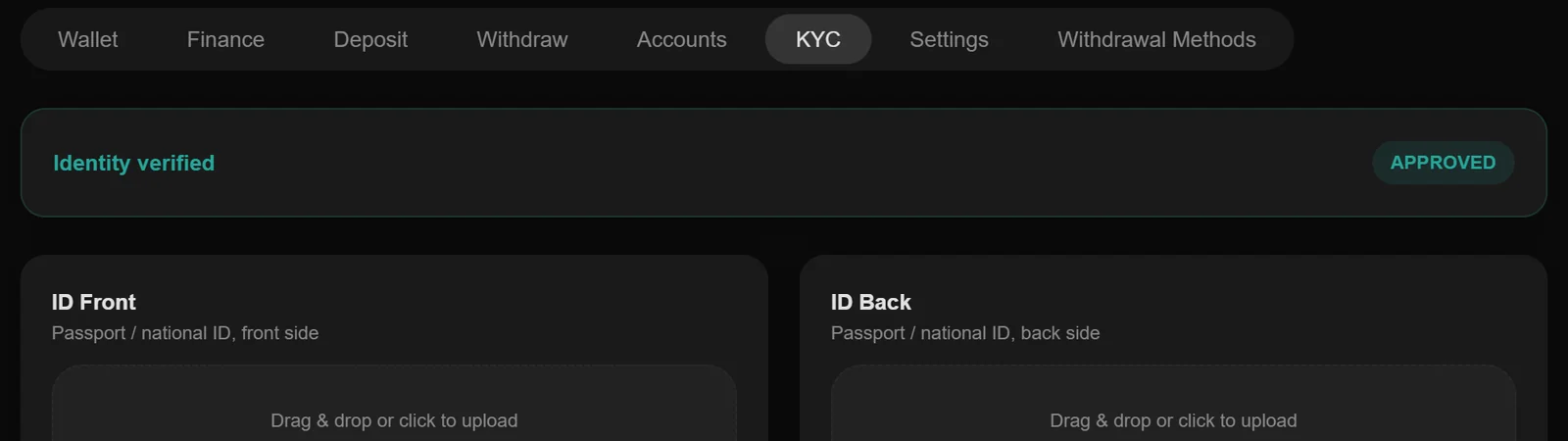
Sample data and sample clients.
Read moreShow less: The CRM behind the desk
Leads arrive in a pipeline with their sources and are assigned to agents; each client has one record holding accounts, money, trades, documents and calls; and five roles, from admin down to sales, keep every agent inside their own book.
Deposits and withdrawals are instant or held for approval, as you decide, against the bank and payment details you set. Identity documents are reviewed before any withdrawal is paid, which is also where proof of address shows whether your terms let you accept a client at all. Sensitive staff actions are written to an audit trail. You pay one flat monthly fee, with the first month free and no setup fee; the plans page has the details.
Common questions
Anything else? Our team answers 24/7.
Is forex trading legal in Egypt?
The FRA's public warning of 31 December 2022 says forex trading instruments are not legal inside Egypt and that their promoters face legal liability. Ask an Egyptian lawyer what that means for your own plans.
Does the FRA license forex or CFD brokers?
Its licences follow the activities named in the Capital Market Law, and retail forex or CFD dealing is not among them. The nearest regulated business is futures brokerage on an exchange, licensed under FRA Board Resolution No. 7 of 2026.
Who may deal in foreign currency in Egypt?
Banks, and exchange companies or other entities licensed under Law No. 194 of 2020, as article 212 provides. Dealing in foreign currency outside them carries three to ten years in prison under article 233.
Is crypto trading allowed in Egypt?
Only with a licence from the Central Bank's board. Article 206 of Law No. 194 of 2020 bans trading, promoting or running platforms for cryptocurrencies without one, and article 225 sets fines from EGP 1 million to EGP 10 million.
How much capital does an Egyptian futures brokerage need?
At least EGP 50 million issued and paid-in under FRA Board Resolution No. 7 of 2026, plus a cash insurance deposit of 0.5% of that capital and a non-refundable application fee of EGP 5,000.
Do you help with the FRA application?
No. We build brokerage software. Licensing is a job for local lawyers and advisers, in Egypt or wherever the company is licensed, and we work alongside whoever you appoint.
See the platform before you pick a jurisdiction
Book a free demo and try the terminal and the CRM on your own brand while your lawyers settle where the company will be licensed.