The costs at a glance
The table lists every cost line a new prop firm meets, from the trading platform to the cash held for payouts. Most of the fixed cost is the platform and the legal work. Most of the running cost is payouts, affiliates and payment fees, which rise with every challenge sold.
| Cost | Typical range | What drives it |
|---|---|---|
| Trading platform with challenge engine and CRM | About $1,500 to $5,000 a month | Number of active accounts, and whether a setup fee applies |
| Challenge software without its own platform | About $1,000 to $5,000 a month, plus a platform | A MetaTrader 5 white label through a provider adds about $1,000 to $5,000 a month and $5,000 to $15,000 to set up |
| Revenue share instead of a fee | About $2,500 to $3,000 to set up, then 50% to 70% of challenge sales or profit kept by the vendor | The vendor funds the payouts and keeps most of the margin |
| Setup fee | None to about $7,500 | Charged by some vendors, once |
| Company | GBP 100 for a UK company to about $11,900 for a Dubai free zone company in its first year | Where you incorporate; agents, office and visas cost extra |
| Legal documents for a prop firm | About $10,000 to $30,000 | Trader agreement, risk disclosure, payout and refund terms |
| Card payments | About 3.5% to 8% of each payment, plus a 5% to 15% rolling reserve | Many mainstream processors refuse prop firms |
| Crypto payments | About 0.3% to 2% of each payment | Plus network fees |
| Identity checks | About $0.80 to $1.90 a check | Monthly minimums of about $49 to $299 |
| Affiliates | 5% to 20% of each referred purchase | The main sales channel for most firms |
| Payouts | About 35% to 48% of challenge revenue | Pass rates and how your rules are set |
The platform: three ways to pay for it
The platform is where traders take their challenges and where you set the rules, watch progress and approve payouts. Vendors price it in one of three ways, and the choice decides how much of the business you keep.
A flat monthly fee is the simplest. A platform with the challenge engine and the CRM included costs about $1,500 to $5,000 a month at list price, sometimes with a setup fee on top. Some products are challenge software only, so you also license a trading platform, which adds a second bill. The third model looks cheaper on day one: a setup fee of around $2,500 to $3,000 and no monthly fee, but the vendor keeps 50% to 70% of challenge sales or profit for as long as you run the firm.
On Pelris the prop firm plan is $1,490 a month on its own, or $300 a month added to a Pelris brokerage plan. It covers challenges on your own brand, with your rules, live progress, a pass certificate and payouts, on the same terminal and CRM a broker uses. There is no setup fee, no fee per challenge sold and no share of your profit.
| Model | What you pay | What you give up |
|---|---|---|
| Flat monthly fee | One subscription, sometimes a setup fee | Nothing beyond the fee |
| Challenge software plus a platform | Two subscriptions and often two setup fees | Time spent joining two systems |
| Revenue share | A setup fee and a share of every sale or profit | 50% to 70% of the margin, for as long as you run |
Sample market data and sample clients.
Company, legal and licences
The company costs less than most founders fear. A UK private limited company costs GBP 100 to register online. A Delaware or Wyoming LLC costs about $100 to $110 to file, then $60 to $400 a year in state fees. A Dubai free zone company costs about AED 12,500 to 43,780 in its first year, roughly $3,400 to $11,900. Offshore companies in places such as Seychelles or Saint Lucia cost a few hundred dollars in government fees, or about $950 to $1,800 in the first year with an agent.
The legal documents cost more, because a prop firm needs terms written for its model: the trader agreement, the risk disclosure, the payout rules and the refund policy. Generic website terms cost a few hundred dollars, but a fintech lawyer drafting a full prop firm set typically charges $10,000 to $30,000.
Whether you need a licence depends on where you set up and where your traders live. Regulators have started to speak about the model. Belgium's FSMA warned consumers about prop trading firms in March 2024, pointing to paid challenges on demo accounts run by firms with no authorisation. Italy's Consob issued a similar warning in July 2024. This guide is not legal advice: talk to a lawyer in your country of incorporation and in your main traders' markets before you launch.
Payments and identity checks
Taking money for challenges is often the hardest part of the launch. Some mainstream payment processors list funded prop trading as a business they do not serve, so most firms use a high-risk card acquirer, a crypto gateway, or both. High-risk card processing costs about 3.5% to 8% of each payment plus a small fee per transaction, and the acquirer usually holds back a rolling reserve of 5% to 15% of your card volume for 30 to 180 days. Crypto gateways charge about 0.3% to 2% of each payment, plus network fees.
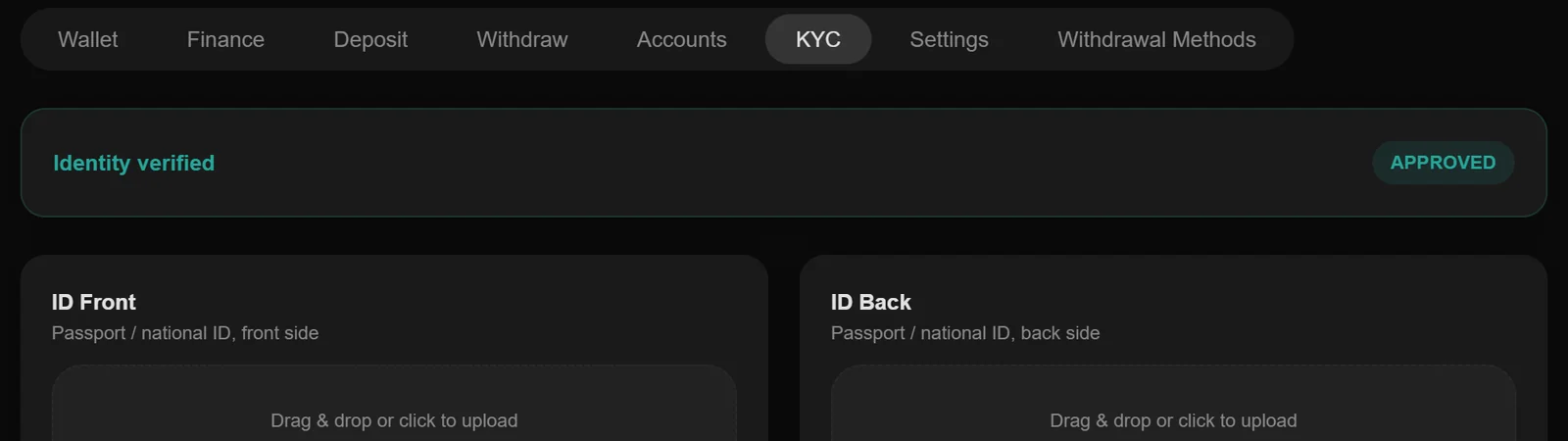
Identity checks are cheaper than most founders expect. Verification services publish prices of about $0.80 to $1.90 per check, with monthly minimums of about $49 to $299, and sanctions screening adds about $0.60. Checking identity before the first payout, rather than at signup, keeps that cost tied to the traders who pass.
Sources (5)
KYC review
Sample data and sample clients.
Marketing and payouts: what you keep from each sale
Affiliates sell most challenges. The largest prop firms pay their affiliates about 5% to 20% of each referred purchase, and a new firm competing for the same affiliates should expect to pay toward the top of that range.
Payouts are the cost that decides whether the firm survives. Published figures from the industry put payouts at roughly 35% to 48% of challenge revenue, because only a small share of traders pass and fewer still are paid. Treat that as a planning ratio, not a promise: one strong market week can bring many winners at once, so keep cash aside before you scale your marketing.
Put together, every $100 of challenge sales leaves the firm with roughly $24 to $60 before its fixed costs, as the table shows.
| Line | Low cost case | High cost case |
|---|---|---|
| Challenge sales | $100 | $100 |
| Payouts to traders | $35 | $48 |
| Affiliate commission | $5 | $20 |
| Payment fees | $0.30 (crypto) | $8 (high-risk card) |
| Left before fixed costs | About $60 | About $24 |
A first-year budget for a small prop firm
The fixed costs for a first year on Pelris come to roughly $29,600 to $51,600, before marketing and payouts. The cost to start a forex brokerage guide covers the brokerage side if you plan to run both, and the demo of the whole platform, free for 14 days, shows what your traders would use.
| Item | Low | High |
|---|---|---|
| Prop firm plan, 12 months at $1,490 | $17,880 | $17,880 |
| Company with an agent, first year | $950 | $1,800 |
| Legal documents | $10,000 | $30,000 |
| Identity checks, about 1,000 a year | $800 | $1,900 |
| Total before marketing and payouts | $29,630 | $51,580 |
Pelris builds brokerage software and is not a law firm or a broker. Nothing in this guide is legal, regulatory, financial or investment advice. Confirm your own position with a lawyer who practises in your jurisdiction before acting.