What a forex liquidity provider does
Foreign exchange has no central exchange. The market is a network of banks and other dealers quoting prices to each other and to their clients, and it is large: the Bank for International Settlements put average turnover at $9.6 trillion a day in April 2025, 28% more than three years earlier. A retail broker cannot reach most of that market directly, so it connects to a liquidity provider that can.
The provider streams buy and sell prices for each instrument to the broker and fills the orders the broker sends at those prices. The broker earns a markup on the spread, a commission or both, and the provider earns its own spread and fees. Some providers also offer metals, energies, indices and crypto contracts, so one relationship can cover a whole CFD book.
A broker does not have to send every trade to a provider. Many keep some or all of their clients' trades in-house, as the counterparty, and pass on only the flow they do not want to hold. Which trades go where is a decision of its own, covered below, and it decides how much liquidity you actually need.
Tier 1 banks, prime of prime and non-bank market makers
The providers a new broker meets fall into a few groups. The difference that matters most at the start is who will take you on: tier 1 banks and their prime brokerage desks serve large institutions, and most new brokerages begin with a prime of prime provider, a firm that holds prime brokerage relationships with banks and resells that access to smaller clients in smaller sizes.
Non-bank market makers have become some of the largest price makers in the market, and many prime of prime providers blend their prices with bank prices. An aggregator, or a provider that aggregates for you, pulls several of these sources into one price stream and fills each order at the best price available at that moment.
| Type | Who it is | Who it serves | What a new broker should expect |
|---|---|---|---|
| Tier 1 bank or prime broker | A large bank dealing directly, or its prime brokerage desk giving access to many dealers under one credit line | Large brokers, funds and institutions | High entry requirements, long due diligence and minimum volumes that few new brokerages meet |
| Prime of prime | A firm with bank prime brokerage relationships that resells access in smaller sizes | Small and mid-sized brokers and funds | The usual first provider: a margin deposit, a commission per million traded and onboarding in weeks |
| Non-bank market maker | A trading firm that quotes its own prices, often electronically | Banks, prime of prime providers and larger brokers | Usually reached through a prime of prime provider rather than directly |
| Aggregated liquidity | Several of the above combined into one price stream by an aggregator | Brokers that want a deeper price and a fallback | A connection fee or licence on top of each provider's own terms |
First decide which trades need a provider
Before you compare providers, decide what you will send them. In an A-book model the broker passes client trades on and earns a markup or commission, so every trade needs liquidity. In a B-book model the broker keeps the trades in-house as the counterparty and carries the market risk, so it needs no provider for execution, though it may still hedge its overall position. Most brokerages end up with a mix of the two, decided client by client. Our founder's guide to A-book and B-book explains how each model earns, what it costs and what your licence must allow.
The answer changes what you buy. A broker that passes most flow on needs tight prices, deep liquidity and fast fills, and pays for them in commission. A broker that keeps most flow in-house and covers only its largest or most consistently profitable clients needs a reliable provider for a smaller share of its volume, and the monthly minimums matter more than the last fraction of a pip.
On Pelris the choice is a setting on each client in the CRM. A client kept in-house is filled from the live price with your brokerage as the counterparty. A client set to cover is filled in exactly the same way, then a matching order goes to your liquidity provider to offset the exposure, so the client's price and speed do not change. You can switch a client at any time.
Liquidity bridges, MT5 bridges and aggregation
A liquidity bridge is the software that joins a trading platform to one or more providers. It takes the orders the platform sends, passes them to the provider, usually over the FIX protocol that most institutional trading uses, and books the fills back. Most bridges also aggregate several providers, apply your markups, decide which orders are passed on and report what happened to each one.
An MT5 bridge, or an MT4 bridge, is a bridge built for a MetaTrader server. MetaTrader brokers usually buy it as a separate product from a bridge vendor, on a monthly licence and sometimes a fee by volume, and it sits beside the MetaTrader server, the manager terminal and any plugins. What an MT5 white label involves is set out on our comparison of the white label models.
Pelris is not MetaTrader, so there is no MetaTrader server and no MT5 bridge in the picture. Whether a client is kept in-house or covered with your provider is chosen in the CRM, client by client, and the provider you work with is agreed between you and them.
How to choose a liquidity provider: the questions to ask
Put the same questions to every provider on your shortlist, in writing, and compare the answers side by side. A provider that will not answer one of them in writing has answered it.
Execution deserves the most attention. Ask whether the provider uses last look, the practice of taking a final moment to accept or reject an order at the quoted price. The FX Global Code, the industry's own code of conduct, asks firms that use it to be transparent and to disclose how it works, so a provider that signs the Code should be able to tell you. Ask too whether price changes during that window are passed on to you both when they help you and when they hurt you.
| Area | What to ask | Why it matters |
|---|---|---|
| Regulation and entity | Which company will be your counterparty, who regulates it, and its number on that regulator's register | Your margin and your trades sit with that exact company, not the group's brand |
| Execution | Last look or not, rejection rates, average fill speed, and whether slippage is passed on both ways | Decides what your clients' trades actually cost you |
| Pricing | Raw spreads or marked up, the commission per million traded, and how both change with volume | The real price is spread plus commission, not either alone |
| Margin and leverage | Margin required per instrument and how it changes around news and weekends | Sets how much of your capital the provider holds |
| Onboarding | The documents needed, which licences and jurisdictions it accepts, and how long it takes | A provider that will not onboard your licence ends the conversation |
| Minimums | The minimum deposit, any monthly minimum fee or volume, and whether commission counts toward it | Small brokers pay most for minimums they do not reach |
| Instruments and hours | Which forex pairs, metals, energies, indices and crypto contracts, and their trading hours | Your client offering cannot be wider than your liquidity |
| Reporting | Daily statements, a report trade by trade and access to your own data | You need to reconcile every fill against your own books |
| Client money and margin | Where your margin is held, whether it is segregated, and what happens to it if the provider fails | This is a credit risk on your own company |
| Exit | The notice period and how fast your margin is returned when you leave | You should be able to change provider without losing a month |
What a liquidity provider costs
Providers set most of their terms privately with each broker, so the honest answer is a set of ranges and the questions that narrow them. The margin deposit is the largest amount you put up, but it stays your money, held by the provider as long as you trade. The costs you actually spend are the commission, any monthly minimum, the connection and the market data your clients see.
If Pelris introduces you to a provider, its terms start from $2,500 a month on either of the two routes we introduce, a UK FCA-regulated provider or one registered in Seychelles or Cyprus, with the deposit, minimum volume and term set in your agreement with the provider. How a liquidity introduction works is explained under execution on our pricing page. You can also bring your own provider.
Budget for liquidity as one line of the whole launch, not on its own: the full cost of starting a brokerage puts it beside the licence, the platform, payments and the team.
| Cost | How it is charged | What to expect |
|---|---|---|
| Margin deposit | Held by the provider as collateral while you trade | Published entry deposits at prime of prime providers run from about $10,000 to $100,000 or more; tier 1 access asks far more |
| Commission | Per million traded, sometimes per lot | Negotiated with volume; published entry rates start in single-digit dollars per million |
| Spread markup | Built into the price you receive | Ask for raw prices plus commission, so you can compare providers like for like |
| Monthly minimum | A fee or a volume floor charged when you trade less | Ask whether commission counts toward it before you compare totals |
| Bridge or connection | A monthly licence, sometimes with a fee by volume | Quoted per broker; needed on MetaTrader, set up with the provider on other platforms |
| Through a Pelris introduction | Agreed between you and the provider | From $2,500 a month on either route; deposit, minimum volume and term in your agreement |
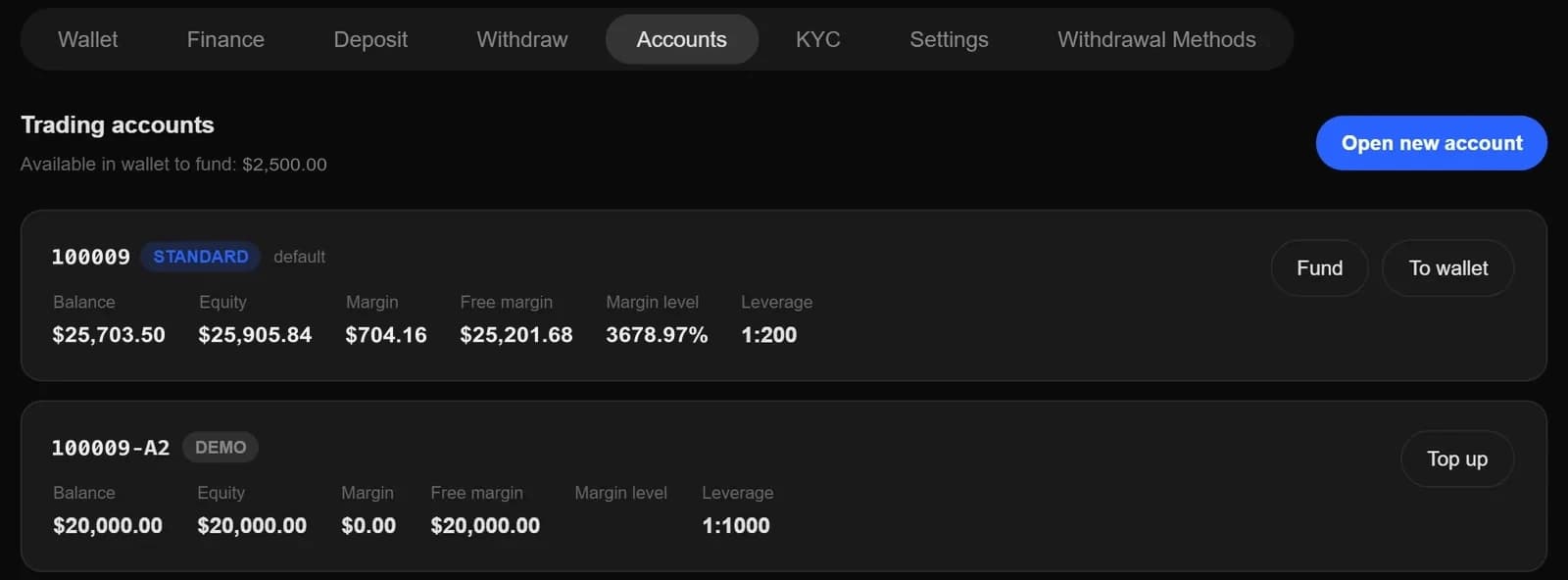
Sample data and sample clients.
Red flags when choosing an FX liquidity provider
Most problems with providers come from a short list of warning signs. Any one of them is a reason to slow down, and two together are a reason to walk away.
- No register entry you can find yourself
Look the counterparty company up on its regulator's own register, by name and number, rather than trusting a badge or a link the provider sends. Check for clone warnings too: some regulators publish warnings about firms copying a registered firm's details.
- Execution terms that are not in writing
Last look, rejection rules and how slippage is handled belong in the agreement. A provider that only describes them on a call can change them without telling you.
- Slippage that only ever moves one way
Ask for fill reports. If price changes are passed on when they cost you and kept when they would help you, your clients pay for it in their prices.
- Money before the contract
Never send a margin deposit before the agreement is signed, and never to a personal account or a company other than the one you are contracting with.
- No reports trade by trade
If you cannot reconcile every fill against your own records, you cannot find an error or a dispute until it is large.
- Software priced on your flow
If a platform's price falls only when your trades go to one provider, your choice of liquidity is no longer yours. Keep the two decisions separate.
Where Pelris fits
Pelris is the trading platform and the staff CRM, not the liquidity. It never holds client money and is never the counterparty to your clients' trades. You choose, client by client, whether trades are kept in-house with your brokerage as the counterparty or covered with your own liquidity provider, and you can switch whenever you like. The software price is the same whichever you choose and wherever your flow goes.
If you do not yet have a provider, we can introduce you to one; you open the account and sign the agreement with them directly. If you already have one, bring it. Either way the liquidity decision stays yours, and the free 14-day demo of the platform shows the terminal and the CRM, routing setting included, before you speak to anyone.
Who holds whatIllustration
- Licence
- Client relationship
- Client money
- Trading accounts
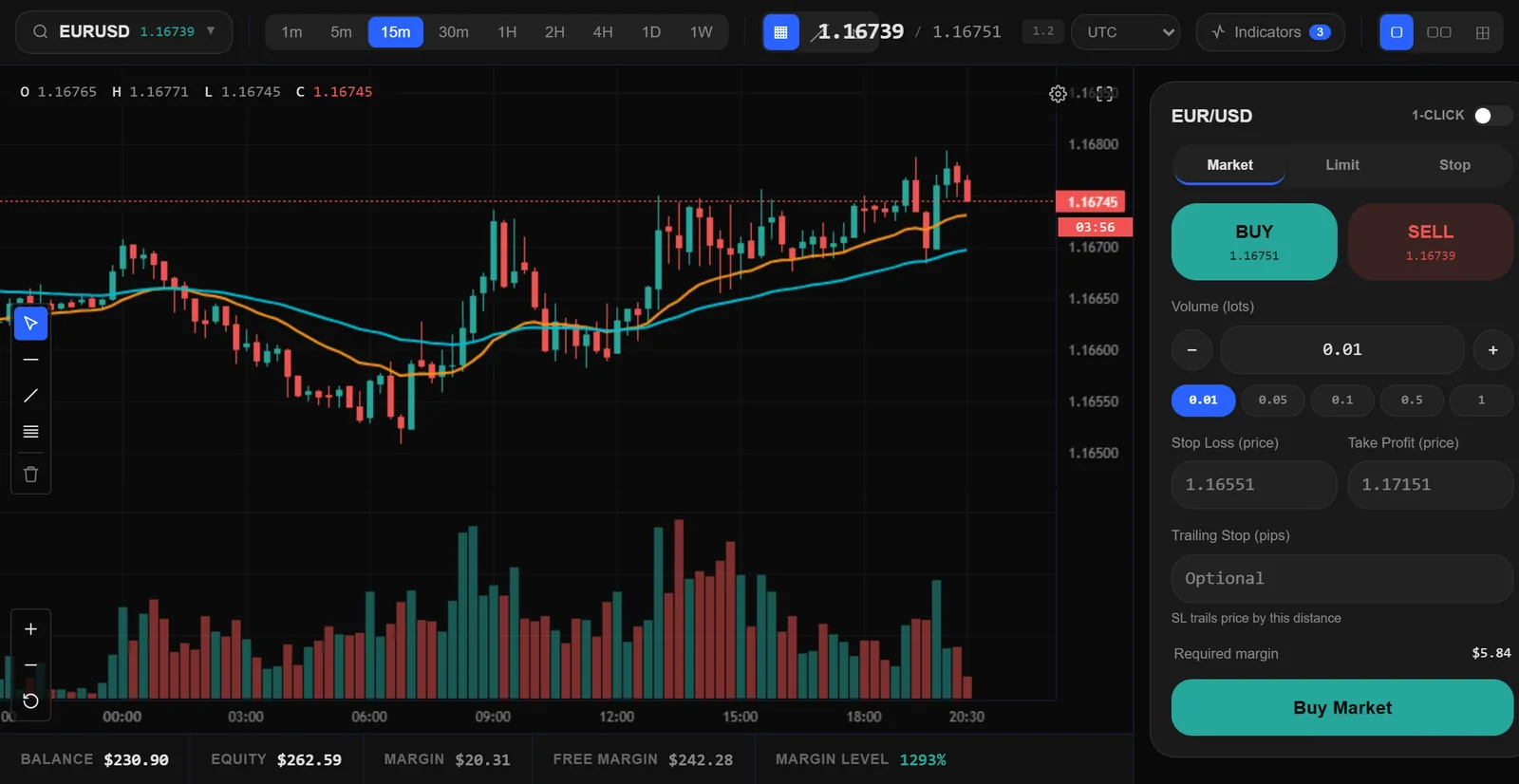
Illustration and sample market data.
Pelris builds brokerage software and is not a law firm or a broker. Nothing in this guide is legal, regulatory, financial or investment advice. Confirm your own position with a lawyer who practises in your jurisdiction before acting.